


The five things you need to know today:
ANGOLA. UNITED STATES. Biden goes abroad to promote merit and probity.
FRANCE. As the government prepares to fall, new elections must wait.
SYRIA. The Gulf joins the battle for Assad.
UKRAINE. RUSSIA. After bold steps in November, Kyiv’s allies tread softly.
THE BALTIC. CHINA. Lithuania faces retaliation as Germany tries dialogue.
Get full access to all five daily briefings, weekly analyses, and private webinars—at 50% off this December. Upgrade today for the the only daily intelligence briefing written by former diplomats, modelled on the US Presidential Daily Brief, and relied on by business leaders and investors in over 140 countries.
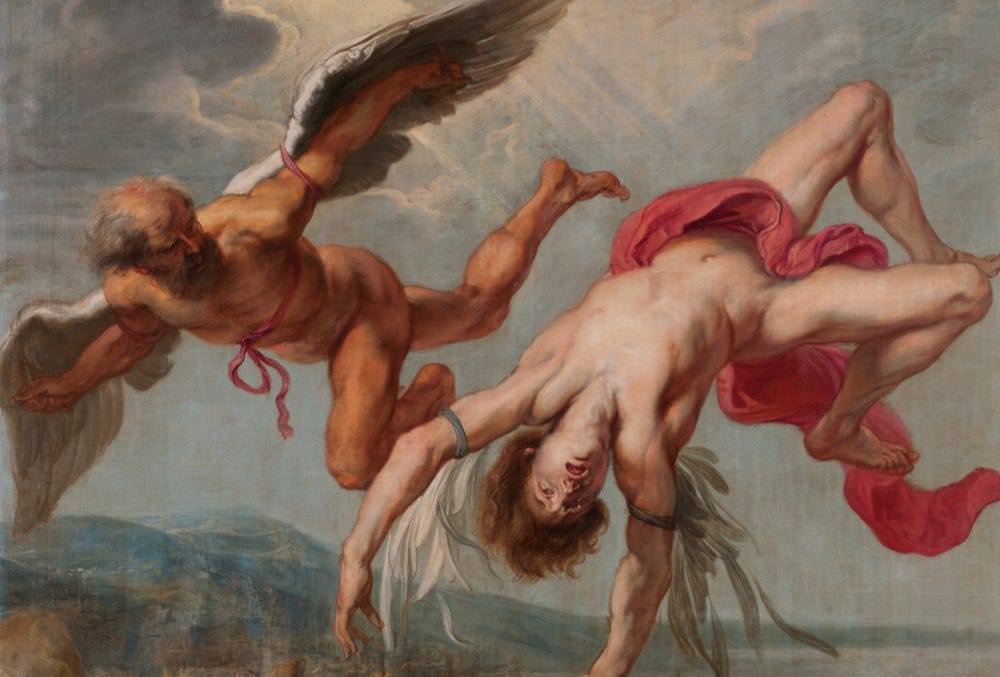
ANGOLA. UNITED STATES. No eclipse of the sons
Biden goes abroad to promote merit and probity.
Joe Biden arrived in Angola Monday, the first visit by a US president to the country, to tout the US-funded Lobito Corridor project. The State Department said the rail initiative was a flagship for the highest standards of infrastructure delivery.
INTELLIGENCE. Replacing a colonial railway destroyed in Angola’s civil war, Lobito is meant to showcase Western standards, transcend a history of exploitation, and counter China’s Belt and Road. It’s also meant to encourage Angola’s continued transition from nepotism and autocracy. Yet the focus has been on Biden’s pardoning of his son and his incomplete legacy at home. The first visit to Africa by a US president since 2015, it also smacks of tokenism.
FOR BUSINESS. Angolan president Joao Lourenco has steadily undone the father-son rule of his predecessor Jose dos Santos since taking power in 2017. Moving away from traditional friends in China and Russia, he has also realigned Angola strategically. This has been possible due to rising institutional trust, a necessary condition for capitalism and meritocracy. That the US is going in the other direction will not go unnoticed in Angola, or beyond.
Enjoying Geopolitical Dispatch? Share it with your network and earn free access. For every friend who subscribes: 3 referrals = 1 month free: 5 referrals = 3 months free: 25 referrals = 6 months free. Simply share your unique link below by text, email or on social media.
FRANCE. Encore une fois
As the government prepares to fall, new elections must wait.
The hard-right National Rally joined parties on the left Monday in submitting a motion of no-confidence against Michel Barnier's minority government. Bond spreads widened as the Assembly prepared for a likely vote on Wednesday.
INTELLIGENCE. Unless Barnier acquiesces to National Rally’s maximalist demands, the prime minister’s centre-right coalition is all but certain to
collapse following the controversial use of Article 49 of France's constitution to push his draft budget forward. Appointing a new government without fresh Assembly elections, which can’t be held until June 2025 under Article 12, will be Emmanuel Macron’s next headache after he returns from a trip to fix the Middle East.
FOR BUSINESS. As Macron plays diplomat on the world stage, his ratings at home continues to fall, with voters blaming him, not the Rally's Marine Le Pen, for France's fiscal and political impasse. Should the motion pass, it will be the first time since 1962 that a government has been ousted through a no-confidence vote. Macron will likely ask Barnier to remain as caretaker. There are few alternatives other than the anti-Macron parties who sought his ouster.
SYRIA. Sheikhing the kaleidoscope
The Gulf joins the battle for Assad.
The US and the UAE were planning to offer Bashar al-Assad sanctions relief if Syria moved away from Iran and Hezbollah, Reuters said Monday. Assad had reached out to Ankara via intermediaries, newspaper Turkiye Gazetesi said.
INTELLIGENCE. Since its civil war reached an inconclusive stalemate in 2016, Syria has been a cauldron of regional proxy forces, and with Hezbollah severely weakened by Israel, and Russia and Iran distracted, it was inevitable that one of these actors (in this case the Turkey-backed Tahrir al-Sham) made a major move against the Assad regime. This puts pressure on the other players to act, particularly before they lose their wriggle-room under Donald Trump.
FOR BUSINESS. Saudi Arabia and the UAE have the deepest pockets but the least risk tolerance of the major actors in Syria. How the US wants to work with them and other Gulf states, including in the context of a grand bargain involving Israel, could be determinative. Complicating matters, however, are suggestions from Riyadh that it no longer wants a defence pact with Washington if predicated on Israeli recognition. New points of leverage could be needed.
UKRAINE. RUSSIA. Tying lost ends
After bold steps in November, Kyiv’s allies tread softly.
Washington announced a $725 million arms package Monday, including for the first time a controversial shipment of landmines. Olaf Scholz made a surprise visit to Kyiv, his first since 2022, announcing a €650 million weapons shipment.
INTELLIGENCE. The numbers seem large. Recent US announcements have generally been in the $100-250 million range. Yet Washington’s announcement comes from within an existing presidential drawdown authority, which Biden had already pledged to use (despite concerns from some in the Pentagon about the impact on supplies for Asia). And Scholz’s announcement lacks sought-after Taurus missiles. Further, like Biden, Scholz is essentially a lame duck.
FOR BUSINESS. The announcements were likely meant as a concession ahead of today’s NATO foreign minister’s meeting, where the alliance is again expected to demur on membership for Ukraine (a condition for Kyiv in giving up territory to Russia). They were also a shadow of last month’s approval for Kyiv to use long-range missiles, suggesting Moscow’s response – a nuclear-capable hypersonic missile strike on Dnipro – has chastened allied policymakers.
THE BALTIC. CHINA. A thousand cuts
Lithuania faces retaliation as Germany tries dialogue.
China said Lithuania's expulsion of three diplomats would be met by countermeasures Monday. Germany's foreign minister told reporters in Beijing that Chinese drones sent to Russia were hurting Europe's "central security interests".
INTELLIGENCE. China denies it has sent dual-use goods to Russia and the accusation isn’t new. What Annalena Baerbock didn’t say, however, was whether she spoke to her counterpart about a Chinese ship thought to have deliberately severed two undersea cables, between Finland and Germany, and Sweden and Lithuania, while transiting the Baltic last month. It is expected she would have. It is also likely she raised China’s souring ties with Lithuania.
FOR BUSINESS. China’s ties with Lithuania were already difficult before the cables were cut (and if this was deliberate the reason could have been partly this, rather than as a Ukraine-related message on behalf of Russia). The hawkish Baltic state allowed Taiwan to open a de facto mission in 2021. The naming of the office infuriated Beijing, but Vilnius – relatively insulated inside the EU – did not back down. It is thought the latest expulsions would have related to this.
Geopolitical Dispatch is brought to you by Geopolitical Strategy. We help businesses map, monitor and manage geopolitical risks with expert advice from former ambassadors, diplomats and intelligence officials. Interested in exploring how our scenario planning workshops, bespoke briefings, tailored risk assessments or ongoing advisory support can help your business?
Today's first briefing on Bidens Angola visit contains yesterdays piece on Syria. Would appriciate a fix.