

CHINA. AFGHANISTAN. Kabul in a China shop.
The Taliban receive their first ambassador.
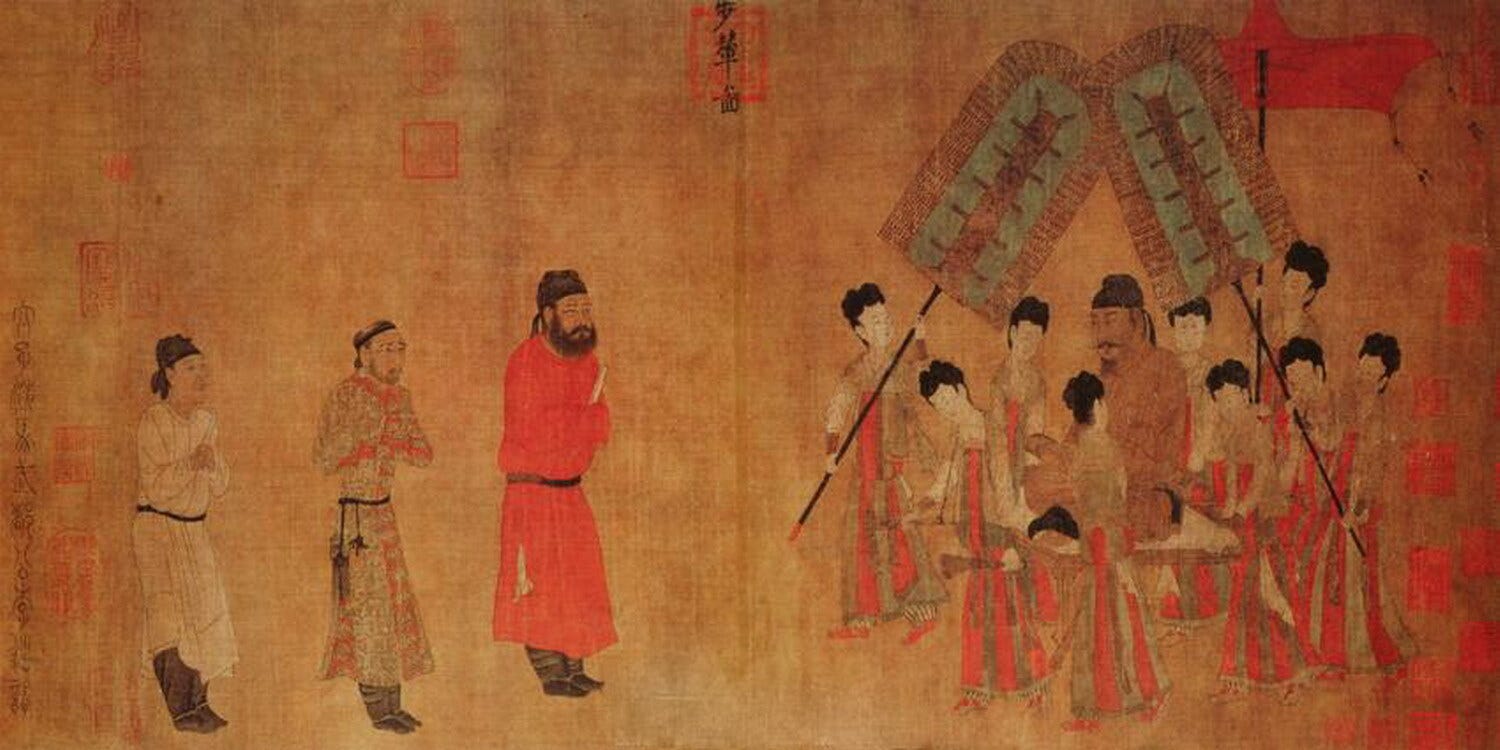
China on Wednesday became the first country to name an envoy to Afghanistan since the Taliban came to power in 2021. Beijing did not indicate whether this appointment signalled a step towards formal recognition of the regime.
INTELLIGENCE. China’s interest in Afghanistan is primarily security driven. Beijing is keen to stabilise the Taliban government and prevent any entrenchment of the Eastern Turkistan Islamic Movement, which seeks to establish a Uighur state in Xinjiang. Stability in Afghanistan is also vital to the success of China’s regional Belt and Road projects, including the China-Pakistan Economic Corridor, which has come under attack from Afghanistan-based militants.
FOR BUSINESS. Beyond security interests, Beijing is also interested in Afghanistan’s valuable natural resources, which include lithium, copper, and rare earth elements. A Chinese company signed a multimillion-dollar investment contract to extract oil in January this year, marking the first significant foreign investment in the country since the Taliban takeover. But political instability and poor transport links have so far dampened further economic ambitions.
JAPAN. Reshuffled.
Tokyo gets new foreign and defence ministers.
Prime Minister Fumio Kishida on Wednesday promised “drastic” economic measures after reshuffling his cabinet and increasing the number of female ministers. A poll over the weekend showed Kishida’s approval rating at just 36%.
INTELLIGENCE. Kishida’s standing within the ruling Liberal Democratic Party has dropped since taking office in October 2021. Ahead of a leadership vote next September, Kishida wants to stay on good terms with party factions, and Cabinet posts were distributed to reflect this. While the increase in the number of women from two to five is welcome, low public support for Kishida’s government is largely due to a lack of fresh policies rather than personnel.
FOR BUSINESS. No major changes to the finance and trade portfolios suggest there won’t be a drastic overhaul of economic policies. Continuity at the finance ministry underscores Kishida’s administration's focus on keeping sharp yen falls in check and easing the household squeeze from rising fuel bills in the face of the strongest inflation in decades. A generous stimulus package will also draw votes ahead of a possible snap election this year or next.
Written by former diplomats and industry specialists, Geopolitical Dispatch gives you the global intelligence for business and investing you won’t find anywhere else.
NORTH KOREA. RUSSIA. Rocket men.
Plenty of handshakes but no confirmed arms deal.
Kim Jong Un met Vladimir Putin on Wednesday at the Vostochny cosmodrome in Russia's Far East. An hour before the summit, North Korea fired two short-range ballistic missiles into the sea outside Japan’s exclusive economic zone.
INTELLIGENCE. The location of the meeting – a symbol of Russia’s continued ambitions as a space power – is notable, as North Korea twice failed to launch spy satellites in the past four months. Pyongyang is keen to prove it can keep up with other space powers in the region, and Moscow’s promise of assistance will help North Korea in its next launch attempt, even if Russia embarrassingly failed last month to land a probe on the Moon’s south pole.
FOR BUSINESS. Kim and Putin may have stopped short of announcing any arms deals publicly, but this does not mean the West can breathe a sigh of relief. Beyond the war in Ukraine, the meeting points to a broader, growing alliance between North Korea and Russia, likely with Chinese support. But with Russia burning through artillery, Kim could demand access to Russian technology to improve North Korea’s capabilities, thereby destabilising the region.
THE CAUCASUS. RUSSIA. War of words.
Russia is struggling to stay pre-eminent in its backyard.
Russia launched a formal protest to Azerbaijan on Wednesday over its comments about elections held in Russian-occupied areas of Ukraine. Russia also accused Armenia of making "unacceptable and harmful" statements.
INTELLIGENCE. In an interview over the weekend, Armenian Prime Minister Nikol Pashinyan said Moscow had failed to protect his country against what he called continuing aggression from Azerbaijan. As the Kremlin continues to be distracted by its war in Ukraine, it is unsurprising that longtime allies like Armenia are looking to signal alarm. Armenia and the US are holding joint military drills this week. Yerevan has also flirted with assistance from the EU and Iran.
FOR BUSINESS. Tensions between Yerevan and Baku have risen in the past week, with each side accusing the other of amassing troops along borders. A deal reached over the weekend to allow aid shipments from Baku-held territory to Azerbaijan’s breakaway region of Karabakh appears to have stalled. In the face of a distracted Russia, the West will put pressure on Azerbaijan’s main allies – Turkey and Israel – to discourage military escalation in the region.
With the brevity of a media digest, but the depth of an intelligence assessment, Daily Assessment goes beyond the news to outline the implications.
EUROPE. States of disunion.
Courting voters takes priority ahead of an election year.
EU Commission President Ursula von der Leyen delivered her fourth State of the European Union speech on Wednesday. She announced policy reviews to the bloc in preparation for EU expansion, but also noted popular hip-pocket concerns.
INTELLIGENCE. Short of announcing her plans to run for re-election in June 2024, VDL set the stage for it by courting political groups, including the conservative European People’s Party and Macron’s liberal Renew Europe group. But perhaps it was what she omitted – how to defend democracy and maintain unity amid the rise of radical populism within the bloc – that echoed loudest. Almost half of EU members now have a far-right party within the top three.
FOR BUSINESS. Among the many promises doled out by VDL to European lawmakers is an anti-subsidy investigation into electric vehicles from China. China reportedly spent about $57 billion on subsidies for EVs and hybrids from 2016 to 2022. EU Trade Commissioner Valdis Dombrovskis will visit China on 25 September, where he hopes Beijing will lower trade barriers for European exports. VDL’s latest announcement may, however, dominate discussions.
EUROPE. Lightning struck.
Apple crumbles to EU pressure.
Apple launched its new iPhone 15 on Tuesday, which features a USB-C cable as the “universally accepted standard”, after the European Union forced the change. France on Tuesday banned the sale of the iPhone 12 on radiation concerns.
INTELLIGENCE. The port switch from Apple’s ‘Lightning’ charger ends more than a decade of wrestling between Brussels and Cupertino, proving the EU can compel even the world's most valuable tech company to fall in line. The move reinforces how the size of the EU’s consumer base means its regulations still have global consequences, as was the case when the General Data Protection Regulation was adopted by major tech firms globally to save costs.
FOR BUSINESS. EU lawmakers have already called on rules to be expanded to include wireless charging, as well as other devices. And as Europe’s Digital Markets and Digital Services acts come into force, next year could see yet more global standards that the mostly US tech titans must follow. While Microsoft has welcomed its designation as “gatekeeper” of online services under the new rules, Apple has expressed concerns about privacy and security risks.
Emailed each weekday at 5am Eastern (9am GMT), Daily Assessment gives you the strategic framing and situational awareness to stay ahead in a changing world.