


CHINA. UNITED STATES. Eyes wide open.
Chinese suspicion mutes US overtures.
Secretary of State Anthony Blinken held talks with his counterpart Qin Gang in Beijing on Sunday. It was the most senior visit by a US official since 2018. Earlier, Bill Gates met with Xi Jinping, pledging $50 million to tackle disease.
INTELLIGENCE. The Blinken visit offers little hope of resolving the long list of grievances between the two economic giants. Coverage of the trip was noticeably less enthusiastic in China than in the US, and there remains deep Chinese suspicion over US motives. Nonetheless, it paves the way for an increased tempo of bilateral engagement at a time when both economies are teetering and tensions are rising. China is reportedly considering a new stimulus package.
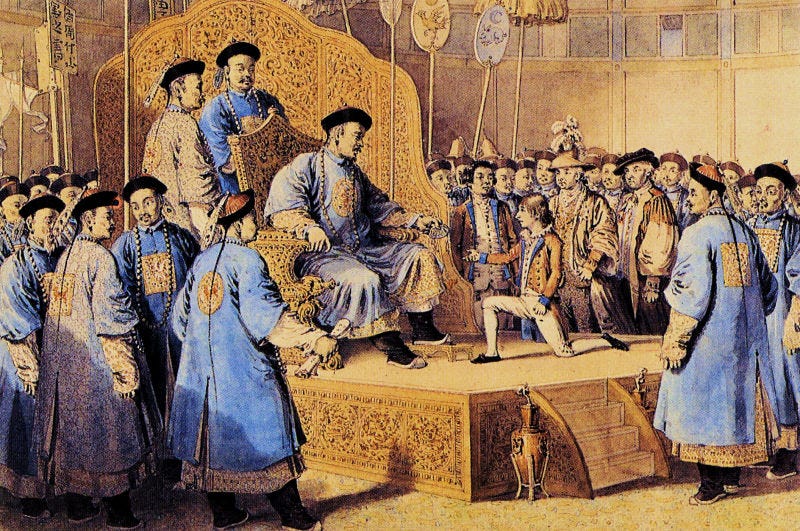
FOR BUSINESS. While economic stability is a central goal of thawing relations, unlike Nixon’s 1972 visit, the two sides are attempting normalisation with parallel superpower status. Talks to ease economic restrictions remain inextricably tied to broader strategic goals around the Pacific and Taiwan. Despite US diplomatic overtures, it recently placed sanctions on Chinese companies and signed a trade deal with Taiwan. For China, actions do not match words.
IRAN. UNITED STATES. Nuclear options.
More signs of secret nuclear talks.
Multiple media outlets reported over the weekend that US and Iranian officials have restarted talks on Iran’s nuclear program following last week‘s approval of a US waiver allowing the transfer of $2.7 billion from Iraq to Iranian banks..
INTELLIGENCE. Trump withdrew from the Obama-brokered Iran nuclear deal in 2018, prompting accelerated efforts by Tehran to grow its nuclear program. Recent talks have reportedly been held in Oman, with the US pursuing not only a curbing of Iran’s nuclear aims but the release of American prisoners. In contrast to the fanfare of Antony Blinken’s China visit, the secrecy surrounding the Iranian talks highlights their delicacy and the genuine possibility of a deal.
FOR BUSINESS. Iran has repeatedly stated it wants sanctions lifted to revive its ailing economy, which is currently experiencing its longest and deepest crisis. In 2021, gross national income was just 57% of its 1976 level. With so many competing interests, we remain sceptical that a substantive deal will get over the line, but the strategic leaks from official sources are too many to ignore and even a token agreement would be a boost to regional confidence.
IRAN. SAUDI ARABIA. No Hajj feelings.
Flights and diplomatic ties are being restored.
Saudi Arabia’s foreign minister travelled Tehran on Sunday, the first such visit in seven years. On Saturday, the first commercial flight from Yemen's capital Sana'a to Saudi Arabia since 2016 took off, carrying Hajj pilgrims.
INTELLIGENCE. Following Chinese-brokered talks, Tehran and Riyadh have restored relations and buried the hatchet over their proxy war in Yemen, which began when Iranian-backed rebels ousted the Saudi-backed government in 2014. After Iran returned its ambassador to Riyadh, Saudi Arabia is set to re-open its embassy in Tehran. The question is whether their newfound cooperation can overcome competing interests in Iraq, Syria, Lebanon and Palestine.
FOR BUSINESS. Saudi money is flowing fast in a bid to restore credibility and attract investment. For Crown Prince Mohammed bin Salman, Saudi Arabia’s de facto ruler, the proxy war became more trouble than it was worth, as did frosty relations with Tehran. His ‘Vision 2030’ strategy, to reduce the country’s dependence on oil and increase private participation, requires a more welcoming face. For now, economic influence is Saudi Arabia’s primary strategic goal.
Written by former diplomats and industry specialists, Geopolitical Dispatch gives you the global intelligence for business and investing you won’t find anywhere else.
MYANMAR. ASEAN. Churl next door.
Myanmar’s neighbours are reluctant to re-engage.
Thailand's government was to host the foreign minister of Myanmar's ruling junta at regional peace talks on Monday. Key Southeast Asian counterparts, including Singapore, Vietnam and Indonesia, have refused the invitation.
INTELLIGENCE. Hastily issued late last week, Thailand’s invitation was met with indifference from fellow members of the Association of South East Asian Nations. While in Washington, Singapore’s foreign minister said on Friday that conditions were not yet right for ASEAN to start high-level talks with Myanmar. Thailand shares a 2,400-kilometre border with Myanmar and has the region’s keenest interest in resolving Myanmar’s civil war, irrespective of the optics.
FOR BUSINESS. Myanmar was long touted as Southeast Asia‘s next great economic opportunity, but internal strife has seen the country slide backwards.Myanmar generals have been barred from ASEAN talks since a 2021 coup ousted the civilian government. With investment opportunities still limited in Myanmar, ASEAN’s interest in engaging Myanmar at senior levels will remain low, giving India and China, as well as Russia, more sway over the isolated junta.
KOREAN PENINSULA. Something to prove.
Pyongyang launches missiles into the sea.
Kim Jong Un opened a key Workers’ Party conference on Friday to discuss Pyongyang’s defence strategy and economy. Earlier, South Korea and the US conducted live-fire military drills, prompting North Korean retaliation.
INTELLIGENCE. At the meeting of the ruling party over the weekend, North Korea admitted its botched military satellite launch last month was its “gravest failure” and vowed to try again. Meanwhile, a US nuclear-powered submarine docked in South Korea for the first time in six years during joint military drills. In response, the North launched two short-range missiles into Japan’s maritime exclusive economic zone.
FOR BUSINESS. The salvo was not unexpected, but Pyongyang’s admission of failure over its satellite launch was. South Korea recovered pieces of the failed satellite, which could provide clues on whether it contained foreign technologies while under UN sanctions. Seoul will need to think hard about whether and how to disclose any findings publicly, particularly if the satellite contained components from China, with which South Korea has deteriorating ties.
UKRAINE. RUSSIA. AFRICA. If it ain’t brokering.
Moscow and Kyiv rebuff a proposed peace plan.
African leaders, including presidents of Comoros, Senegal, South Africa and Zambia, visited St Petersburg on Saturday to broker peace, following a visit to Kyiv. The Kremlin said their initiative was “difficult to implement”.
INTELLIGENCE. Many African nations have historic ties with Moscow, dating back to the Cold War when the Soviets supported anti-colonial resistance. But like the Chinese peace plan offered in February, Putin publicly rejected the African proposal almost immediately, as did Zelensky. Conversely, in a sign of escalation, Putin declared on Friday at an economic forum that the first Russian tactical nuclear weapons had been deployed to Belarus.
FOR BUSINESS. African nations want to end the war from an economic perspective, with many relying on grains and fertiliser from Russia and Ukraine. The high-level delegation underscored this. But economic damage is of secondary concern to Russia and many in Africa are happy to accept the Kremlin’s line that the war is the fault of the West. High grain prices also give Russia a source of leverage amid an otherwise declining influence on the world economy.
Emailed each weekday at 5am Eastern (9am GMT), Geopolitical Dispatch’s Daily Assessment gives you the situational awareness to stay ahead in a changing world.