

Listen (coming soon).
CHINA. UNITED STATES. CYBERSECURITY. The storms of state.
Two tempests rock the western Pacific.
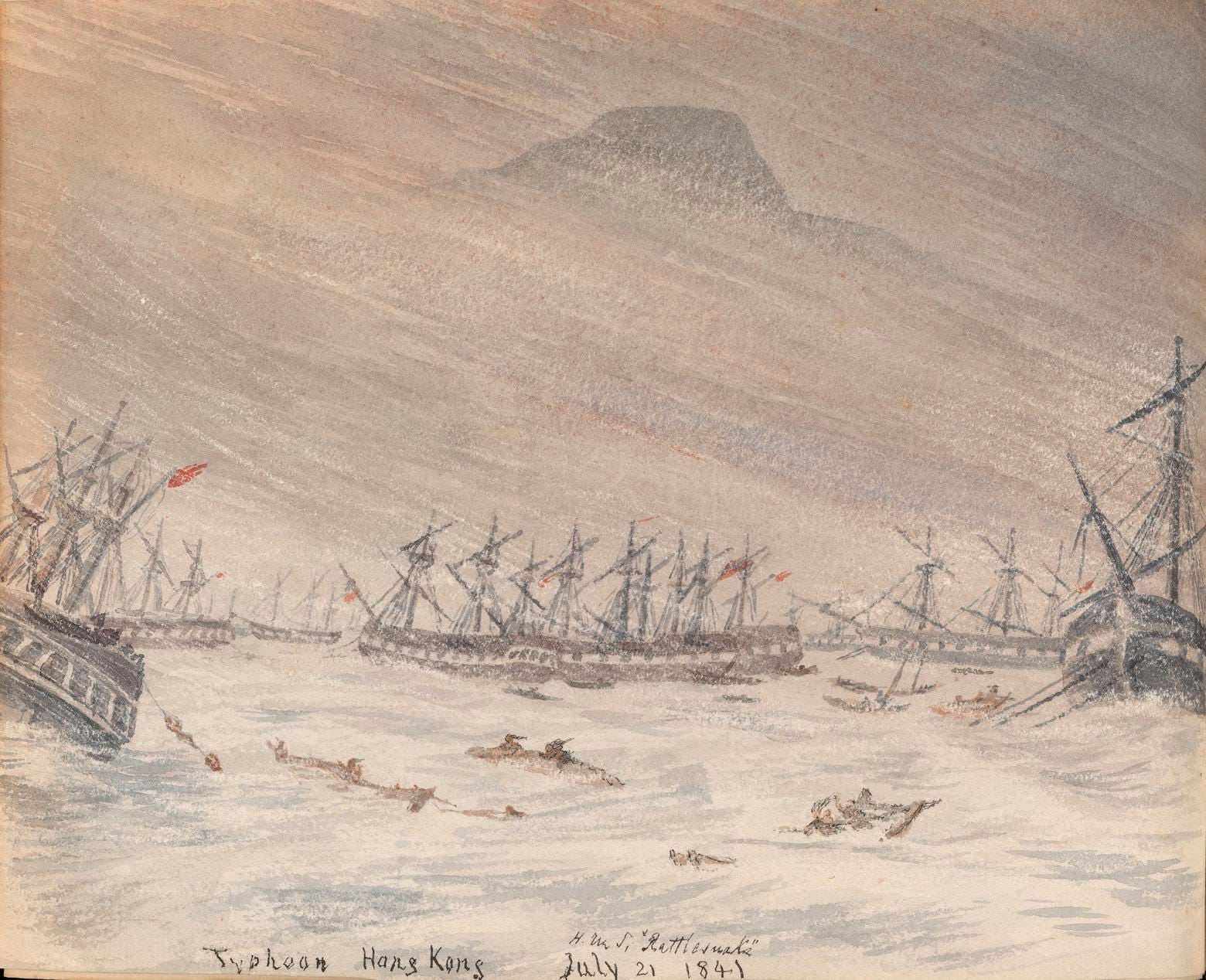
The US said late Wednesday a Chinese group, ‘Volt Typhoon’, had compromised critical infrastructure, notably in Guam. Most of Guam, which hosts a major US presence, lost power on Wednesday as Typhoon Mawar crossed the Pacific.
INTELLIGENCE. Sometimes life imitates art, even the art of cyber espionage, but it’s rarely so dramatic. Typhoon Mawar left Guam relatively unscathed, with personnel evacuated and ships sent out to sea, but Volt could have a significant impact. Beyond exposing the vulnerability of communications systems, the public attribution of a state-sanctioned activity will anger Beijing amid attempts to reset diplomacy against escalating commercial tensions. This isn’t the first public attribution by the US or its allies, but they are relatively rare and carry diplomatic weight.
FOR BUSINESS. Prominent threat advisories remind firms of the need to harden cyber defences. Volt is also a reminder to Washington, as was Mawar, of the vulnerabilities of Guam, a significant cable communications hub and one of the US’s biggest bases. Ultimately, Volt was about Taiwan. Mawar is expected to reach the island next week.
CHINA. UNITED STATES. Changing of the guards.
Beijing and Washington reshuffle their key players.
China's new ambassador to Washington arrived on Tuesday, saying he wanted to get the relationship back on track. The US State Department said late Wednesday that its top China policy official would step down on 23 June.
INTELLIGENCE. A senior Reagan official once said, “personnel is policy”. The truth of the adage will be tested by how US-China competition evolves after these shifts. Foreign policy is mostly downstream from immutable national interests, but how it is wielded amid constraints is the diplomat’s craft. Incoming ambassador Xie Feng, like his predecessor Qin Gang (now China's foreign minister), is no crude ‘wolf warrior’, a breed of emissary known for provocative nationalism. But nor is he a dove, as it is said was Rick Waters, State’s outgoing China coordinator.
FOR BUSINESS. Joe Biden suggested at the G7 that things would improve in the relationship. Still, the arrival of a hard-headed pragmatist and the exit of a pro-engagement bureaucrat suggests this doesn’t mean Panda hugs. Firms can have faith that China and the US understand their interdependence, but tensions will persist.
CHINA. RUSSIA. Hyper-ironic.
The ‘no-limits’ partnership hits a ceiling.
A Russian court said on Wednesday the trial of Anatoly Maslov, a scientist charged with treason, would commence next week. Maslov and two others from a hypersonic missile lab in Novosibirsk are said to have handed secrets to China.
INTELLIGENCE. Russian rocket science is world-class, despite Kyiv’s claims to have downed a hypersonic with US air defences. Notwithstanding a growing closeness to Beijing, hypersonic trade secrets are a red line in the relationship, which, aside from current bonhomie, is built on centuries of distrust. Among a small group of capabilities where Russia still has some (diminishing) edge, it provides Moscow with valuable leverage. The trial will be held in secret but will have a chilling effect. Allegedly, 50,000 of Russia’s top scientists have left in the last five years.
FOR BUSINESS. As it was in the Cold War, scientific espionage has become a theme of today’s geopolitical contests. The intent of the Russian scientists may have been benign, but this is cold comfort to anyone operating in potential ‘dual use’ industries. The mere suggestion of malfeasance is enough to ruin careers and companies.
Written by former diplomats and industry specialists, Geopolitical Dispatch gives you the global intelligence for business you won’t find anywhere else.
PAKISTAN. Riding the tiger.
Imran Khan weighs his options.
Pakistan's defence minister said on Wednesday Islamabad was considering a ban on the Pakistan Tehreek-e-Insaf party, led by former prime minister Imran Khan. Several key PTI officials resigned from the party this week.
INTELLIGENCE. Khan may well be replaying his ‘cornered tiger’ speech, which as Pakistan’s captain during the 1992 Cricket World Cup, catapulted his team to an epic victory over England. One of the sport's greatest batsmen and today Pakistan’s most popular leader, Khan is not out, despite a formidable opposition in the military, which engineered his political rise and now wishes to take him down. The defence minister may need to eat his words. At this stage, the army’s best bet would be to share power with Khan and dispense with an unpopular government.
FOR BUSINESS.If Khan and the military engineer a constitutional coup, they can avoid the violent kind, which would push Pakistan over the edge. The stakes are otherwise too high, though perversely, a collapse would be the one thing to unite China and the US, possibly avoiding a showdown somewhere that mattered more to global trade, like Taiwan.
AUSTRALIA. OUTSOURCING. Proceed with Caution.
Information disclosure allegations rock PwC.
Australia’s Treasury Department on Wednesday said it had referred a leak scandal involving PricewaterhouseCoopers to the police. A former partner is accused of using privileged government advice to help multinationals avoid taxation.
INTELLIGENCE. The case enlivens a debate on how much governments should trust corporate advisors. Canberra is PwC’s biggest Australian client and has spent billions on outsourced work that once would have been done by officials. It caps off a bad period for the ‘Big 4’ accountants. Last month, Germany banned EY from audit work after the Wirecard scandal. In March, China suspended Deloitte's operations for three months over the collapse of ‘bad bank’ China Huarong. In February, KPMG settled a £1.3bn lawsuit over the collapse of Carillion, another outsourcer.
FOR BUSINESS. The actions of PwC’s former partner were quickly disowned by the firm, but they paint a picture of systemic complacency and conflict of interest. Businesses with government clients should tread carefully as political winds shift against outsourcing and mixing public information with private incentives.
UKRAINE. RUSSIA. Another outsourcing scandal.
Russia points the finger at a private military company.
The Kremlin accused the US on Wednesday of providing hardware to the Russian Volunteer Corps, which Moscow calls a Ukraine proxy, but Kyiv describes as a group of private citizens. The RVC has its roots in neo-Nazi football gangs.
INTELLIGENCE. The pro-Putin (but increasingly anti-Kremlin) mercenary Wagner Group has become infamous for its assault on Bakhmut and activities in Africa. Still, it is not the only private outfit gone rogue. With the post-Soviet Union’s legions of unemployed men and stocks of heavy weaponry, mercenary activities are increasingly common. Still, even arms-length Western involvement risks escalatory action, let alone ethical dilemmas. Wagner, which will leave Bakhmut in the coming weeks, said it lost 20,000 men in the battle, many recruited from Russian prisons.
FOR BUSINESS. The world’s second-oldest profession, mercenaries are experienced at getting around legal and supply chain restrictions. They increasingly feature in conflicts worldwide, and with many having a foothold in the corporate security and asset protection sector, firms need to ensure they know whom they are dealing with.
Emailed each weekday at 5am Eastern (9am GMT), Geopolitical Dispatch’s Daily Assessment gives you the situational awareness to stay ahead in a changing world.