


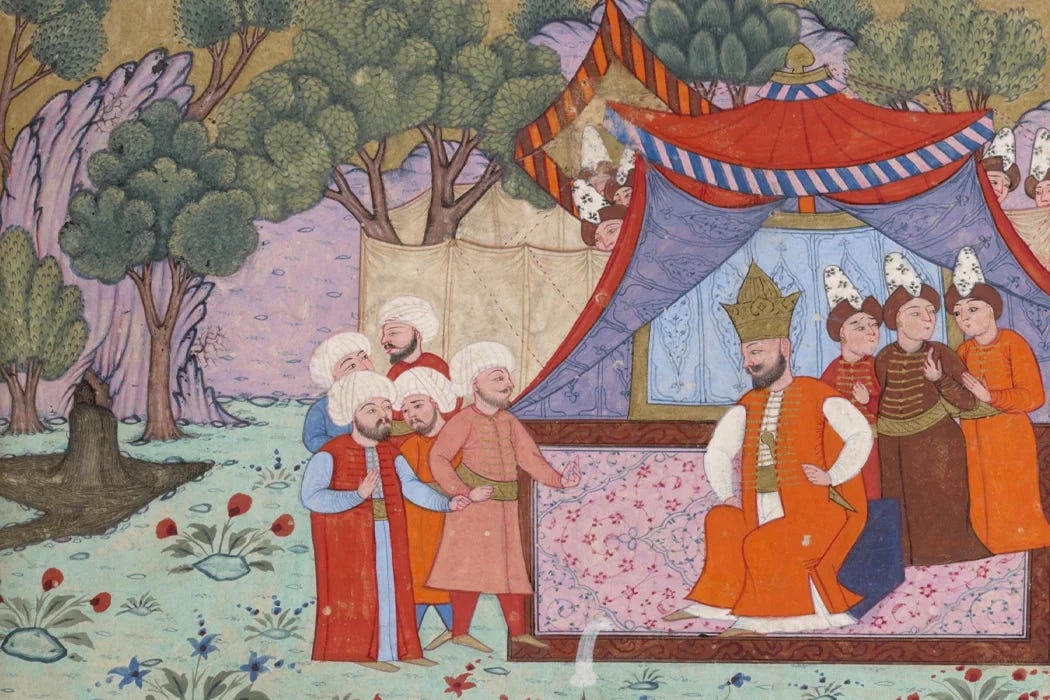
TURKEY. Knife edge.
Erdogan may scrape through, but at the expense of legitimacy.
President Recep Tayyip Erdogan and lead opposition candidate Kemal Kilicdaroglu both said early Monday they would accept a run-off vote, as final tallies continued. Both sides claimed foreign interference and Kilicdaroglu alleged fraud..
INTELLIGENCE. Erdogan appears to have come short of the 50% needed to avoid a run-off, but his lead over Kilicdaroglu and a divided opposition suggests he will scrape through. If the second round, due on 28 May, is also close, Erdogan may prevail on the security establishment to ensure he continues. This is the accusation already being made by Kilicdaroglu and observers, who have claimed Russia has interfered on Erdogan’s behalf (which Moscow denies). Erdogan has meanwhile warned of US interference on behalf of the opposition. Since 2003, Erdogan’s leadership has become increasingly divisive and fiscally erratic at home, but Turkey’s influence has grown abroad.
FOR BUSINESS. An uncertain result is a bad outcome for both markets and the region, with Erdogan likely to double down on nationalist rhetoric over the next fortnight. The West will need to avoid stoking an already fiery situation.
THAILAND. One step forward.
A surge in opposition votes may nonetheless count for little.
The opposition Move Forward Party appeared first in early tallies, Monday morning, followed by the Shinawatra family's Pheu Thai party, and the government in third place. Official results won't be confirmed for several weeks.
INTELLIGENCE. Prime Minister Prayuth Chan-ocha’s military and monarchy-aligned government received a drubbing on Sunday, but the establishment may still have the final say with democratically elected lower-house votes unlikely to be enough to overturn the pro-establishment bias of the 250-member senate, stacked in the army's favour. An awkward and potentially unstable coalition of liberal and conservative elements is likely to instead emerge. While a victory in a sense for young Thais, tired of Bangkok’s cronies, it is unlikely to result in dramatic changes for the ageing and slowing country of 71 million, which is slowly getting closer to China in trade, outlook, and governance style.
FOR BUSINESS. Investors looking for reform will be disappointed and an election annulment cannot be ruled out, with Move Forward’s promise to repeal contentious lèse-majesté laws potentially falling foul of those very same laws.
UNITED STATES. EUROPE. Places of refuge.
Migration could become the defining issue of 2024.
Europe could see record irregular border flows this year, the EU’s border agency said on Friday. Joe Biden said on Sunday the border situation was better than expected, with crossings down 50% since new rules began on Friday.
INTELLIGENCE. It is too early to tell whether new US border rules will attract or deter migrants, but both sides of politics are spinning conflicting signals as election season nears. President Biden is hoping that more legal pathways and regional cooperation will avoid a repeat of chaos at the border, but in doing so he is held hostage by the courts and Mexico. On Friday, Biden met with Spanish Prime Minister Pedro Sanchez to discuss Latin American migration, with Spain also a popular destination, owing to linguistic ties. But Sanchez, whose polls are down ahead of elections this year, will be more concerned about Mediterranean crossings, which tripled year-on-year for the first quarter.
FOR BUSINESS. Illegal crossings will only rise once refugees from Sudan reach Western borders. Avoiding another migrant crisis will top the agenda on both sides of the Atlantic, with ramifications for firms struggling to get workers.
JAPAN. CHINA. RUSSIA. Spar east.
Tensions rise in the Asia Pacific.
China was intensifying pressure in East Asia, Japan's foreign minister said on Saturday as a four-ship Chinese flotilla continued a circumnavigation of Japan's main islands. Japan hosts the G7 Summit on Friday.
INTELLIGENCE. Amid slowing consumer prices and last week’s talks with senior US officials, Beijing will not risk harming its economy, but continues to remind the West that any moves to sanction Chinese firms trading with Russia will backfire. Ahead of the G7 Summit, European and Asian foreign ministers met over the weekend to discuss China’s growing cooperation with Russia. Beijing, which has sent a senior envoy to Moscow and Kyiv for peace talks, has not explicitly provided military aid to Moscow, but increased trade has helped the Kremlin’s war aims. Russia has meanwhile maintained a visible presence in the east. On Sunday, US jets intercepted six Russian planes near Alaska.
FOR BUSINESS. Unless the West imposes secondary sanctions, China won’t seek a trade war while its economy recovers from Covid. That said, Beijing’s belligerence persists and foreign investors continue to face long-term risks.
UKRAINE. RUSSIA. Taking sides.
Kyiv and Moscow call on their friends as fighting continues.
Germany would support Ukraine as long as necessary, Berlin said on Sunday, after announcing a €2.7 billion military aid package. Russia and South Africa agreed closer ties, the Kremlin said on Friday, after a presidential phone call.
INTELLIGENCE. Ukrainian President Volodymyr Zelensky took another trip abroad, with a surprise visit to Germany, France and Italy. Zelensky’s travel is yielding support from once reluctant European partners, but it remains to be seen whether new pledges will prove decisive. Berlin’s package – its largest so far – will not arrive for several months and Paris’s offer of light tanks and armoured vehicles, announced Sunday, was seen as a sop for refusing to send fighter jets. US Patriot defence systems and British cruise missiles are proving effective in the war – four Russian aircraft were allegedly downed over Friday and Saturday – but Moscow retains deep reserves of combat power.
FOR BUSINESS. Small gains on both sides should not distract from the bigger picture of a slow, grinding war. More troubling are Russia’s growing ties with South Africa, whose already dented economy could face sanctions.
EGYPT. ISRAEL. IRAN. Return of the pharaoh.
Cairo reasserts its regional presence.
An Egypt-brokered ceasefire in Gaza appeared to be holding, officials said on Sunday, after fighting between Israel and Palestinian militants claimed 35 deaths. An Iranian lawmaker on Sunday said relations with Egypt could soon resume.
INTELLIGENCE. Having been overshadowed by the active diplomacy of Moscow, Ankara, Abu Dhabi and Riyadh, Cairo appears to be reasserting itself after a year of high inflation and fiscal stress. An IMF package agreed in December has seen a return to orthodox policy in recent months and consumer prices are stabilising. On Sunday, Cairo announced the sale of a 9.5% stake in Telecom Egypt, in a tender that was three-times oversubscribed. News that Egypt may restore ties with Iran shows a growing political pragmatism too, following an accord struck with Turkey two months ago. The cheer will however be tempered by the conflict in Sudan, Egypt’s second-largest export market.
FOR BUSINESS. If the Egypt-backed military in Sudan gains an advantage, Cairo’s good news should continue, but in a fragile region, the risks of spillover remain high. The most populous Arab country, where goes Egypt goes the region.