


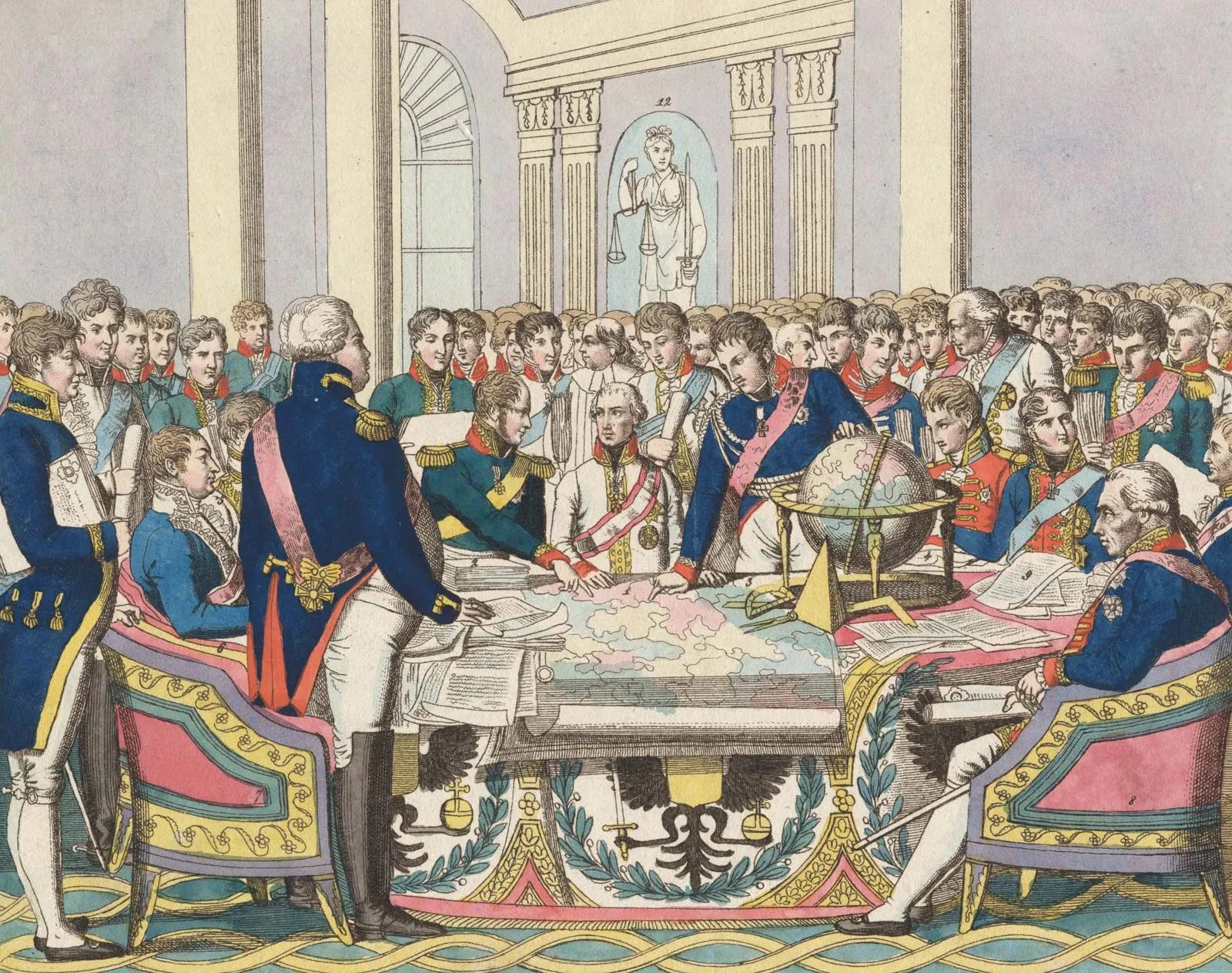
UNITED STATES. CHINA. Congress in Vienna.
Senior talks suggest an accord – for now.
US National Security Advisor Jake Sullivan met Beijing’s top diplomat in Austria on Thursday, the powers’ most senior engagement since February’s spy balloon incident. China’s foreign minister met with the US ambassador last week.
INTELLIGENCE. Neither side has revealed what was said, but the talks are a further sign of thawing relations after a testy year over Russia, espionage, technology, trade barriers, and Taiwan. Politburo foreign affairs chief Wang Yi’s visit to Vienna comes as Foreign Minister Qin Gang (junior to Wang in Beijing’s hierarchy) continues a tour of European capitals. Despite a spat with Canada and raids on foreign firms, China has recently attempted to ease tensions with the West, whose most senior leaders meet in Japan next week for the G7 summit. Chinese media are meanwhile reporting that Qin will soon visit Australia, which this week sent its trade minister to Beijing.
FOR BUSINESS. Short-term stabilisation will sooth investor worries. Long-term objectives nonetheless remain incompatible. China’s ‘great rejuvenation’ cannot, by definition, coexist with continued US dominance in the Pacific.
UNITED STATES. SOUTH AFRICA. RUSSIA. Cape of bad faith.
The US makes a bold accusation at a sometime ally.
The US Ambassador told media on Thursday that South Africa provided military aid to Russia when a cargo ship docked at a naval base near Cape Town in December. The South African government said there was no evidence of the claim.
INTELLIGENCE. While the majority of South Africans back Ukraine in the war, the ruling African National Congress retains close ties to Russia, which supported the anti-Apartheid struggle. The charges are nonetheless worrying for Pretoria, which will host the Brazil-Russia-India-China-South Africa (BRICS) Summit in August and, as a member of the International Criminal Court, has been mulling whether to disinvite Vladimir Putin, to avoid having to arrest him at the airport. Since democratisation, the Rainbow Nation has tried to balance ties to the West against the emerging powers. It has often failed, with grubby politics tarring the reputation it likes to project as a human rights champion.
FOR BUSINESS. Should the US make good on its claims, South Africa faces a real risk of secondary sanctions, which will be considered by the G7. It’s a warning to others still trading with Russia, notably China, India and Turkey
UKRAINE. RUSSIA. Delays, deliveries, declines.
Volodymyr Zelensky postpones his counteroffensive.
Ukraine’s president said on Thursday Kyiv would need more time before it could reclaim captured territory, due to a lack of equipment. Britain's defence minister said the UK would deliver long-range cruise missiles, costing £2 million each.
INTELLIGENCE. The war remains for both sides a contest of attrition and supplies. Already Europe’s most costly conflict since 1945, its dimensions are as much industrial as military. While Ukraine waits, Russia too is showing strain. Beyond the human toll and wrangling between the Kremlin and paramilitary Wagner Group, Russia’s finance ministry this week estimated a 22% year-on-year decline in revenue for the first four months in 2023 against a 26% rise in expenditure. Lead Republican candidate Donald Trump meanwhile said military aid to Ukraine had left the Pentagon short on munitions, adding that Europe should be asked to put up more money.
FOR BUSINESS. Firms wanting a forecast on the war should pay more attention to the economic indicators than the military speculation. Western opinion also counts, especially after Iraq and Afghanistan and ahead of US polls.
PAKISTAN. Judges versus generals.
The Supreme Court orders Imran Khan to be freed.
Pakistan's chief justice ordered the release of detained former prime minister Imran Khan on Thursday, a day after the military was deployed to quell widespread protests. Mobile internet remains shut down amid ongoing rallies.
INTELLIGENCE. Islamabad’s weakening hold on the country’s institutions was put in stark relief by the court’s intervention, which complicates an already fluid situation. The government has vowed to re-arrest Khan, Pakistan’s most popular politician, but it risks further legal challenges, not to mention a potential split among the uniformed services. With 36% inflation and less than a month’s worth of foreign reserves, the protests and communications blackout will further harm an economy already in crisis. And while talks with the IMF and banks continue, there is a risk that lenders will now refuse to bailout a delegitimated government. Some observers are speculating on a coup.
FOR BUSINESS. Firms inside Pakistan shouldn’t expect a quick return to normal and there is now a risk of crisis beyond the border, with Pakistan a major source of economic migrants and its soldiers providing security in the Gulf.
TURKEY. Byzantine.
A candidate’s late exit could lead to a presidential run-off, or worse.
Muharrem Ince pulled out of Turkey's presidential race on Thursday, blaming fake sex photos. The lead opposition candidate, Kemal Kilicdaroglu, is expected to pick up the votes at the expense of incumbent Recep Tayyip Erdogan.
INTELLIGENCE. Turkey is already facing a tight election race – one of this year’s most important. Its weakened institutions could face a major test should Sunday’s poll not result in an clear outcome. President Erdogan, a pugnacious political operator, has the benefit of incumbency and has been working hard to keep voters focused on security and prestige. But a strong turnout of younger Turks voting on the economy and creeping Islamisation could tip the balance, particularly if Ince no longer splits the opposition. Since facing off an attempted 2016 coup, Erdogan has tightened his grip on the military. Should Sunday’s margin be ambiguous, the generals may favour continuity.
FOR BUSINESS. The Turkish army has overthrown four governments since the war of independence in 1923. Should they try it again, this would mean economic sanctions and financial chaos, at least in the short term.
ARMENIA. AZERBAIJAN. Back to the negotiating table.
Border clashes complicate a Western strategy in Russia’s backyard.
Armenia and Azerbaijan blamed each other on Thursday after border gunfire killed one and wounded four. The two countries' leaders are preparing to meet in Brussels on Sunday, having held talks last week outside Washington DC.
INTELLIGENCE. Elbowing Moscow’s traditional mediating role between the former Soviet republics, the US and Europe have attempted to reduce Russia’s regional sway and ensure more reliable energy supplies to the West. The latest skirmishes however illustrate the conflict’s intractability, which in many ways predates the USSR and even Imperial Russia. Complicating matters are Turkey’s election, with Erdogan a major ally of Azerbaijan, and Western mulling of secondary sanctions on Russia, with Armenia a major route for Russian parallel imports. Up to $1 billion in sanctioned “ghost” goods have disappeared via Armenia and Central Asia, the Financial Times has reported.
FOR BUSINESS. Peace in the Caucasus may be a pipedream, but secondary sanctions are a growing prospect as the West seeks additional leverage on Russia. Firms from the Caspian region to India and China should plan accordingly.