

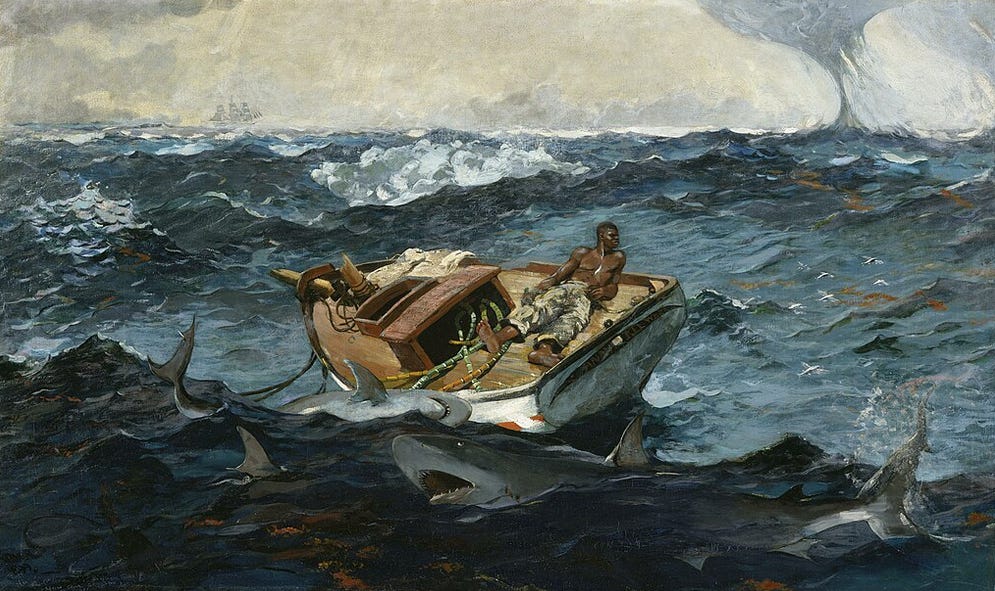
ENERGY. Gulf roar.
Hurricanes, strikes and conflict make for a potent blend.
The US National Hurricane Center warned Monday of a system developing in the Gulf of Mexico alongside five more in the Atlantic. Workers at an Australian gas plant threatened to strike, sending European prices 9% higher on Monday.
INTELLIGENCE. A hot summer has led to more hurricanes being forecast. Storms near the Gulf Coast bear watching as refiners run at 95% capacity, leaving little margin for error. Europe should breathe easier, with ample gas reserves ahead of winter, yet the impact of industrial talks in faraway Australia suggests traders aren’t relaxing. Iran also bears watching, with Tehran threatening Western ships after a tanker it claims was seized began offloading off Texas.
FOR BUSINESS. Threatened strikes at Woodside Energy’s North West Shelf projects come after the firm booked a record $1.9 billion half-year profit. Iran’s threats come as transit data suggests it ships 2 billion barrels in daily supply – more than before sanctions. Markets remain caught between demand-side fears of a Chinese slowdown and supply-side realisations of low inventories and underinvestment. A storm, or a conflict, could easily tip the balance.
SAUDI ARABIA. ETHIOPIA. No longer out of mind.
New claims of atrocities bring up forgotten wars.
Human Rights Watch on Monday accused Saudi border guards of killing hundreds of Ethiopian migrants between March 2022 and June 2023. The asylum seekers crossed into Saudi Arabia, fleeing civil wars in Ethiopia and Yemen.
INTELLIGENCE. While the world has watched Ukraine, the war in Yemen has killed at least 150,000 since 2014. In Ethiopia, the war in the region of Tigray has killed potentially twice that. Both conflicts have largely been resolved, but the humanitarian fallout continues, and an insurgency has recently begun in the Ethiopian region of Amhara, with four times Tigray’s population. Just as Saudi Arabia looked rehabilitated, this latest charge could harm its reputation.
FOR BUSINESS. Recent business deals won’t necessarily be jeopardised – the Kingdom has been accused of worse and is pivotal to energy markets – but Crown Prince Mohammed bin Salman will be in damage control, particularly ahead of a potential UK visit. Also weighing will be comments from Israel on Monday that it would oppose a Saudi nuclear industry as a price for diplomatic recognition. Riyadh doesn’t need nuclear energy, but it craves prestige.
Written by former diplomats and industry specialists, Geopolitical Dispatch gives you the global intelligence for business and investing you won’t find anywhere else.
RUSSIA. AFRICA. Back in business.
Wagner resurfaces in the Sahara.
Yevgeny Prigozhin on Monday posted his first video message since an aborted mutiny in June, standing in the desert and calling for fighters to join him. ECOWAS said it would not accept Niger's proposed three-year democratic timeline.
INTELLIGENCE. Eyes are mostly on Xi Jinping’s meeting with African leaders after South Africa’s BRICS Summit, which begins today. Vladimir Putin won’t attend due to an international arrest warrant, but through proxies like Wagner, and in the wake of his own meeting with leaders in St Petersburg, Russia remains a force on the continent. Of interest to Putin will be Niger, should the Economic Community of West African States intervene despite the risks.
FOR BUSINESS. Russia is a minor trade partner with Africa, compared to China or the West, but the trends are in its favour, particularly in arms, food and energy.The US, which has thousands of troops in Niger, must decide whether geopolitics trumps principle, lest it leave the field to the likes of Wagner. Europe will be relieved Prigozhin is out of Belarus, but he can still do great damage from the Sahara or Sahel, thanks to resource riches and refugee flows.
HUNGARY. Viktor’s parade.
Autocrats descend on Budapest.
Hungarian Prime Minister Viktor Orban hosted leaders from Turkey, Serbia, Qatar and Central Asian nations on Sunday for St Stephen's Day celebrations. On Monday, Hungary signed deals on gas with Turkey and nuclear energy with Russia.
INTELLIGENCE. Budapest, also hosting the World Athletics Championship, did not welcome any fellow EU leaders. Orban is keen to promote Hungary’s eastward pivot and “illiberal democracy”. He also hosted right-wing pundit Tucker Carlson, as well as Serb energy firms aiming to give Budapest alternative transit routes should Ukraine shut Russian pipelines, which still provide several central European countries, including Austria, with most of their gas.
FOR BUSINESS. Despite the theatrics, Hungary is inextricably tied to European supply chains. German firms, particularly, are vital to Hungary’s industrial production and revenues. Like Turkey, Hungary will continue to exploit its odd-man-out reputation if it can gain leverage in NATO or EU negotiations. It annoys Brussels, but many Europeans are also happy that Orban distracts from their own profitable links to authoritarian regimes like Russia.
With the brevity of a media digest, but the depth of an intelligence assessment, Daily Assessment goes beyond the news to outline the implications.
THAILAND. Return to form.
The Shinawatras are back together.
Former Thai prime minister Thaksin Shinawatra returned on Tuesday after 15 years of exile, before being arrested. Shinawatra’s Pheu Thai on Monday announced an 11-member coalition, including with two parties linked to the military.
INTELLIGENCE. At the time of writing, Pheu Thai was seeking to form a new government. Thaksin’s return indicates the party is close. His arrest is likely a bit of legalistic theatre before a pardon is granted. While Thaksin’s daughter Paetongtarn will not become prime minister, the family is close to property tycoon Srettha Thavisin, who will lead the coalition. With a broad parliamentary majority, Srettha has promised economic competence and good governance.
FOR BUSINESS. If time were frozen from 2006 when Thaksin was removed by a coup, the coalition of “red” (Thaksin) and “yellow” (military and monarchy) supporters would be profound. But instead, it appears an alliance of two types of elites wishing to stop the more radical and election-winning Move Forward party, popular among younger Thais. Thailand’s economy grew 1.8% in the last quarter, missing estimates. Reforms are necessary, and hard to imagine.
SOUTH CHINA SEA. Manila folder.
The Philippines cites ‘logistical limitations’ to avoid US-led drills.
The US, Japan and Australia would participate in drills in the South China Sea, Filipino officials told Associated Press on Sunday. The Philippines would not participate but would take part in bilateral exercises with Australia instead.
INTELLIGENCE. Manila has leaned heavily into its US alliance under the Marcos administration. Washington and its partners have in turn backed Manila on its territorial disputes with Beijing, but there is only so much poking of China the Philippines is willing to do at once. Of greater concern is resupplying its troops stationed on a grounded World War II wreck, which de facto marks a sovereignty claim. Chinese ships have blocked earlier resupply attempts.
FOR BUSINESS. In many ways the South China Sea dispute is absurd. Dubious claims are backed with steel-hulled ‘fishing’ boats. Islands are manufactured out of submerged reefs. ‘Locals’ are made to live on isolated sandbars. Yet it could be a more likely superpower flashpoint than Taiwan, thanks to US defence obligations and Beijing’s push to expand a maritime buffer into waters through which up to a third of the world’s seaborne goods are traded.
Emailed each weekday at 5am Eastern (9am GMT), Daily Assessment gives you the strategic framing and situational awareness to stay ahead in a changing world.