



Hello,
When writing Geopolitical Dispatch, we sometimes fall into the familiar trap of seeing the world primarily through political borders. But while geopolitics (i.e., geographical politics) is still often a matter of political geography, its frontiers go far beyond the boundaries of the nation-state. Global affairs is more than inter-national relations, as it were. Instead, it is as much the product of the natural environment, as well as of economics, technology, history, culture, and human biology.
In our second Invitation to Treat column, we’ve invited Michael Guterbock, the founder of Lynx Advisors and a global public health expert with a background at the United Nations and the US Centers for Disease Control and Prevention, to uncover these familiar blind spots by looking at a series of intersecting risks and challenges from the perspective not of Europe, the Middle East or North Africa - political regions we cover frequently, if sometimes in a silo - but from a region more naturally understood since ancient times, the Mediterranean basin.
From Michael’s participation in this month’s MED Dialogues, hosted by the Italian Ministry of Foreign Affairs, we hope you’ll find this essay on where cultures, commerce, opportunities and threats daily intersect to be as illuminating as we did.
You can also read more of Michael’s writing at his Substack, Geostrategic Lynx.
From the Black Death to Ebola, the Mediterranean has always been more than a sea connecting Africa, Asia and Europe. The region serves as a corridor through which disease, people, ideas, goods, capital and insecurity converge. Yet, as the recent MED Dialogues in Naples, or Napol,i demonstrated, we still struggle to see the region as one and are distracted by events in other regions, causing dangerous geostrategic blind spots.
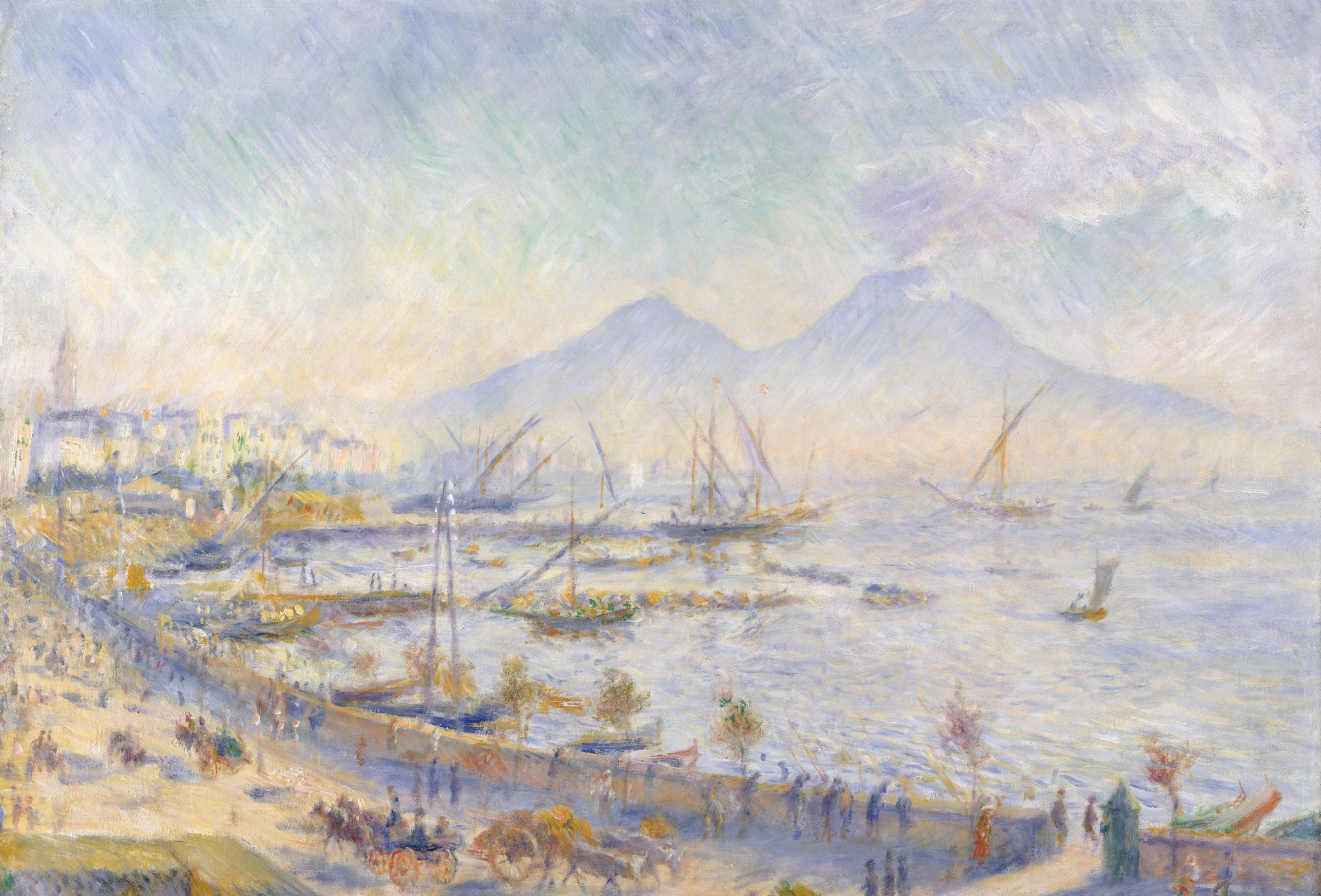
There is something fitting about discussing geopolitics and global health in Napoli. Napoli is a food lover’s delight, and a wonderful, crazy mess of a place. Like geopolitics today, Napoli is half falling down yet incredibly alive. Nearly 700 years ago, the Black Death entered Europe through Mediterranean trading networks, carried by ships arriving from the Black Sea. Italian port cities became one of the great gateways through which the disease spread across Europe and eventually killed roughly 30% of the population. The lesson was brutal and straightforward: disease respects no borders. Geopolitics uses the same ethos.
Almost seven centuries later, Italy hosted the MED Dialogues in Napoli, considering a familiar problem in a rather different geopolitical environment. Ebola outbreaks in central Africa, resurgent measles in the United States, continuing conflict and poverty, and the accelerating effects of climate change all remind us that the health of one region, geopolitically or otherwise, is rarely independent of another. Meanwhile, war, economic insecurity and environmental pressures continue to push people across the Mediterranean and into an increasingly divided, demographically declining and politically brittle Europe.
The MED Dialogues brought together more than 300 experts and 2,000 participants, including ministers, international leaders, businesses, think tanks, media and civil society representatives, across 60 sessions. All sessions fell under two main pillars: Shared Security and Shared Prosperity, which offered a useful framework for thinking about the Mediterranean’s future.
But one question kept returning: are we looking at the Mediterranean in a way that best uses its strengths and mitigates its weaknesses?
The Mediterranean blind spots
The MED Dialogues were partially funded by the Italian government, and the rest by private, mostly Italian companies, giving the whole thing a very Italian lens. Nonetheless, much of the geopolitical conversation at the conference focused on the Middle East, Iran and the Gulf, not geographically the Mediterranean, yet very much connected. From the Italian perspective, this view makes some sense as energy security, regional conflict and the strategic competition between Saudi Arabia and the United Arab Emirates (not to mention the US and Iran) have placed the Middle East firmly at the centre of European and Italian politics.
Yet there is a geographical blind spot that emerges because Europe cannot agree with itself on various crises. The Sahel receives considerably less attention than its importance warrants, while North Africa is too often treated as an extension of Europe’s migration problem rather than as a strategic region in its own right. Even the regional rivalry between Morocco and Algeria gets marginal attention from European capitals. However, the most underappreciated part of the Mediterranean is arguably Libya, which was only discussed in one or two sessions at the conference.
Libya is not simply a failed state or another unresolved conflict on Europe’s southern maritime border. Europe (and the US) had a hand in creating chaos there and then mostly absolved themselves of any nation-building pretences. Libya serves as the strategic backbone for Russia’s expanding presence in North and Central Africa, is a transit corridor for human trafficking, drugs and illicit fuel, and a critical piece of the wider security architecture connecting the Sahel, North Africa and the rest of the Mediterranean.
Libya is an uncomfortable illustration of the deterioration of the multilateral system. Much like the global health preparedness and response system during and post-COVID, no one trusts the international system to solve large problems like Libya anymore. Everyone is working for themselves. Again, as with COVID, the international response to crisis is uncoordinated - it’s everyone for themselves. European governments struggle even to agree on which political actors to support in Libya, with France and Italy at times backing different sides of the civil war there. External powers (Turkey, Egypt, Russia, the UAE) have pursued competing interests as well, while successive diplomatic initiatives have struggled to produce a durable settlement. The contrast with Europe’s rhetoric on shared security vis-à-vis Ukraine is difficult to ignore. In Libya, Europe has appeared unwilling or unable to act collectively. The result is a vacuum that others have been more than willing to fill.
Everyone has their own partner and strategy
Libya also illustrates how regional relationships increasingly complicate the Mediterranean’s security environment. Turkey has established itself as a major actor through its military and political engagement, including the deployment of relatively inexpensive armed drones. Ukraine recently sank a Russian ship docked in Libya, in another illustration of how seemingly far-off conflicts converge in lawless states. The proliferation of cheaper drone technology, including the increasingly accessible capabilities demonstrated in Ukraine, is changing the military calculations of states and non-state actors alike (think Houthis).
The UAE has cultivated its relationship with leader Khalifa Haftar in eastern Libya, while Egypt has had to balance its own security interests with relationships involving both Saudi Arabia and the UAE. The Saudis and the Emiratis support different sides in Libya, and Egypt needs money from both Gulf states, so it must balance Libya cautiously. Morocco and Algeria remain locked in a strategic rivalry that extends well beyond their bilateral relationship, influencing security calculations in Niger, where Algeria recently deployed troops, and the Western Sahara, which recently lost UN observers and risks full annexation by Morocco.
Russia, meanwhile, has found opportunities to consolidate its position through relationships with local actors and access to strategic infrastructure. These relationships are not isolated developments and form a grand strategy to extract resources and cause issues on NATO’s southern flank.
One striking feature of the Napoli discussions was the strong representation of Gulf countries. Their growing interest in Mediterranean affairs is understandable, particularly given their investments, energy interests and expanding diplomatic ambitions. Just as evident, however, was the absence of some of the European countries with the most direct stakes in their own region, including Spain, Greece, France and Portugal.
That imbalance says something about the changing geography of influence. The Mediterranean is increasingly important to actors who do not necessarily live on its northern shores.
The health of the Mediterranean
Yet there is another dimension to this geopolitical competition that deserves considerably more attention: public health.
COVID should have fundamentally changed how governments understand health security. It demonstrated that pandemic preparedness is not simply a matter for health ministries, laboratories or international organisations. It is a question of national resilience, economic security, supply chains, diplomacy, cooperation and collective action. Regardless of COVID’s origins, humans failed to contain it largely because we failed to cooperate sufficiently.
Any lessons learned from COVID have been forgotten and in fact one of the clearest lessons is being actively flouted in geopolitics today: cooperation. The re-emergence of measles in countries with sophisticated health systems, alongside continuing outbreaks of Ebola and other infectious diseases in the Democratic Republic of Congo, illustrates the fragility of public-health preparedness today. These developments are different in scale and epidemiological dynamics.
The Mediterranean is particularly exposed to interconnected risks because it is a diverse crossroads of dozens of cultures. It is a region of intense commercial traffic, tourism, migration and population movement. It connects Europe with North Africa and the Middle East, while its southern neighbourhood is closely linked to the Sahel and sub-Saharan Africa.
Climate change adds another layer. Water insecurity, changing patterns of infectious disease, food insecurity and population displacement are increasingly connected. The Mediterranean is already experiencing many of these pressures, often in countries with very different levels of institutional capacity and financial resources. Because the Mediterranean is almost fully enclosed, it heats up quickly like a bathtub.
The question is not whether these pressures will affect Europe. They already do. The question is whether governments will treat them as interconnected strategic risks or continue to manage them through separate self-serving national policies. Today the answer seems depressingly clear.
The politics of doing things at the margins
Perhaps the most important lesson from Napoli is that the Mediterranean’s future will be shaped as much by what happens at its margins as by what happens in its political centres, in Europe. The influence of Europe is clearly waning. The Sahel, Libya, the wider Maghreb and the eastern Mediterranean are not peripheral to European security.
COVID provided a particularly clear demonstration of what happens when international cooperation gives way to national competition. Countries competed for protective equipment, vaccines and access to medical supplies, often at the expense of collective preparedness. The multilateral institutions intended to coordinate the response were left trying to manage a crisis in which national interests increasingly took precedence.
In many respects, Libya represents an earlier version of the same problem: international actors recognise a shared interest in stability but struggle to agree on the means of achieving it.
Napoli itself is a useful metaphor for this complexity. It is a city of extraordinary historical depth, culinary delights and wonderfully chaotic contradictions. It is also a place where Europe, North Africa and the wider Mediterranean have always met, traded and competed. Its apparent disorder is part of its character, but beneath it lies a remarkably resilient urban and cultural ecosystem.
The Mediterranean needs something similar: recognition that its diversity and complexity can be managed with better cooperation and longer-term vision. Shared prosperity cannot exist without shared security. Shared security cannot be achieved without recognising that public health, migration, climate resilience and geopolitical stability are inseparable.
The Black Death did not stop at Italian ports. Nor will the next pandemic stop at the external borders of the EU. The view adopted at the MED Dialogues understood that war in the Persian Gulf is the Mediterranean’s problem, but the region’s dire problems closer to home continue to fester untreated.
Seven centuries after the Black Death tore through Europe, perhaps the most important question is whether the “health” of the Mediterranean region can improve through meaningful coordination on today’s most pressing issues. To pull on the public health and geopolitics thread one final time, perhaps what the Mediterranean needs now is Geoprophylaxis in the form of true cooperation to prevent traditional diseases and geopolitical strains.