


Dear readers,
In this edition of Irregular, I am writing from New York at the end of a month-long trip to Berlin, Paris, Geneva, Boston, and Washington DC where I have been meeting clients, diplomats, intelligence analysts and policymakers across the international system.
The talk of every town has been Donald Trump’s election and what a Trump 2.0 presidency will mean for the United States, its foreign and trade policy, and the world at large.
Views differ. Berliners largely lamented Trump’s election – some presuming the US would become a less reliable ally and others fearing he would embolden the German far-right. Trade policymakers and lawyers in the “Geneva bubble” worried Trump’s embrace of tariffs and scorn for multilateralism would spell an end to the already spluttering global trade system and a descent into irrelevance for the WTO. Parisians were often aghast yet unsurprised that voters hurt by inflation and concerned by immigration turfed out incumbents seen as out of touch and out of ideas — after all, the French did it recently during parliamentary elections and most wish they could have fired Macron as well.
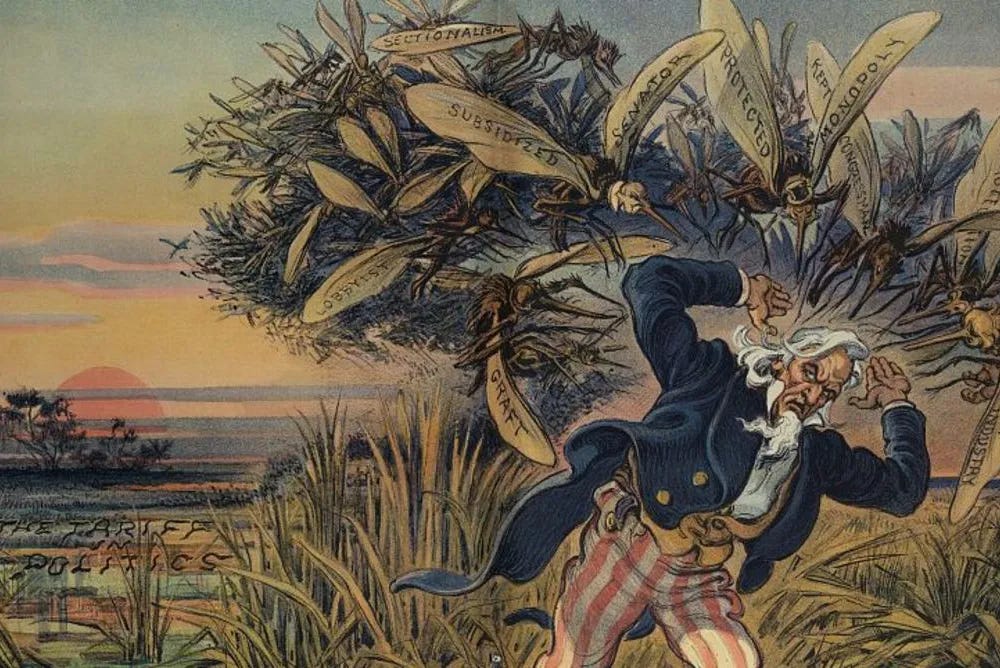
But it was especially fascinating to canvass views in Washington DC, where I had the opportunity to speak with congressmen, business executives, lobbyists, pollsters, and scores of diplomats and congressional staffers — that is to say, with the creatures of what Donald Trump would call “The Swamp”.
And over in “The Swamp” there is certainly no consensus on how a Trump 2.0 presidency could unfold.
On America itself, some feared Trump, with a friendly Congress, a pliant Supreme Court and a clear mandate to rule, would use his power in a way that would erode democratic institutions, the rule of law and any remnants of civility in politics. Others with more faith in the robustness of such institutions and the benevolence of elected and appointed officials thought this was a form of hyperventilation: the sky would not fall in, even if Trump and the Republicans more generally would have significant governing power.
As the week went on, almost everyone I spoke with was shocked – and many appalled – at some of Trump’s nominations for senior posts, especially a TV anchor for defence secretary and a congressman under investigation for sex trafficking as attorney-general. Trump, almost all presumed, would install loyalists and outsiders and the majority, except for one or two of the most contentious, would sail through the appointment process.
On international security, some thought Trump would bring more order to a chaotic world through his mercurial style, mercantilist economic philosophy and pragmatic deal-making – a combination that could allow the US to create leverage and more effectively wield its power not only to bring an end to the wars in Ukraine and the Middle East but restore American leadership in world affairs. Others thought his America First mantra, confrontational attitude to China, and disdain for multilateral fora could fray the Western alliance, make the world less safe and render international institutions less effective. But even those who disagreed were united that Trump would make foreign policy more central than the Biden administration. And that we are all destined to live in interesting times.
On trade, some thought Trump would go ahead with broad based tariffs while others thought it was a more bluff or negotiating tactic. Diplomats and trade experts agreed that, either way, the mere threat of imposing tariffs would create new dynamics between nations and give Trump a way to get more out of America’s friends, foe and frenemies. And there were differing views on whether tariffs would damage the American economy, meaningfully change the behaviour of importers and exporters, usher in a global tit-for-tat, or spell the demise of the WTO. Company executives were at pains to explain that tariffs are a cost on American businesses and consumers, not foreign governments, but also recognised that Trump, the consummate salesman, would very likely be able to sell the opposite idea to the public. And the most savvy underscored that any new tariffs are actually part of a broader effort to lower taxes and recoup revenues by other means.
On China, some thought Trump would eventually give up supporting Taiwan (once enough of its semiconductor industry relocated to the U.S.) while others thought he would be more forceful and combative than his predecessor, with a series of China ‘hawks’ backing up that view.
On Ukraine, some thought he would push for a quick end to the war through a deal to partition the country while others thought that, despite promises to end the war on “day one”, he would let Putin grind it out. The most interesting proposition, which some well-connected insiders conveyed, was that Trump would give Putin one chance for a deal that, if not agreed to, would result in America ramping up its support for Ukraine and letting it defend itself how it sees fit, including through attacking Russia directly. This may well be the way that Trump could incentivise Putin to end a war in which the Russian leader otherwise has the momentum.
And on the Middle East, some thought Trump would reflexively and unequivocally support Israel no matter what while others thought Trump would “pull Netanhayu’s head in” and push for a deal with Iran, bolstered by reports of Elon Musk, who has been bunkering down with Trump since the election, meeting Iran’s ambassador to the United Nations.
The only thing anyone could agree on was Trump’s foreign and trade policy would be very different to Joe Biden’s not just in style but in substance and strategy. Trite but true: the only certainty is more uncertainty.
That is why, rather than attempting to predict what will come to pass, we work with our clients to develop multiple scenarios, informed by a wide range of conversations with experts and insiders across the world, to help them map their exposure to geopolitical developments, monitor what matters to them and, ultimately, manage risks strategically and effectively.
Over the coming months, we will be sharing with our paid subscribers not only full access to our Daily Dispatches, but also a series of scenario analyses and special reports on what a second Trump presidency will mean for various geopolitical flashpoints – from the Middle East to Ukraine and Taiwan - with the first coming out next week.
If you would like to receive these reports, simply upgrade your subscription today — and right now, for 50% off.
Thank you for reading Geopolitical Dispatch.
Kind regards
Damien
CEO, Geopolitical Strategy
