

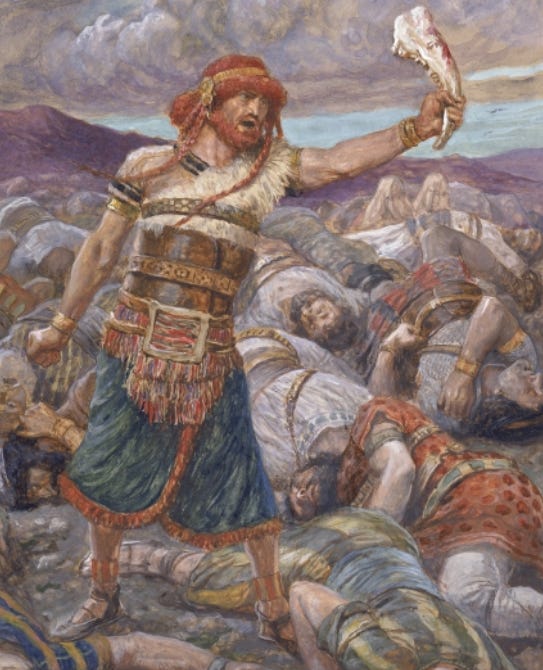
ISRAEL. PALESTINE. An eye for an eye.
The cycle of vengeance and the failure of strategic foresight.
Israeli airstrikes killed at least 400 in Gaza on Sunday after Hamas militants killed 700 Israelis and abducted dozens more in shock air, sea and land-based incursions on Saturday, 50 years after the start of the surprise Yom Kippur War.
INTELLIGENCE. With Gaza one of the world’s most surveiled regions, it is hard to believe this was an intelligence failure, as opposed to a failure of analytical or political imagination. Benjamin Netanyahu vowed “mighty vengeance”, and Israelis have rallied, but right now it is difficult to see his coalition government surviving the catastrophe. It is a crisis for the White House too, casting another light on the US’s own undefended border and military challenges.
FOR BUSINESS. Oil prices spiked on Monday, with some traders eyeing a repeat of the 1973 Arab oil embargo, which followed the Yom Kippur War. This appears unlikely. While Israel’s peace deal with Saudi Arabia is almost certainly now on hold – the Kingdom’s reaction to the attacks firmly sided with the Palestinians – Hamas and its allies do not have the same international support, beyond Qatar and Iran, as did the chief protagonists of 1973: Egypt and Syria.
Written by former diplomats and industry specialists, Geopolitical Dispatch gives you the global intelligence for business and investing you won’t find anywhere else.
ISRAEL. IRAN. It’s who you know.
Tehran will take the blame irrespective of its involvement.
Leaders from Hamas and Hezbollah on Sunday told the Wall Street Journal that Iran's Islamic Revolutionary Guard Corps helped plan Saturday's strike on Israel. Iran’s president on Sunday congratulated Hamas on its “glorious” attacks.
INTELLIGENCE. We will likely never know the extent of Iran’s involvement, but hardliners in the IRGC won’t wish to deny a role in what they see as a justified retaliation. This will complicate Iran’s return to global oil markets, as well as its relationship with Russia, which is trying to balance both sides. It will also stall relations with Israel-friendly states like the UAE, but that’s the point. As Iran’s supreme leader ages, the IRGC wants the conditions for full control.
FOR BUSINESS. Saturday’s events will hurt moderates in the Islamic Republic, who recently managed to negotiate the release of $6 billion in oil revenues, and who have been making tentative outreach to former foes. The IRGC however will benefit from further isolation and opprobrium, controlling the smuggling of sanctioned goods and benefiting from any rise in nationalism after further Islamic dress code protests threatened to break out last week.
With the brevity of a media digest, but the depth of an intelligence assessment, Daily Assessment goes beyond the news to outline the implications.
ISRAEL. RUSSIA. Welcome distraction.
A crisis in the Middle East has multiple benefits for Moscow.
Former Russian president Dmitry Medvedev blamed US “idiots” on Saturday for Hamas’s attacks. The Pentagon on Sunday ordered an aircraft carrier strike group into the eastern Mediterranean and augmented regional air force assets.
INTELLIGENCE. The US military can walk and chew gum, but politically, Washington will struggle to justify more aid to Ukraine as its close ally Israel responds to its worst crisis in decades. Diplomatically, having attempted a Saudi-Israel deal that would have foreclosed Palestinian rights, Washington will also struggle to negotiate a lasting peace agreement. Russia, playing all sides, is better placed. The Arab League’s chief headed to Moscow on Sunday for talks.
FOR BUSINESS. Beyond the benefits of higher oil, Russia will welcome further isolation of Iran, where its firms have an advantage, assuming continuing ties with Tehran don’t jeopardise Moscow’s other relationships. The seeming failure of Israel’s intelligence service also brings US capabilities into question, bolstering Russian defence exports and diplomacy. And anything to discredit the White House will boost the Kremlin’s preferred outcome in 2024.
AFGHANISTAN. Faultlines.
An earthquake kills thousands near the Iranian border.
More than 2,400 have been killed in seismic shocks northwest of Herat, a Taliban spokesman said on Sunday. Pakistan expressed solidarity with Afghanistan on Sunday, despite strained ties over border terrorist attacks and asylum seekers.
INTELLIGENCE. At the southern extent of the Eurasian tectonic plate, Afghanistan experiences frequent earthquakes, but this is the deadliest since 1998 when an estimated 4,000 died in the country's north. As winter sets in and international aid reduces to a trickle due in part to the Taliban’s treatment of women, authorities will find recovery difficult. A planned expulsion of around 1 million Afghan refugees from Pakistan next month will add to the crisis.
FOR BUSINESS. Afghanistan has dropped off the West’s radar, but growing humanitarian pressures are adding to migration problems in Europe and political instability in Pakistan. Afghanistan is also a concern for Iran, undergoing its own social and economic stresses, and the former Soviet republics of Central Asia, which have gained newfound strategic importance since the sanctioning of Russian energy and the growth of China’s infrastructure ambitions.
Emailed each weekday at 5am Eastern (9am GMT), Daily Assessment gives you the strategic framing and situational awareness to stay ahead in a changing world.
LUXEMBOURG. GERMANY. Bourgeois revolution.
The right makes inroads in Europe’s most comfortable electorates.
Near-final tallies on Sunday showed centre-right and populist parties winning seats in Luxembourg's election. In another rebuke to Germany's government, conservative and far-right parties gained in elections in Hesse and Bavaria on Sunday.
INTELLIGENCE. Europe’s rightwards march has largely been seen in poorer districts, but elections in three of the continent’s most prosperous regions on Sunday show populism’s widening appeal. The biggest losers in all three elections appear to be the Greens, who were part of the defeated coalition governments of Hesse and Luxembourg. The far-right Alternative for Germany is now poised to join government or lead the opposition in Bavaria and Hesse.
FOR BUSINESS. High electricity costs and irregular migration have become key battlegrounds in Europe and are expected to deliver conservative victories in parliamentary elections in Poland next week, and federal elections in Switzerland the week after. They are also guiding a pivot by Conservatives in Britain and Republicans in the US, who are increasingly focusing their campaigns on energy and borders, even among voters previously aloof to such issues.