

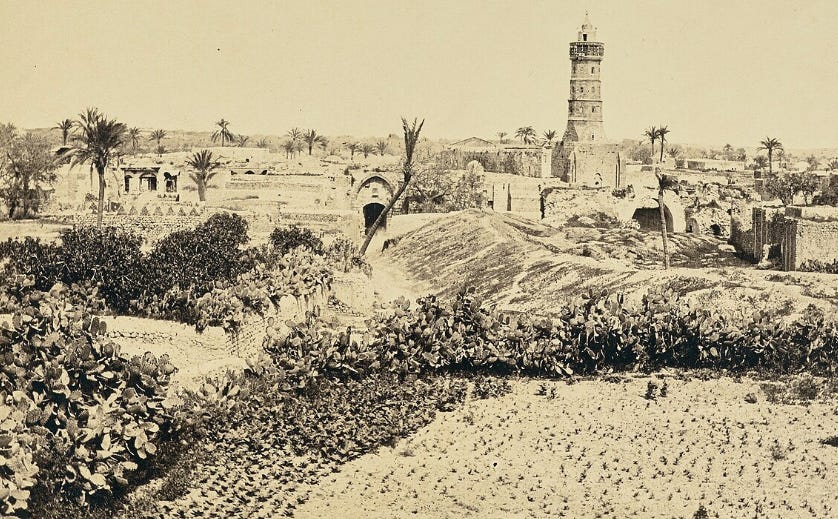
ISRAEL. PALESTINE. No refuge.
A strike in a civilian area sparks global anger.
A strike targeting a Hamas leader killed dozens of civilians in a Gaza refugee camp on Tuesday. Benjamin Netanyahu dismissed calls for a humanitarian pause. Secretary of State Antony Blinken said he would visit Israel on Friday.
INTELLIGENCE. The IDF said it was aiming for a senior Hamas commander in the strike on the Jabalia camp. Unlike the rocket that hit the Al-Ahli Arab Hospital on 17 October, the IDF claimed responsibility, stating it was necessary to eliminate Hamas fighters, despite a civilian presence. The strike has sparked global protests. Bolivia has cut diplomatic ties. The UN now estimates over 1.4 million people in Gaza, out of 2.3 million in total, are now homeless.
FOR BUSINESS. Regional stability has already been upended but could further deteriorate as previously reluctant supporters of Gaza feel compelled to act. Iranian-backed Houthis confirmed they launched ballistic missiles from Yemen, which Israel intercepted. In the north, there have been further cross-border skirmishes with Hezbollah. Rockets have been fired from Syria. The US is sending 300 additional troops, but the deterrence may be insufficient.
Written by former diplomats and industry specialists, Geopolitical Dispatch gives you the global intelligence for business and investing you won’t find anywhere else.
EUROPE. RUSSIA. Dime a dozen.
A further round of sanctions is discussed.
Bloomberg on Wednesday said the EU was discussing a possible 12th round of trade sanctions against Russia. Moscow on Sunday warned it would seize EU assets if Brussels used frozen Russian funds to support Ukraine.
INTELLIGENCE. The 11th round of sanctions was adopted by the EU in June and also targeted circumvention. This new round would reportedly hit up to €5 billion in trade, including export restrictions on diverse products such as chemicals, software and processed metals, but Western technology will likely continue to find its way to the Russian military as long as willing middlemen exist in third countries such as Turkey, Kazakhstan, India and China.
FOR BUSINESS. Russian oil also continues to make its way onto the world market, despite the West’s $60-per-barrel price cap. While sanctions have targeted transport companies, a ‘shadow-fleet’ has been able to transport oil undetected and disguise its origins. This again highlights the difficulties in implementing effective sanctions, given the lack of universal cooperation, and the vast (and lucrative) commercial networks dedicated to circumventing them.
With the brevity of a media digest, but the depth of an intelligence assessment, Daily Assessment goes beyond the news to outline the implications.
MONTENEGRO. A new mont to climb.
An incoming government promises hope and rapprochement.
Montenegro’s parliament appointed a new government on Tuesday, led by Milojko Spajić. His party, the Europe Now Movement, has formed a coalition with a pro-European party, a pro-Serbian party, and parties of Albanian minorities..
INTELLIGENCE. Spajić is likely to push hard for Montenegro’s bid to join the European Union. His party also signalled Montenegro wants to be taken more seriously at a multilateral level, including at the UN and within NATO. The push for EU membership has Brussels’ backing. EU Commission President Ursula von der Leyen urged Montenegro to ‘bring it over the finish line’, but a number of domestic reforms remain to be implemented before that can happen.
FOR BUSINESS. Montenegro remains one of Europe’s poorest countries, with a GDP per capita of around $10,000, roughly half of nearby Greece. Its economy, heavily reliant on tourism, took a beating during Covid-19. Inflation has bitten hard and foreign investment remains relatively low. Montenegro is still off the map for many European companies, deterred by its small market, poor business environment, lack of skilled labour and language barriers.
JAPAN. UNITED STATES. Hitting the tar heels.
Toyota puts more money into EV capacity.
Toyota, the world’s highest-selling carmaker, announced on Tuesday an $8 billion investment in a battery plant in North Carolina. The investment would allow for eight additional production lines for electric vehicles and hybrid batteries.
INTELLIGENCE. This investment is one of the largest in US automaking capacities since Ford announced an $11.4 billion investment in EVs and batteries in 2021. The Biden Inflation Reduction Act, while likely having little impact on reducing inflation, has successfully offer substantial subsidies (worth $370 billion) to boost US supply chains for EV battery manufacturing and other green industries. Toyota is aiming for electrified options for all its models by 2025.
FOR BUSINESS. Despite the attention given to industrial bargaining in Detroit, it’s in the South where global EV production is being transformed. North Carolina reportedly offered $900 million in additional incentives. Alabama, Missouri and Kentucky continue to rank in the top 10 for US auto-manufacturing jobs. However, a slowdown in demand has paused some expansion plans, with Ford, GM and Tesla all pulling back on expansion plans recently.
Emailed each weekday at 5am Eastern (9am GMT), Daily Assessment gives you the strategic framing and situational awareness to stay ahead in a changing world.
GERMANY. AFRICA. Ghana get some.
Berlin talks up economic ties with Africa.
German Chancellor Olaf Scholz visited Ghana on Tuesday, as part of a trip also taking in Nigeria, Tanzania and Zambia to. German President Frank-Walter Steinmeier arrived for talks earlier this week in Tanzania and Zambia.
INTELLIGENCE. Berlin’s visit offensive comes ahead of a 20 November meeting between G20 and African countries. The most pressing concern for West Africa is security, as ECOWAS leads a mediation process with the junta in Niger and Gabon’s coup continues to destabilise. Germany wants to present the trip as about deepening economic ties but is also keen to balance influence from China and Russia, particularly as France fumbles its own political position.
FOR BUSINESS. German companies are increasingly looking south for new investment opportunities as Russian sanctions continue, Asian growth rates slow, and Chinese, Indian and Turkish firms steal a march. While Africa remains a difficult market, all have an eye on the size of the future pie. Nigeria, for example, is predicted to become the world’s third most populous nation by 2100, with Africa projected to account for up to 40% of global GDP.