

In addition to our daily risk monitoring brief, the team behind Geopolitical Dispatch also provides advice, risk audits, scenario planning, executive masterclasses and board briefings among other services. Click here to get in touch.
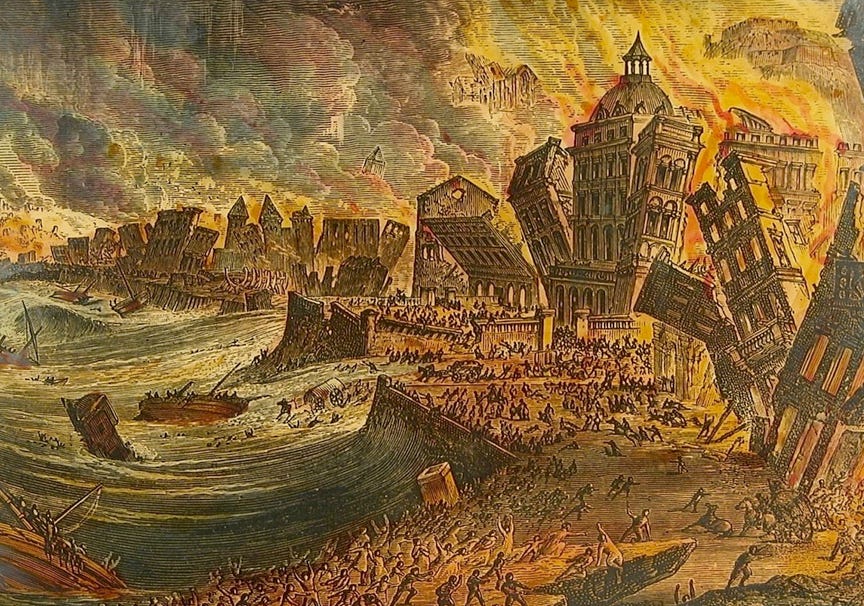
PORTUGAL. Lisbon earthquake
A traditionally liberal country swings sharply to the right.
The centre-right Democratic Alliance declared victory early Monday after snap elections were held in the wake of a corruption probe. The DA won two new seats, but the far-right Chega! (Enough!) party increased its tally from 12 to 48.
INTELLIGENCE. The incumbent Socialist Party, which has alternated with the DA’s Social Democrats since the 1974 Carnation Revolution, was fighting an uphill battle, but the swing to Chega could upturn Portugal’s political culture. Chega not only campaigned against crime and corruption, but migration and nostalgia for dictator Antonio Salazar. With the Socialists saying they will form opposition, it seems almost inevitable the DA will need to govern with Chega.
FOR BUSINESS. A member of the EU Parliament’s Identity and Democracy faction, Chega’s win could boost the far-right’s chances across Europe in June. It could also bring momentum to the campaigns of other national ID member parties, including Belgium’s Vlaams Belang, which is leading Flemish opinion polls ahead of elections in June, and Geert Wilders’ PVV in the Netherlands, which came first in November, but is still trying to form a governing coalition.
Geopolitical Strategy is the advisory firm behind Geopolitical Dispatch. Our partners are former diplomats with vast experience in international affairs, risk management, and public affairs. We help businesses and investors to understand geopolitical developments and their impacts with clarity and concision.
IRELAND. Hot potato
Voters deprive the Taoiseach of a seemingly easy win.
Leo Varadkar, Ireland's prime minister or Taoiseach, conceded Saturday after voters defeated two proposed constitutional changes by 68% and 74%. Thirty-two previous amendments have been carried since the 1930s.
INTELLIGENCE. Held on International Women's Day, the referenda were to change language on families and a woman’s “duties in the home”, which appeared sexist even by the standards of 1937. Polling and cross-party support, not to mention previous liberalising referenda (including on abortion, blasphemy and same-sex marriage), made a double yes vote seem inevitable, but the defeat has shown again that popular opinion can’t be taken for granted.
FOR BUSINESS. The results contrast with France’s vote the same day to constitutionally protect abortion rights. Yet Ireland’s result is less a statement on gender than a sign of dissatisfaction with the political elite. High house prices and migration scandals have added to a view that Varadkar and his coalition are out of touch. This has boosted the appeal of the opposition Sinn Féin that, while supporting the proposed changes, is the most populist of the big parties.
UKRAINE. RUSSIA. White flag over the Vatican
The Pope calls on Kyiv to surrender.
Volodymyr Zelensky said Kyiv would never capitulate Sunday, after Pope Francis said it would need to show the "courage of the white flag". Turkey on Friday said it was ready to host peace talks between Ukraine and Russia.
INTELLIGENCE. The message upset Kyiv, yet Francis, the church’s first non-European pontiff, is more representative of views from the South than from the West (last year, he urged Russians to take pride in their imperial past). Either way, Western sceptics can now use the Pope’s intervention to justify their own positions. After meeting Donald Trump at Mar-a-Lago Friday, Hungary’s Viktor Orban praised the Republican’s plans to not give a “single penny” to Ukraine.
FOR BUSINESS. As Russian forces advance in the Donbas, Western leaders have vacillated between further aid or even troops, and peace talks or an armistice. Ultimately the argument will be won or lost in Congress, where pro-Kyiv Republicans are now floating a “loan” in lieu of military funding. Yet with a rolling series of shutdowns and recesses leading to the election, there’s unlikely to be time for serious debate, let alone appetite for serious assistance.
Emailed each weekday at 5am Eastern (9am GMT), Geopolitical Dispatch goes beyond the news to outline the implications. With the brevity of a media digest, but the depth of an intelligence assessment, Geopolitical Dispatch gives you the strategic framing and situational awareness to stay ahead in a changing world.
THE CAUCASUS. European, not Eurasian
Armenia turns away from Russia.
Armenia may seek EU membership, Yerevan's foreign minister said Friday, after the country suspended its ties to the Collective Security Treaty Organization. Azerbaijan demanded the return of four Armenian-occupied villages Saturday.
INTELLIGENCE. Though engaged in on-off peace talks with Azerbaijan, Armenia continues to rattle sabres, buoyed by increased attention from the West, notably France, which last month signed a military deal with the former Russian ally. Armenia has now asked Russian troops to leave Yerevan’s airport, but it will need to be more certain of Western support if it now wants to press its case against Azerbaijan, whose military is at least 50% larger, and allied to Turkey.
FOR BUSINESS. Western support for Armenia will annoy Russia but won’t alter the strategic or economic balance in the Caucasus, which favours Azerbaijan. And Baku, which hosts this year’s UN’s climate summit, is not just being courted by Ankara, but Moscow, which sees Azerbaijani territory as vital to its north-south route to Iran, and useful to shaping China’s east-west corridor to Europe. And while the West may like Armenia, it invests far more in Azerbaijan.
LIBYA. Wait of the union
Rival factions agree to unify, again.
Leaders from Libya's three main factions agreed Sunday to the “necessity” of a unified government and elections. Libya's Tripoli-based authorities said last week they wanted to join with the Benghazi-based army to protect the border.
INTELLIGENCE. Since the 2011 overthrow of Muammar Gaddafi, Libyans have endured a seemingly endless process of factional fighting and negotiations, which have made the warlords rich but the people – once wealthier than the average European – poor. This has opened Libya’s frontiers to people smuggling, complicating ties with the EU, as well as drugs and weapons, many of which are being routed to conflicts in Sudan and across the Sahel.
FOR BUSINESS.Unification would be a boon for Libya and European energy. Yet the broken status quo has delivered greatly for Libya’s rapacious elites and they will not let this go on account of UN or EU efforts. A unifying force may however be present in the form of Gaddafi’s sons, one on trial in Libya, the other jailed in Lebanon. And while few want a return to the tyranny of their father, nostalgia for stability – as seen in Egypt and Tunisia – can prove powerful.