

Welcome to our first daily dispatch for 2024. We hope you had a good break. We’ll publish our outlook for the year ahead on Saturday.
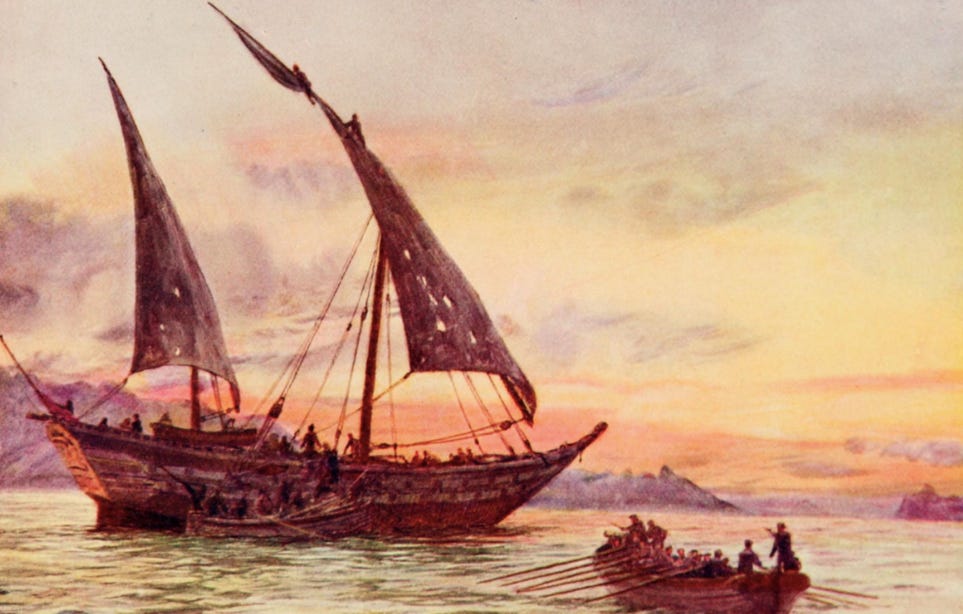
RED SEA. Red alert
Even if the Houthi strikes end, the troubles in the Gulf of Aden aren’t over.
Attacks continued in the Red Sea on Saturday, despite a US-led ultimatum to Yemen's Houthi militia. The UN’s Yemen envoy outlined a peace plan on Sunday. Somalia on Saturday nullified a deal Ethiopia signed with a breakaway region.
INTELLIGENCE. Despite diverting 95% of Red Sea shipping, the US appears unwilling to strike more forcefully at the Houthis. With a peace deal being brokered behind the scenes, the Houthis have been using their Red Sea campaign as negotiating leverage. As with Hamas, which struck out at Israel partly in response to impending Saudi normalisation, the Houthis have escalated partly due to last year's Saudi-Iran normalisation deal, brokered by China.
FOR BUSINESS. China, which relies on the Red Sea for its exports to Europe, has been a bigger victim of the crisis than the US. This is likely the Houthis’ intention, considering the China-backed Saudi-Iran deal required Tehran to end its support to Sana'a. With its economy wobbly, China will be the biggest beneficiary of any peace, but other threats have re-emerged, notably rising Somali piracy, exacerbated by a new dispute between Mogadishu and Addis Ababa.
Geopolitical Strategy is the advisory firm behind Geopolitical Dispatch. Our partners are former diplomats with vast experience in international affairs, risk management, and public affairs. We help businesses and investors to understand geopolitical developments and their impacts with clarity and concision.
ISRAEL. IRAN. Persian catch
Neither side wants escalation, but risks remain.
The IDF on Sunday claimed evidence Iran was training Hamas in long-range weapons. Antony Blinken on Sunday warned of the crisis “metastasising”. Iraq on Friday said it might expel US troops after the death of an Iran-backed militia leader.
INTELLIGENCE. Despite skirmishes with Hezbollah in Lebanon and Houthi claims that strikes on shipping are Gaza-related, there has been relatively little escalation between Israel and Iran (or its proxies) since the war with Hamas began. A partial drawdown of Israeli, troops and Sunday’s declaration of Hamas’s defeat in Gaza’s north, should meanwhile ease tensions. Yet renewed violence in Iraq, which tries to hedge between the US and Iran, remains a risk.
FOR BUSINESS. Israel’s economy will benefit from the return of reservists, but warnings of a protracted war in Gaza’s south could complicate the 2024 outlook, not to mention new investments, such as a $25 billion Intel plant 40 kilometres from Gaza. Iran’s recovery needs an end to sanctions, but internal politicking as Ayatollah Khamenei approaches his 85th year complicates policymaking, as does resurgent terrorism locally, and in Iraq and Afghanistan.
UKRAINE. RUSSIA. Stocks crash
Missile barrages deplete Kyiv’s defences and Washington’s hopes.
Attacks on Ukraine continued through Orthodox Christmas on Sunday, following weeks of escalating strikes. The New York Times on Saturday said the Pentagon feared it may soon no longer be able to send Kyiv new Patriot missiles.
INTELLIGENCE. As the US seeks to buy back Patriots from Japan, and as European NATO members scramble to replenish their own supplies, Ukraine is running out of air defences. Morale-boosting but costly strikes on Russian targets in Crimea and Belgorod have further sapped supplies of other Western armaments. Russia is meanwhile outproducing the West on artillery shells, as it maintains a usage rate an estimated 5-7 times higher than Ukraine’s.
FOR BUSINESS. Recent talk of a possible peace deal seems premature if the Kremlin continues to build its lead on the frontline and in materiel. Beyond a handful of symbolic victories, Kyiv’s war economy is on the ropes as Moscow’s thrives. And even if Congress agrees on a new military package this month, the US can print money but not weapons. Washington may need to raise the costs in other ways, such as the confiscation of Russian central bank reserves.
Emailed each weekday at 5am Eastern (9am GMT), Geopolitical Dispatch goes beyond the news to outline the implications. With the brevity of a media digest, but the depth of an intelligence assessment, Geopolitical Dispatch gives you the strategic framing and situational awareness to stay ahead in a changing world.
EUROPE. New year, old problem
Migration remains the EU’s biggest political challenge.
The European Council's president said Saturday he would resign to run in EU parliamentary elections in June for the liberal Belgian Reformist Movement. Spanish data showed 57,000 illegal migrants arrived last year, double 2022 levels.
INTELLIGENCE. European centrists are preparing to fight a far-right assault in the bloc’s forthcoming elections. Yet ironically, Charles Michel’s early resignation risks ceding the chairmanship of key meetings to Viktor Orban, when Hungary takes Europe's rotating presidency from July to December. High migration fuelled a populist turn in 2023, from Germany to the Netherlands. The EU agreed to new asylum rules in December, but cracks are already showing.
FOR BUSINESS. The far-right’s march looks set to continue in 2024. Even if Europe can implement its migration deal, push factors in Africa and the Middle East continue, and many Ukrainian migrants remain unwilling to return amid Kyiv’s tightening military draft. Schengen reforms for Romania, Bulgaria and Kosovo have added pressure. France’s passage of its own stricter migration laws last month has only damaged Macron’s coalition, not strengthened it.
BANGLADESH. Sheikh down
Growing polarisation risks a South Asian success story.
Prime Minister Sheikh Hasina, 76, was re-elected for a fifth term on Sunday in a poll marred by opposition boycotts and a 40% turnout. At least 7,000 refugees were left homeless early Sunday after a fire at a camp near the Myanmar border.
INTELLIGENCE. India ally Hasina's victory could be pyrrhic for both Dhaka and Delhi if it leads to further discord in a country with a population bigger than Russia in an area smaller than Tunisia. And any domestic distractions for the security services come at a time when the civil war in neighbouring Myanmar enters a dangerous new phase. Rebels last week seized a key town on the border with China. Military airstrikes near the Indian border killed 17 on Sunday.
FOR BUSINESS. Bangladesh’s recent development gains, many a result of Hasina’s leadership, have been immense. Yet these now risk being undone as civil society is cowed and rolling protests threaten to diminish the export sector’s competitiveness. This comes as Bangladesh prepares to graduate from Least Developed Country status, which will end some tariff relief, and as the IMF warns of rising capital flight risk. Growth is estimated to slow to 5.6% in 2024.
finally back, my days were empty
Finalmente voltou, meus dias eram vazios