


Hello,
We interrupt our publishing break to bring you this special edition of Geopolitical Dispatch. Usually, these reports are only available to paid subscribers and Geopolitical Strategy clients, but in light of recent developments, and as a taster of our analysis, we are providing today’s free of charge. Our regular daily briefs recommence on 19 January, though we may publish more special editions following major developments.
Here are the five things you need to know today:
VENEZUELA. After a big weekend, the regime may still come up trumps.
UKRAINE. RUSSIA. Claims of a Washington-Moscow bargain return.
IRAN. Elite divisions will complicate a smooth regime change.
YEMEN. SOMALIA. Regional aspirants scramble amid distraction.
CHINA. TAIWAN. Beijing lets others do the work.
Geopolitical Dispatch is a daily strategic briefing for business leaders and investors, based on the US Presidential Daily Brief. Covering five top global developments at 5am Eastern Time, Geopolitical Dispatch gives you visibility of events in context.
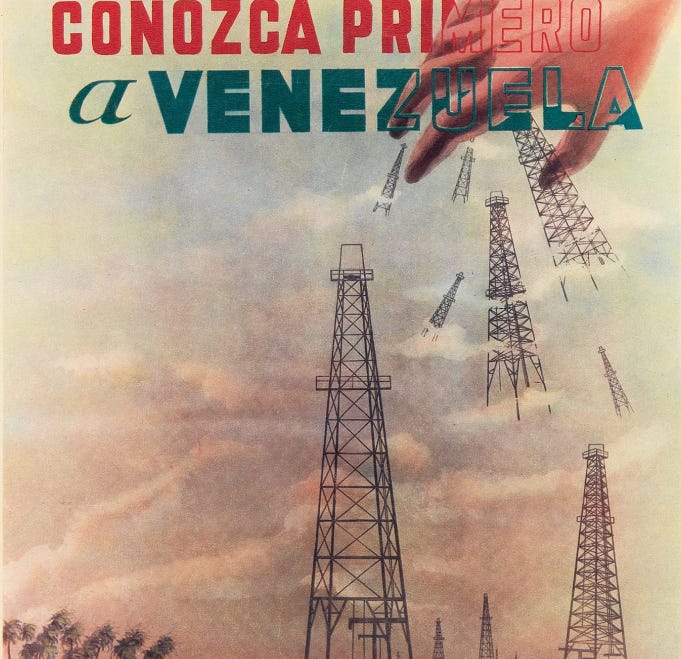
VENEZUELA. Roll of the Delcy
After a big weekend, the regime may still come up trumps.
Donald Trump said interim leader Delcy Rodriguez faced a threat “bigger than Maduro” unless she let the US “run” the country. Rodriguez invited Trump to join a “cooperation agenda” after initially slamming her predecessor’s abduction.
INTELLIGENCE. Rodriguez’s softened tone, Trump’s initial overtures, and the relative ease of Nicolas Maduro’s rendition (plus his seemingly buoyant mood in a Brooklyn penitentiary) suggest an inside job. But whether he, she or others were complicit, the regime’s ongoing role suggests a reluctance in Washington to take further action. Indeed, Maduro’s exit seems more an offramp for Trump, who had otherwise deployed the military without a clear strategy.
FOR BUSINESS. Trump says this is about oil, which seems brazenly sincere. Yet at current prices, repairing Venezuela’s infrastructure in a legal grey zone may not be worth the risk. It’s certainly not about democracy, migrants, petrodollars, or drugs, though it may be about distraction – whether in terms of Trump’s own incoherence, his policy failings elsewhere, or his need to get the Epstein files, for which a key deadline passed Saturday, off the front page.
New subscribers are eligible for a 50% introductory rate for the first year. You can decide over time whether receiving all five daily briefs, five days a week, earns a permanent place in your routine.
UKRAINE. RUSSIA. Very strange swaps
Claims of a Washington-Moscow bargain return.
A 2019 testimony by former Trump adviser Fiona Hill around a “very strange swap arrangement between Venezuela and Ukraine” lit up Russian social media. Pragmatic spy chief Kyrylo Budanov was made Volodymyr Zelensky’s chief of staff.
INTELLIGENCE. Hill’s claim, during Trump’s first impeachment, may have simply highlighted Russian disinformation, as the online rumour mill is now doing again, but the theatres do have links. After the reengagement of US diplomats, Belarus was positioned as a potential new home for Maduro. Rodriguez was reportedly in Russia at the time of Saturday’s rendition (since denied). Russian radars were allegedly switched off as US commandos arrived in Caracas.
FOR BUSINESS. It may ultimately be unfalsifiable whether Moscow was involved with events in Caracas, which it has officially condemned, but Russia starts 2026 in a stronger position with both the US and Ukraine. Trump continues to gently admonish Putin (lies about a drone attack; “killing too many people”), but his sympathies seem largely with the Kremlin. And in his sincerest flattery yet, he even called the Venezuela strike an “extraordinary military operation”.
IRAN. Khamenei get it
Elite divisions will complicate a smooth regime change.
Washington said Tehran would “get hit very hard” if it continued killing protesters. Benjamin Netanyahu called on Iranians to “take their fate into their own hands”. The Times reported plans for Supreme Leader Ali Khamenei to flee to Moscow.
INTELLIGENCE. As in Venezuela, many in Iran’s elite might be happy for Khamenei to go, if it meant less external pressure. But Israel and the US will see Iran as an adversary for as long as its nuclear program remains possible and its enmity remains good politics. Further, if Khamenei left, there’s no clear successor, risking a civil war between the Revolutionary Guards, the conventional army, the mullahs, and what’s left of the non-regime economic establishment.
FOR BUSINESS. Shorn of its deterrence in Syria, Lebanon and Gaza, Iran is less a conventional threat. Dealing with drought and hyperinflation, its focus is at home. Forcing regime change, as Israel and the US are reportedly considering (even ex-Secretary of State Mike Pompeo has joked about Mossad being among the protesters) may be easy, but with Khamenei 86 would probably be unnecessary and, as in the 1953 coup, risk unintended consequences.
YEMEN. SOMALIA. Aden and bettin’
Regional aspirants scramble amid distraction.
Saudi-backed forces Sunday retook Yemeni territory vacated by the Southern Transitional Council, supported by the UAE. The leaders of Turkey and Saudi Arabia spoke after leading the condemnation of Israel’s recognition of Somaliland.
INTELLIGENCE. On both sides of the Gulf of Aden, a key maritime chokepoint, the vacuums of Somalia and Yemen are being filled by a variety of actors. And as ostensibly allied partners, like the UAE and Saudi Arabia, squabble over which factions to back, others like the Iran-backed Houthis are experiencing a reprieve (and allegedly space to cooperate with Somalia’s Al Qaeda affiliate, Al Shabaab). The distraction is compounded by US domestic politics.
FOR BUSINESS. A beat-up over alleged Somali-led fraud in Minnesota has complicated crucial US counterterror cooperation with Mogadishu and has benefited Al Shabaab talking points. The chaos has emboldened Somaliland separatism (long de facto and now, at least in Israel, de jure) and could encourage other regions to secede. In Yemen, war between the STC and official government will only help the Houthis, fresh from 2025’s repelling of the US Navy.
CHINA. TAIWAN. Hide, bide, divide, decide
Beijing lets others do the work.
Xi Jinping said Taiwan reunification was “unstoppable” after large-scale drills wrapped up before the new year. Chinese social media hailed Trump’s move on Venezuela as a template for Taiwan as Beijing criticised “world judge” behaviour.
INTELLIGENCE. Officially, Beijing is aghast at events in Caracas but privately is reportedly pleased at the precedent set. Likewise, Trump’s threats against Greenland, ostensibly because of “Chinese ships all over the place”, underline China’s claims of a US in decline. Yet this doesn’t mean China will move on Taiwan. The PLA purges continue. An economic rebalancing is underway. Inroads with Taiwan’s opposition suggest carrots may be as effective as sticks.
FOR BUSINESS. China would prefer to take Taiwan as it took Hong Kong: gradually and with little friction. Another island region, Hainan, may also form a template, albeit this time of a province turned into a special economic zone, perhaps to show fence-sitting Taiwanese how “two systems” can work at scale. US misadventure, far from shaming Beijing due to its envoy meeting Maduro hours before, will only show Taipei how the rules-based order has collapsed.
Thank you for subscribing to Geopolitical Dispatch. Feel free to contact me with any questions or comments.
Best,
Michael Feller, Chief Strategist
michael@geopolitical-strategy.com
This briefing is for general information only. It is not legal, financial or investment advice. Information and opinions are current at the date of publication and are subject to change without notice. There is no representation or warranty as to its accuracy, completeness or reliability, and no liability for any loss arising from use or reliance on this information is accepted.