

In addition to our daily risk monitoring brief, the team behind Geopolitical Dispatch also provides advice, risk audits, scenario planning , executive masterclasses and board briefings among other services. Click here to get in touch.
SWEDEN. TURKEY. Sweedener
Stockholm inches closer to NATO membership.
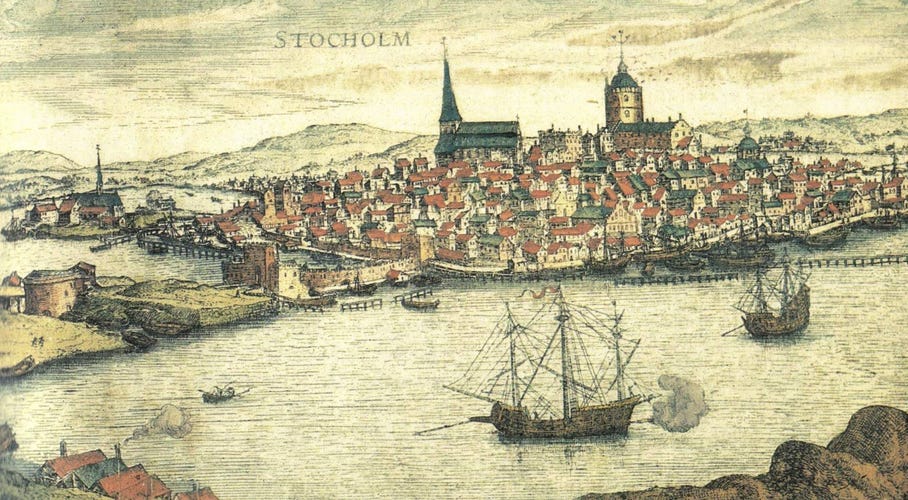
Sweden moved closer to NATO membership on Tuesday, with Turkey’s parliament ratifying Stockholm’s NATO bid. While Turkey endorsed Finland’s membership in April 2023, it had been holding out on Sweden over a range of issues.
INTELLIGENCE. Turkey is a key vote in Sweden’s NATO accession plan, with Sweden’s bid already approved by 28 of 30 NATO members. Turkey had refused to budge, citing Sweden’s lack of action in tackling Kurdish militants operating in Sweden. To respond, Sweden recently passed legislation to toughen anti-terrorism laws. Hungary is the sole NATO member yet to ratify Sweden’s bid. Viktor Orbán invited Sweden’s prime minister for talks on the matter.
FOR BUSINESS. While Ankara’s grievances may have been validly held, there was an element of opportunism at play (and likewise for Hungary). Erdogan had tied Turkey’s approval to the US selling it new F-16 jets. There are now strong indications that the sale will be approved by Congress, which the White House also backs. Turkey claims that unofficial arms embargoes by NATO allies have restricted its military purchases and harmed its national security.
Geopolitical Strategy is the advisory firm behind Geopolitical Dispatch. Our partners are former diplomats with vast experience in international affairs, risk management, and public affairs. We help businesses and investors to understand geopolitical developments and their impacts with clarity and concision.
KOREAN PENINSULA. Cruise out of control
Animosity flares in a highly dangerous zone.
North Korea fired multiple cruise missiles off its west coast towards the sea, according to South Korean reports on Wednesday. Kim Jong Un ordered the destruction of a monument to reconciliation with the South in Pyongyang.
INTELLIGENCE. The DPRK continues to ramp up its weapons testing. This latest launch comes after Pyongyang tested, earlier this month, an intermediate-range missile, which is designed to target US military installations in the region, including the Pacific base of Guam (around 3,400km from Pyongyang). The destruction of the monument comes after last week’s pronouncement by Kim Jong Un that reunification with the South was no longer possible.
FOR BUSINESS. Global attention is focused on conflicts in Israel/Gaza and Russia/Ukraine. But the Korean Peninsula is still possibly the most dangerous zone on the planet given the confluence of nuclear-armed actors, including China, Russia, the US and now North Korea, the combined weight of actors’ economic influence, and the huge populations represented. Kim is using the time to manoeuvre into a better military posture while attention is focused elsewhere.
SANCTIONS. Sans action
More than words, but less than deeds.
The US sanctioned an Iraqi airline this week over claims it transported arms to Iran-backed militias. The EU sanctioned six companies for involvement in the Sudan war. Australia, the UK, and the US sanctioned a Russian for cyber-breaches.
INTELLIGENCE. The US sanctions target Fly Baghdad, a low-cost carrier that services regional countries. It is accused of transporting arms, fighters and money to Damascus, which were then used by the Islamic Revolutionary Guard Corps–Quds Force of Iran and its militias operating within Syria. Meanwhile, European sanctions target companies linked to the Sudanese army and other companies that assisted in procuring military equipment.
FOR BUSINESS. Sanctions are increasingly being used by countries to target businesses and individuals involved in financing and assisting military actions. For states, they provide a convenient way to point to action beyond diplomatic condemnation. Their effect is still contentious, however, with research showing they rarely alter behaviour in the desired way. They can also backfire, turning people against the sanctioner rather than the host government.
Emailed each weekday at 5am Eastern (9am GMT), Geopolitical Dispatch goes beyond the news to outline the implications. With the brevity of a media digest, but the depth of an intelligence assessment, Geopolitical Dispatch gives you the strategic framing and situational awareness to stay ahead in a changing world.
EXISTENTIAL RISK. Midnight sky
Scientists leave the Doomsday Clock where it is, for the moment.
In its annual appraisal of threats to humanity, the Bulletin of Atomic Scientists left the Doomsday Clock unchanged on Tuesday. The clock remains at 90 seconds to midnight. The Bulletin listed AI and climate among its list of key threats.
INTELLIGENCE. The Doomsday Clock shows, symbolically, how close the world is to annihilation. It was started in 1947 by scientists in the wake of the unprecedented use of nuclear weapons. The Clock hands have moved 25 times since then, the furthest being 17 minutes to midnight (at the end of the Cold War), the closest being 90 seconds. Since 2007, the Clock has considered threats beyond nuclear perils, including bioweapons and other technologies.
FOR BUSINESS. The Clock is, of course, just a visual tool to inject a sense of urgency about threats to humanity. But as a tool, it’s been quite successful, generating attention and commentary in a way thousands of written articles have not. Nuclear arsenals continue to remain high. The latest estimates on warhead numbers are: Russia 5,889; the US 5,244; and China 410. Pakistan, India, Israel and North Korea have also built up unreported arsenals in recent years.
UGANDA. UNITED ARAB EMIRATES. U get a go
More Gulf investment flows to East Africa.
Uganda said the UAE’s Alpha MBM Investments has been selected as its preferred bidder for a planned $4 billion oil refinery. The UAE attended Uganda’s Non-Aligned Movement and G77 summits in recent days, despite being a US ally.
INTELLIGENCE. The decision is a first step in Uganda developing an indigenous supply of refined petroleum, rather than relying on imports. Uganda’s reserves are mostly located in the Albertine rift basin, near the politically unstable DRC, but its reserves are estimated to be in Africa’s top ten. The refinery would have the capacity to process 60,000 barrels of crude per day. Alpha MBM is a private investment office led by a member of the Dubai royal family.
FOR BUSINESS. The announcement is just the first step in a long process to have the refinery up and operational. A previous consortium of Russian and South Korean companies failed back in 2015. But the UAE is an increasingly sophisticated investor in Africa, the fourth largest after China, Europe and the US. Many UAE investments have accompanied diplomatic and security deals, including (controversially) in Ethiopia, Sudan, Somaliland and Zimbabwe.