



Hello from Melbourne,
Even to a modern-day Nostradamus, 2025 was a year full of surprises.
The war in Ukraine ground on, despite repeated claims that resolution was imminent. The war in Gaza stopped, despite assumptions it would continue. The United States imposed tariffs on friends and rivals alike, as if they were going out of fashion. Threats were made that later proved empty while others — presumed to be bluff, bluster, or bravado — were carried out. Language that had come to define an era — “the rules-based international order” — was consigned to the dustbin of history and replaced by older notions of “spheres of influence” and “might makes right”. “International law” would have had a bad year on Google Ngram.
From our vantage point at Geopolitical Dispatch — where our unofficial analytical line is to describe the world as a wry Martian might do so while looking upon Earth — international politics often took on a vaudevillian, almost burlesque quality. It was frequently unclear what should be taken seriously, what should be taken literally, and what should be ignored altogether.
And then 2026 happened. While many thought an American intervention in Venezuela was possible, few envisaged how it would be carried out. Seemingly emboldened by this military success, President Trump then took on Iran — ‘decapitating’ its leadership only to find, like the mythological Hydra, two heads regrow for every one chopped off.
Anyone who had war-gamed an enormous aerial attack on Iran would have predicted the closure of the Strait of Hormuz — except, it seems, the US Department of War. Maybe its military planners had forgotten what one of its former Secretaries, Robert Gates, once observed: “When it comes to predicting the nature and location of our next military engagements, since Vietnam, our record has been perfect. We have never once gotten it right.”
The conceit of prediction
We live in an era obsessed with prediction. The zeitgeist favours Big Data, when often in international affairs it is small data — the thoughts and hopes and fears of just a few world leaders — that matters at least as much in shaping history. With AI bursting onto our screens and getting more powerful by the day, it is easy to be lulled into the conceit that with just a little bit more computing power we will be able to, finally, see into the future.
As we search for the most apt historical analogies for our current predicament, we (and our chatbot companions) most naturally turn to the eras we (and the internet) know best: some strange mix of the nineteenth-century world of rivalrous great powers scrambling for resources, the interwar period of recession, hostility, and protectionism, and the early Cold War days of two superpowers racing for economic, technological, and political supremacy.
Yet none of those analogies feels quite right. The nineteenth-century Concert of Europe was fundamentally a system of Western domination — when today the collective power of the West and the internal cohesion of its nations are both on the wane. While there are echoes of protectionism and totalitarianism in the way the leading powers act today, this could hardly be considered an age of competing ideas. And while much of the world may be influenced by today’s superpower rivalries, it is not defined by them.
Most fundamentally, all of those eras had a sense — even if it was illusory — of predictability. By the eve of the First World War, the success of the European alliance system in managing conflicts over the prior hundred years gave rise to a sense that war could not break out — and once it did, that it would be the “war to end all wars”. The optimists of the interwar period who established the League of Nations did so in a genuinely held, if hopeful, belief that institutions could prevent war from breaking out once again. During the Cold War, the peculiar condition of mutual assured destruction somehow created stability.
Now, however, the ground feels a lot more shaky — and the world a lot less predictable.
The staircase becoming steeper
The Georgian novelist and historian Boris Akunin recently gave an interview that captured this mood better than almost anything I have read. In his words, the world is “falling apart”:
It is like standing on a staircase that is not only descending, but becoming steeper with every step. You feel not simply movement downward, but acceleration. And this feeling — of something slipping, something losing control — creates the sense of growing madness. Before, there was the feeling that the end of the world was happening somewhere — on one part of the globe, where one happened to be unlucky enough to live. Now this process is global. The staircase leading downward is becoming steeper, and this feeling of growing madness is not only mine; it is very widespread. The world in which we all live has simply flown apart into pieces. It has crumbled.
And then this image, which I find almost impossible to improve upon:
I imagine the world as a huge bus, in which sits a very motley, quarrelsome public, and at the wheel sits an American. We are all used to that. It was not necessarily a good arrangement, but it was an arrangement. There was a driver, there was a sense of direction. And now something strange is happening to the driver. He jerks the wheel this way and that. He shouts some strange songs. There is a complete feeling that all of this is about to fly into a ditch. This is not about one man or one country; it is about the loss of predictability at the centre of the system.
Akunin is not a pessimist by disposition. He is merely diagnosing the present state of affairs. And his diagnosis cuts to something important: the unpredictability is not a temporary condition to be waited out. Rather, it is the essential condition of the world in which we live.
Positioning, not predicting
This matters because the natural human response to unpredictability is to reach for more prediction. More data, better models, smarter algorithms. It is the instinct of our age. And it is, on the available evidence, largely futile.
The question worth sitting with instead is not “what will happen next” but “how do you position yourself for a range of outcomes”. These sound similar, but they are not. The first asks you to bet on a single future. The second asks you to build resilience across several. The first rewards confidence, while the second rewards humility. The first focuses on outcomes, the second on options.
Regular readers of Geopolitical Dispatch will know that we rarely make predictions — we know that is unwise. What we try to do instead is provide an honest assessment of how world politics are developing: to orient readers in a world of constant change, to connect seemingly disparate events by maintaining a truly global view, and to filter relentlessly for what is actually shifting in a significant way, always drawing it back to what it means for businesses and the economy.
The conviction behind this is that the big picture matters. Reading the world, not just one country, not just one newspaper, not just one editorial line, and covering regions the mainstream press ignores. Our inspiration, if you’ll forgive the immodesty, was the President’s Daily Brief — though we hope you pay rather more attention to the intelligence we provide than the current customer of that particular product appears to.
This same philosophy also informs our advisory work, where we are engaged principally to help companies assess how geopolitics practically affects their firm — identifying specific threats, quantifying risks, and arriving at solutions built around positioning for an uncertain future rather than predicting one. It is less about forecasting and more about orientation. In a world where the bus is jerking toward a ditch, knowing roughly where you are matters more than knowing exactly where you’re going.
The World Humility Index of Predictions
Which brings me to the other reason for today’s column. Geopolitical Dispatch has entered a collaboration with RANE (Risk Assistance Network + Exchange), one of the world’s leading risk intelligence platforms. RANE’s founder, David Lawrence — a man enamoured with this publication’s analysis, puns and, in particular, its repeated Seinfeld references — suggested we collaborate on something called the RANE World Humility Index of Predictions (WHIP Index). The meeting of minds was immediate.
The WHIP Index is, so far as we know, the only instance of a corporate group publishing not its forecasts for the year ahead, nor a compendium of predictions it got right, but a catalogue of events that occurred last year — none of which anyone predicted — and which historians may well one day judge to have changed the course of history. It documents 194 such moments from 2025 alone, including thirty geopolitical events that nobody called, each of which reshaped something important.
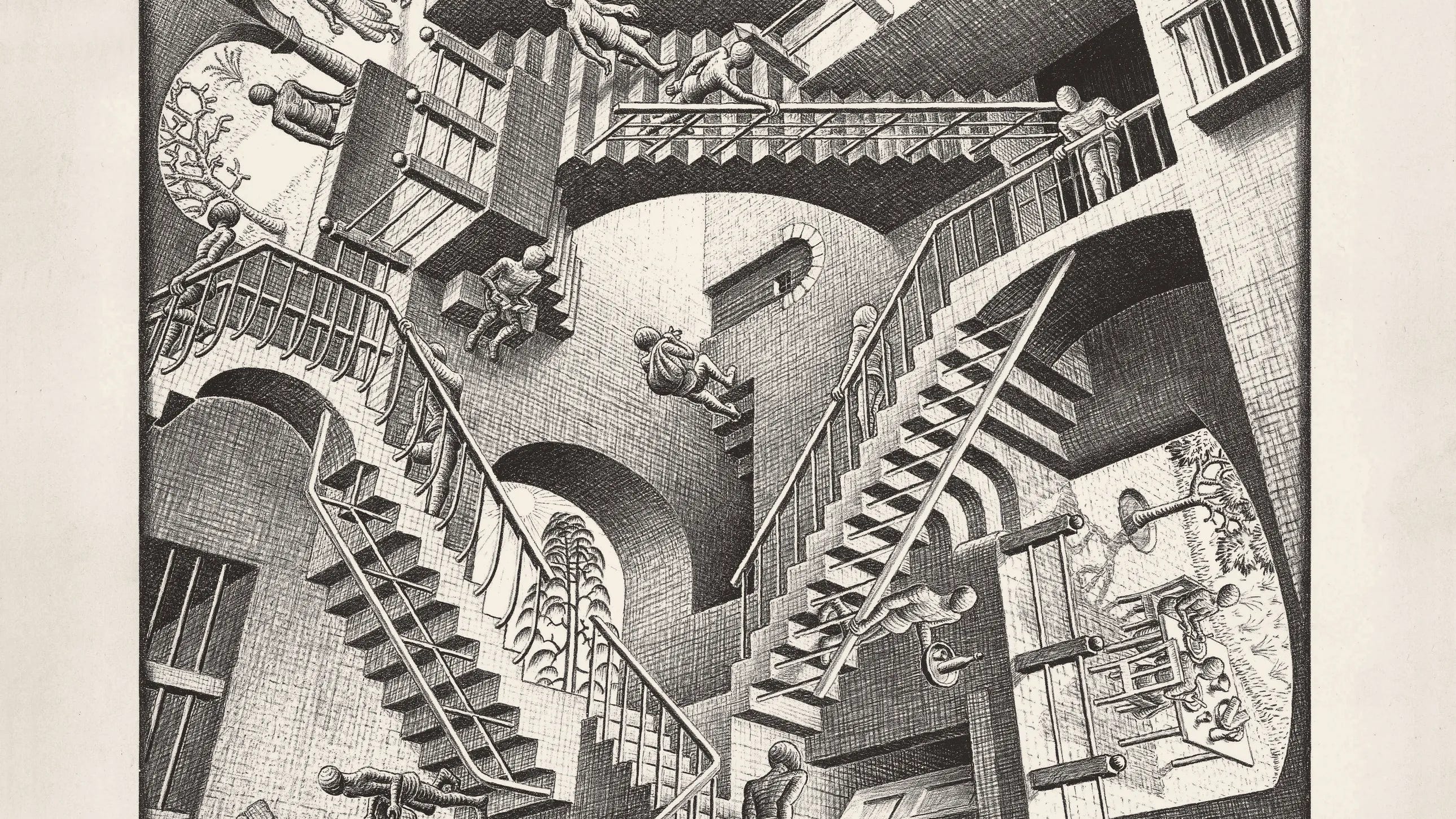
I encourage you to peruse the interactive website, though it should come with a trigger warning: it is, after all, a catalogue of strange and often disturbing events in a year of immense change, in which many old shibboleths were broken, long-standing assumptions were questioned, and previously unthinkable scenarios became daily headlines. A world that feels like Akunin’s staircase, or perhaps one of Escher’s.
I recommend reading it not as a catalogue of failures but as a training exercise. Each entry is a reminder that the future arrives not gradually, but in lurches. That history is shaped as much by “black swans” as secular trends. That, fundamentally, as Yogi Berra once put it, “it’s tough to make predictions, especially about the future.”
What the WHIP Index implicitly recommends — and what Geopolitical Dispatch explicitly tries to provide each day — is not better forecasting. It is better positioning, an openness to possibilities, a wider aperture, and a disposition to think in scenarios. It’s about attempting to see the forest for the trees, to see connections between seemingly disconnected events, and to constantly filter what’s important from what’s merely noise. Just as a wry Martian observing Earth would do.
In this era obsessed with prediction, data, and the promise of technology, we grasp for foresight. But as Akunin makes clear, as the WHIP Index attests, and as any wry Martian would tell you, no one really knows where the bus is going. Not even the driver.
Best to stay humble, stay oriented — and hang on.
Happy April Fools’ Day,
Damien
Geopolitical Dispatch is written by former diplomats and modelled on the US President’s Daily Brief. Five analyses, every weekday, delivered at 5am Eastern. Each one follows the same discipline: what has changed, what it reveals geopolitically, and what it means for business and markets. The whole thing takes less than ten minutes to read. Free subscribers receive one of the five. Paid subscribers receive all five, plus Week Signals — our Saturday strategic essay — and a monthly private roundtable with our team and expert guests.