


Hello,
Welcome to this week’s edition of Irregular, where we preview the G20 Summit, which will take place next weekend (from 9 to 10 September) in New Delhi.
The G20 – or Group of Twenty – is a club of the world’s largest economies that meets to coordinate global economic policy.
Between them, G20 countries account for 85% of the world’s economic output, 75% of global trade, two-thirds of the global population – and much of the world’s major geopolitical divisions and awkward photo opps (second only to APEC).
Founded in 1999 as a meeting of finance ministers, G20 leaders had their first meeting in 2008.
Off to a good start, in their second meeting in 2009, world leaders agreed to a range of measures that arguably averted the worst of the global financial crisis. But that moment of cohesion forged in extremis represented the peak of G20 solidarity.
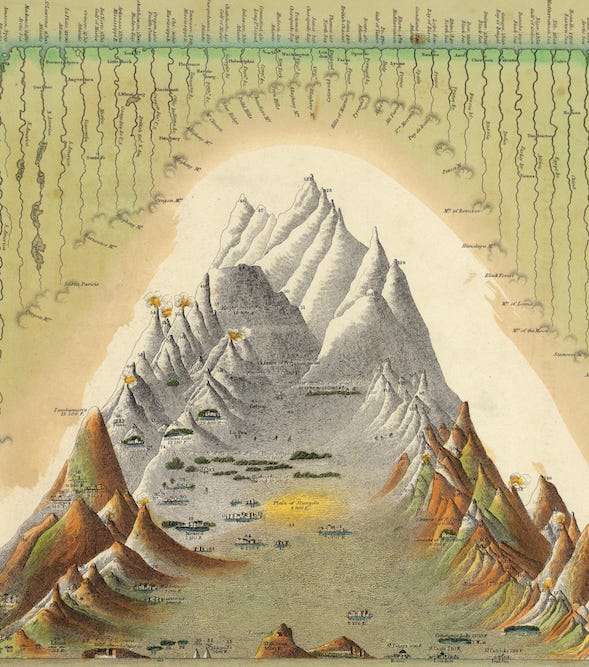
Once a mountain, leaders have made the G20 into a molehill.
A mountain high enough.
The G20’s steady decrease in effectiveness has multiple roots.
Chief among these is growing geopolitical tension between the major players, especially thanks to China’s rise, America’s polarisation and Russia’s belligerence. With power more evenly spread among members, achieving consensus has been made more difficult.
More mundane, the agenda’s steady expansion beyond economic and financial policy to issues as diverse as health, culture, climate change and the future of work has opened as many areas for disagreement as agreement. It has also made meetings more programmed, more bureaucratic and more ritualistic.
Last year’s meeting in Bali, Indonesia, was in our view the nadir of G20 summits. Russia’s invasion of Ukraine dominated the agenda. Officials could barely agree on technical policy areas.
While Indonesia admirably managed to steer leaders to a joint statement, the 17-page declaration, as in recent years, contained mostly anodyne phrases, reiterations of past agreements, and lofty rhetoric about challenges faced. The G20 has become an effective forum for admiring problems, rather than solving them.
This year’s summit will likely be little different.
Written by former diplomats and industry specialists, Geopolitical Dispatch gives you the global intelligence for business and investing you won’t find anywhere else.
Major tensions between India and China (over a contested border), Russia and the West (over Ukraine), and the US and China (over everything), will make agreement on anything significant almost impossible. Ministerial declarations made over the past few months have failed to produce breakthrough policies.
And each has mentioned polarised discussion about Russia’s war in Ukraine, which continues to impede progress.
But, as with all diplomatic gatherings, the real action is in the corridors.
The G20 still provides a good opportunity for world leaders to have bilateral meetings otherwise hard to schedule, politically or logistically. In 2019, Trump met Putin for the first time amid allegations of Russian interference in US elections. In 2018, Trump and Xi agreed to delay threatened tariff hikes.
And last year, Biden and Xi agreed to impose “guardrails” on the US-China relationship, paving the way for a spate of recent senior visits that have eased tensions.
Indian summer.
India, as the 2023 host, wants to use the G20 to promote itself as the “voice of the Global South”.
China is bristling, with some analysts predicting Xi won’t attend, as a rebuke to India’s ambitions. But, as we wrote this week, Xi likely has other reasons.
If anything, Xi’s appointment of Premier Li Qiang as attendee signifies low Chinese expectations for major outcomes and a preference for using other forums, like APEC and the expanding BRICS, to assert its global leadership. Putin will also not attend so long as he will be ostracised by most of his peers.
Even at last year’s meeting of the Shanghai Cooperation Organization – a collection, for the most part, of Russia-friendly autocracies – you could feel the cold shoulders.
But India’s hosting of the G20 is as much about Modi’s domestic political ambitions as his international ones.
Hosting world leaders in Delhi will boost his prestige, even if governments fail to agree on anything beyond banalities – few Indian voters will read the communiqué. India has hosted meetings all over the country, which has been characterised by G20 posters bearing Modi’s munificent bearded image all year.
Even India’s choice of theme – “Vasudhaiva Kutumbakam” or “One Earth, One Family, One Future”, derived from an ancient Sanskrit text – has served a double entendre of projecting global unity and tapping into Modi’s politics of Hindu nationalism.
With the brevity of a media digest, but the depth of an intelligence assessment, Daily Assessment goes beyond the news to outline the implications.
Climbing the walls.
The most important formal outcome will be expanding the G20’s membership to include the African Union. Leaders will also likely reiterate the need for urgent climate action and reforming international organisations.
These statements won’t be binding: G20 statements never are. But they could help countries get closer to reaching meaningful agreements – on topics like climate finance, sovereign debt restructuring, and WTO reform – in more specialised forums, like COP28 (Dubai, November), the IMF / World Bank Annual Meeting (Marrakesh, October), and the 13th WTO Ministerial Meeting (Abu Dhabi, January 2024).
Businesses hoping for a reduction in geopolitical tensions, a reversal of protectionist policies, or a new era of international cooperation will be disappointed. But Brazil’s presidency next year may offer more hope.
Lula wants to use the G20 to break deadlocks in reforming international financial institutions, greening the economy, and addressing food security challenges and economic inequality. Whatever the agenda, the structural gridlock in the G20 will remain and Lula too will use the forum for domestic political gain: he refers to hosting it as a “Diplomatic World Cup”.
But at least Brazil knows how to play football.
If you are reading Geopolitical Dispatch for the first time, we would encourage you to check out our full website where you can see our Daily Assessments, which cover the six most important stories in international affairs from both a diplomatic and business perspective.
And, of course, if you are a regular reader or simply like our work, we would really appreciate it if you could share with any friends and colleagues who might also enjoy it.
Best wishes,
Damien Bruckard
Emailed each weekday at 5am Eastern (9am GMT), Daily Assessment gives you the strategic framing and situational awareness to stay ahead in a changing world.
