

In today’s dispatch:
UNITED STATES. Old tropes are used in the election’s final stages.
POLAND. Warsaw says it will focus on the future, not on Berlin.
ISRAEL. PALESTINE. Talks are back on, but the fighting doesn’t stop.
HONG KONG. HSBC hedges its bets on global payments.
NORTH KOREA. Signs of a deployment to Ukraine will worry China.
Geopolitical Dispatch is the daily client briefing of Geopolitical Strategy, a specialist advisory firm helping companies map, monitor and manage geopolitical risk.
UNITED STATES. The F word
Old tropes are used in the election’s final stages.
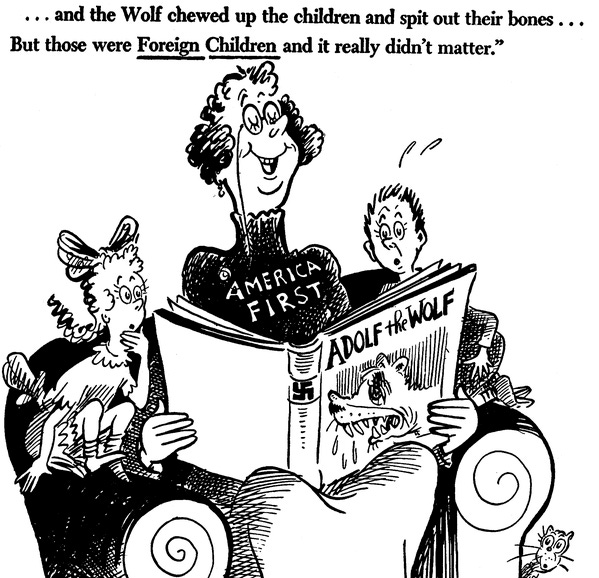
New Democrat ads, recording Donald Trump's former chief of staff labelling him a "fascist" emerged Thursday, after Kamala Harris and Joe Biden endorsed the description. With 25 million votes cast, signs continued Trump was ahead.
INTELLIGENCE. Calling someone a fascist is an old tradition (Trump has alluded to Biden’s “Gestapo” administration before). It’s also a technique that’s unlikely to work and may in fact backfire (the Harris campaign has been under fire for the alleged incitement of at least two assassination attempts). It also smacks of desperation as more polls and predictions lean towards Trump. All it can likely do is increase the chances of a violently contested outcome.
FOR BUSINESS. A YouGov survey this week found 27% of Americans are confident a civil war will happen after the election. This is highly unlikely – US institutions aren’t nearly as divided as voters and there’s no foreseeable catalyst – but extreme rhetoric on both sides casts a pall on US influence and reduces space for the inevitable compromises of any future government. It also makes a mockery of foreign interference accusations. Why spoil self-sabotage?
POLAND. The N word
Warsaw says it will focus on the future, not on Berlin.
EU enlargement would be a focus of Poland's EU presidency next year, Prime Minister Donald Tusk said Thursday. Warsaw would drop demands Berlin pay for Nazi war crimes, Foreign Minister Radoslaw Sikorski said Wednesday.
INTELLIGENCE. Sikorski’s suggestion that a memorial might suffice, and both countries should focus on Russia, will enrage many Poles, including in the opposition, who made reparations a central cause. Yet intergenerational debt is a fraught idea (Ukraine and Poland have also done bad things to each other), as similar movements in the US and the Commonwealth may soon discover. The idea of “Nazis” is also fraught, with Russia a particular abuser of the term.
FOR BUSINESS. The historical reparations debate, which has also stymied ties between South Korea and Japan, won’t disappear. But Poland’s decision will cheer Germany and the EU alike. It should also cheer firms and investors, considering the risk of legacy lawsuits virtually everywhere. Historic accounting is fuzzy. Precedent is untested. The risks of inheriting unrealised and potentially incalculable obligations could deter investing in anything not brand new.
ISRAEL. PALESTINE. Ceaseless
Talks are back on, but the fighting doesn’t stop.
Mossad's chief said he would visit Doha and Hamas met officials in Cairo ahead of a possible resumption of hostage talks. The US did not want a protracted war, Antony Blinken said. Iran was bracing for strikes, the New York Times said.
INTELLIGENCE. Ceasefire efforts have failed more times than Blinken has travelled to the region, and there’s little chance a deal will be reached before the US election. Benjamin Netanyahu’s policy of ignoring international criticism has been vindicated on the battlefield and in domestic polls – the only metrics that will matter to him – but eventually an agreement will be needed, particularly as rocket and drone defences decay and as US public opinion hardens.
FOR BUSINESS. The US has offered carrots – Senator Lindsey Graham raised again the prospect of Saudi-Israeli détente – but has so far shown few sticks. That may change after 5 November, especially if the risk of war with Iran escalates.Masoud Pezeshkian's visit to Russia and talk of naval drills with Saudi Arabia make this seem unlikely, but there's been plenty of improbabilities in the war so far. Fighting in Lebanon meanwhile shows few signs of easing.
HONG KONG. Pulling a swift one
HSBC hedges its bets on global payments.
HSBC said it had formally joined China's Cross-Border Interbank Payment System (CIPS) Thursday, a day after announcing a split into eastern and western divisions. Use of the US dollar in China had been "diluted", the bank said.
INTELLIGENCE. In no doubt unintended irony, the announcement was made at the first China forum of the Society for Worldwide Interbank Financial Telecommunication (SWIFT), which manages the world's primary payments system. Following this week’s BRICS summit in Russia, where plans to study an alternative to SWIFT were outlined, the announcement by Europe's largest bank to join CIPS is a win for the sceptics of Western financial leadership.
FOR BUSINESS. HSBC will stay in SWIFT, which will likely remain its main clearing and settlements system for some time, including in Hong Kong, but direct participation in CIPS, of which it has been a longtime shareholder and indirect participant, gives the platform a greater role in global trade. Standard Chartered, another British bank with Asian roots, is already a direct participant, as are the Chinese branches of JPMorgan, Deutsche Bank, BNP Paribas, ANZ and Citi.
NORTH KOREA. The east is red-faced
Signs of a deployment to Ukraine will worry China.
Ukraine said North Korean troops were in Russia's Kursk region Thursday, as Moscow ratified a strategic partnership with Pyongyang its deputy foreign minister described as an "alliance". The US said the troops would be "fair game".
INTELLIGENCE. South Korea claims 12,000 North Korean troops are in Russia and heading to Ukraine. If true, they’ll barely plug a week’s worth of Russian causalities, according to most estimates. But the deployment is less about tactics than optics – a sign Moscow has options (it’s hardly kept the news a secret) and is willing to flout norms. But that’s less a message to Washington, or even Tokyo and Seoul, but Beijing, which has warned against escalation.
FOR BUSINESS. The bonhomie between Xi Jinping and Vladimir Putin was on show in Kazan, but Beijing will not just be uncomfortable with the risk of secondary sanctions, should the war reach a new intensity, but Pyongyang’s increased insouciance under its renewed Moscow patronage. The DPRK was once treated by China as a useful attack dog, but now it’s off the leash. Not only has Putin diminished Xi’s standing in the hierarchy, he’s screwed the pooch.