

Listen (coming soon).
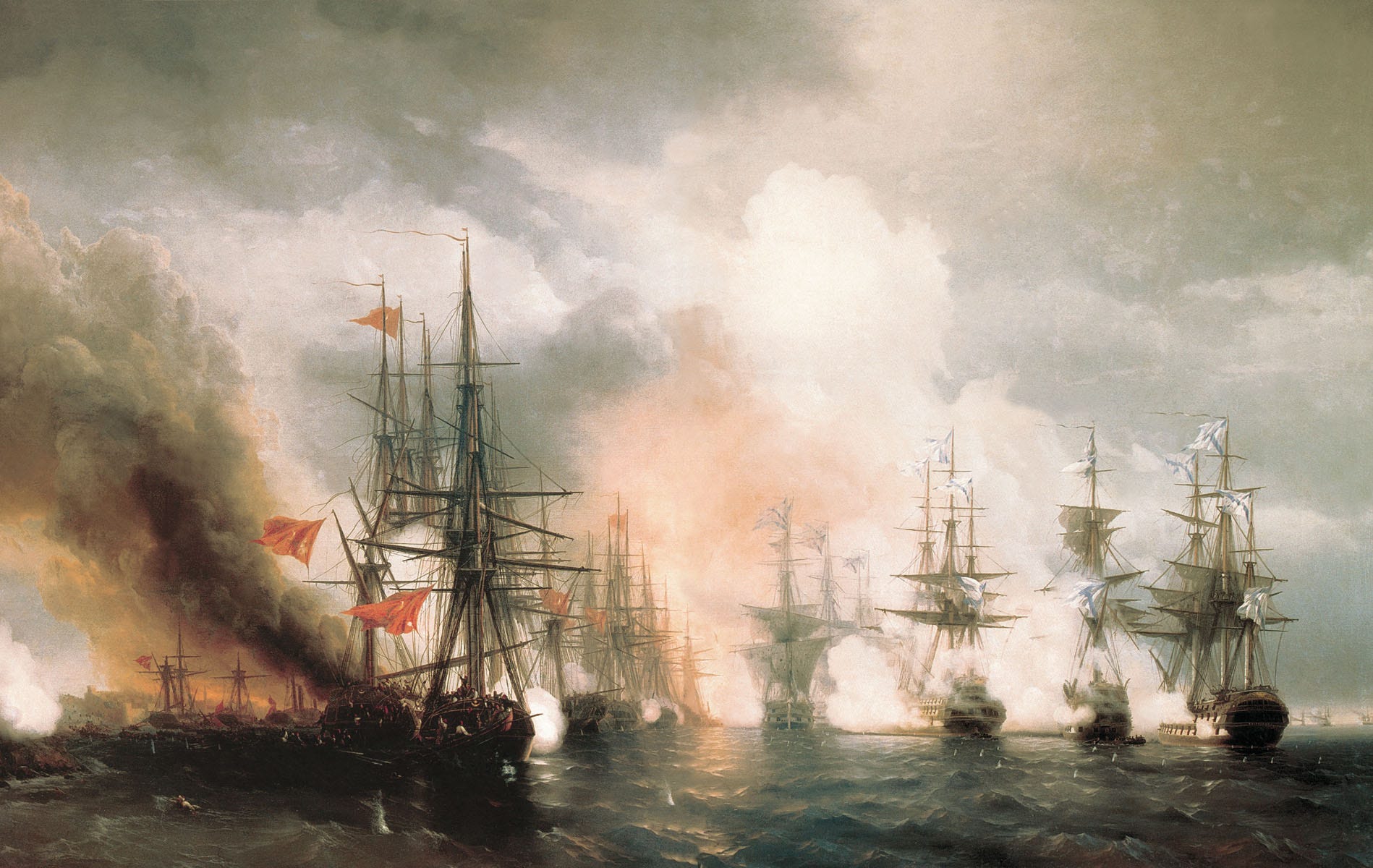
TURKEY. RUSSIA. ENERGY. High water.
An attack in Turkish waters prompts questions over pipeline security.
Social media videos on Thursday showed a Ukrainian drone hitting a Russian spy ship north of the Bosporus Strait. On Wednesday, Russia said it had repelled the attack on the vessel guarding the TurkStream pipeline.
INTELLIGENCE. Media on both sides have focused on whether the ship was hit, but what matters is what Ankara thinks. Turks return to the polls on Sunday, where Recep Tayyip Erdogan is expected to win another five-year term. Turkey, which shares the Black Sea with Russia and Ukraine, has avoided taking sides, despite its membership of NATO. Speculation of an attack on a vital energy resource, however, could tip Ankara’s sympathies to Moscow. This week, German media reported Ukraine was behind last year's attack on the NordStream pipeline in the Baltic Sea.
FOR BUSINESS. Evidence of attempted sabotage on TurkStream risks not just upsetting Turkey, which brokered last week’s extension of the Black Sea Grain Initiative, but Serbia, Austria and Hungary, the pipeline’s main customers and the European states most equivocal on the war. European gas futures have fallen in recent months on lower demand.
BELARUS. RUSSIA. Scare tactics.
Putin deploys tactical nukes to frighten Europe.
Belarus’s president said on Thursday Russia had begun deploying tactical nuclear weapons in his country. Washington believes Russia has around 2,000 working tactical warheads, versus 200 for the US, of which half are based in Europe.
INTELLIGENCE. Beyond proof of life, Alexander Lukashenko’s remarks were more a reminder of Russia’s nuclear trump card than a material development in the war on Ukraine. And while the nuclear option exists, Moscow would only use it as a last result. What is significant, however, is that this is Russia’s first nuclear deployment beyond its borders since the end of the Cold War. Conversely, the US still deploys nuclear weapons in several countries, including Germany, Italy and Turkey. While no Cuban Missile Crisis, Moscow is once again testing atomic norms.
FOR BUSINESS. Despite releasing a prominent dissident this week, Belarus is locked in Russia’s orbit. And until sanctions on Moscow are lifted, they won’t be eased for Minsk. Belarus’s integration into Russia’s economy continues apace, but it is also deepening ties with China. One option for Beijing to send arms to Moscow is through Belarus.
THE CAUCASUS. RUSSIA. Moving mountains.
Moscow looms large in its southern periphery.
The Armenia-Azerbaijan conflict could soon be resolved, Vladimir Putin said on Thursday, alongside the leaders of the two countries. Georgian Airways said on Thursday it would shortly launch connections between Russia and Europe.
INTELLIGENCE. After the EU and the US recently attempted to broker peace in the conflict over Nagorno-Karabakh, Russia may have the final word. Tensions between Yerevan and Baku were convenient for Moscow, which has a practice of creating frozen conflicts in its hinterland, from Moldova to Kyrgyzstan, but it is wary of Western meddling. Moscow may also have the final say on Georgia, which with Ukraine, was a locus for the ‘colour revolutions’ of the early 2000s. Tbilisi has been a refuge for Russian dissidents but is also an emerging hub for sanctions-busting.
FOR BUSINESS. There have been many false dawns in the decades-long war between Armenia and Azerbaijan, but Russia can fix it if it wishes. This will relieve Iran, which will not want to see Russia cut out of the vital transit corridor. Age-old tensions between Tehran and Baku continue to fester, with some in Iran calling for Azerbaijan’s annexation.
Written by former diplomats and industry specialists, Geopolitical Dispatch gives you the global intelligence for business you won’t find anywhere else.
IRAN. ISRAEL. Up the Kheibar.
Tehran tests a missile aimed not just at Israel.
Iran's defence ministry said on Thursday it had successfully tested an upgraded Kheibar Shekan missile, with a range of 2,000km and a 1,500kg payload. Kheibar refers to a Jewish fortress destroyed by Muslim soldiers in the year 628.
INTELLIGENCE. The Islamic Republic called the test a triumph, but Israel holds the cards, as its generals have recently indicated. What the Kheibar delivers, however, is a bargaining chip as Tehran normalises its relations across the region. It also gives the Islamic Revolutionary Guard Corps prestige as insiders jostle for political influence in the wake of last year’s protests and eye a future after Supreme Leader Ali Khamenei, who turned 84 last month. On Monday, a senior IRGC commander replaced a diplomatic reformer as head of the Supreme National Security Council.
FOR BUSINESS. Though Iran has normalised ties with Saudi Arabia and much of the Arab world, the regime’s hardliners are not interested in rapprochement with the West. The IRGC’s hold on power, despite mass protests and swingeing sanctions, shows no sign of loosening. Iran's economy will stay shut for as long as the hardliners remain.
GERMANY. Zugzwang.
Berlin’s turnaround strategy is in a bind.
German GDP shrunk 0.3% in the first three months of 2023, Berlin said on Thursday. Economy Minister Robert Habeck received an envelope containing white powder the same day. His popularity has fallen on controversial energy reforms.
INTELLIGENCE. With high inflation and the loss of the Russian market, Germany’s poor data came as no surprise. Still, for Habeck, previously the government’s most popular minister, it compounds a furore over Berlin’s Energiewende (‘energy turnaround’) policy. Habeck, leader of the Greens in the three-party coalition, came under fire this week from the Free Democrat Party on plans to ban gas heating for new homes. Chancellor Olaf Scholz of the Social Democrats risks having his other policies upended, including a belated defence Zeitenwende (‘era turnaround’).
FOR BUSINESS. Unless he can fix the contradictions of a coalition spanning the green left and the free market right, it’s the end of an era for Scholz, whose approval rating has fallen to 32%. He must also fix the contradictions of a policy that wants China’s investment but also wants ‘de-risking’. Unless a new coalition forms, such fixes are unlikely.
UNITED STATES. CHINA. Speak softly.
Diplomacy returns, but the big stick remains.
Talks between China's commerce minister and his US counterpart were “candid, professional and constructive”, according to a statement from Beijing on Friday. The meeting was China's most senior visit to Washington since 2020.
INTELLIGENCE. Joe Biden’s promise of US-China stability looked more real when, on Thursday, Gina Raimondo hosted Wang Wentao. Still, the dialogue comes in a week that’s seen a blistering G7 statement, the banning of a significant US chipmaker and the release of a war game simulation where 24 hypersonic missiles were used to sink the USS Gerald R Ford. Washington’s “invest, align, compete” strategy on China was thrown into turmoil when an alleged spy balloon appeared over Montana in February. Talk is good, but it needs to be between militaries.
FOR BUSINESS. All trade officials instinctively favour dialogue and cooperation. The problem for the US and China is not that diplomats aren’t talking; it’s that the generals aren’t. Further, rhetoric remains charged in the lead-up to the US election. Both sides want growth, and neither war, but strategic (and political) interests remain irreconcilable.
Emailed each weekday at 5am Eastern (9am GMT), Geopolitical Dispatch’s Daily Assessment gives you the situational awareness to stay ahead in a changing world.