

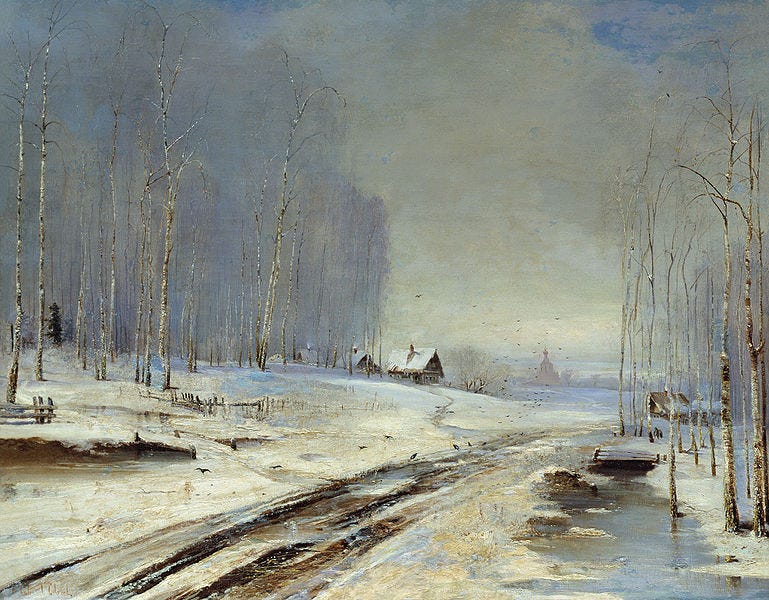
UKRAINE. RUSSIA. Muddy waters.
The causes, and consequences, of the Kakhovka attack.
Russia and Ukraine traded accusations at the UN Security Council on Tuesday following the destruction of the Kakhovka dam in Kherson earlier that day. The White House said it could not say conclusively who was responsible.
INTELLIGENCE. While flooding largely impacted Russian-held territory and the Kakhovka reservoir supplied water to Crimea, Moscow has the most to gain from the attack. Muddying the ground around Kherson will stymie any armoured assault from Ukraine and complicate logistics. That said, Ukraine could have reasons too. Flooding will damage Russian defences. It will also complicate potential plans to cross through to Odessa and Moldova.
FOR BUSINESS. The conflict is increasingly a total war for both sides. Many have quickly blamed the Kremlin, but reports leaked in December suggest that Ukraine has also considered blowing up Kakhovka as a last resort. As with the Nord Stream pipeline sabotage, where the media is now reporting Kyiv’s complicity, investors and insurers face greater complexity in determining the risks and consequences of assets caught in the crosshairs.
BULGARIA. New alliance, old problem.
Sofia forms a new pro-EU government.
Bulgaria's National Assembly approved a new coalition government on Tuesday, ending a two-year impasse that has disrupted its eurozone bid and access to the Schengen migration area. Leadership will rotate between the two parties.
INTELLIGENCE. The news is a relief for Brussels, which has faced a sometimes-awkward partner in Bulgaria’s pro-Russian but popular President Rumen Radev. Yet the former EU commissioner Mariya Gabriel, who will eventually take over as prime minister under the power-sharing deal, represents a scandal-plagued conservative GERB party, which was removed from power in 2021 after 400,000 protesters took to the street. The relief may not last long.
FOR BUSINESS. Bulgaria may now be called Europhile, but investors should not mistake an abrupt turn. As in much of Eastern Europe, feelings toward Brussels are complex. EU aid is popular; costly energy is not. European populism, meanwhile, continues its steady rise. The far-right Alternative for Germany tied with the ruling Social Democrats in polls this week, joining far-right parties in Sweden, Finland and France, which are also polling in second place.
CHINA. RUSSIA. Friends with benefits.
Beijing and Moscow help each other where they can.
Four Russian and four Chinese aircraft entered South Korea's air defence zone on Tuesday, causing Seoul to scramble fighter jets. Also on Tuesday, the World Bank lifted its forecast for Russia's economy, citing strong exports to China.
INTELLIGENCE. Having largely burned bridges with Seoul and Tokyo, which also scrambled jets, Moscow likely joined Beijing’s provocations to demonstrate the strength of its “no-limits” partnership, even as it competes for influence in Central Asia. And Beijing, alongside Delhi and others, continues to give Moscow an economic lifeline. The World Bank now expects Russia’s economy to only contract by 0.2% this year – not much worse than its forecast for Europe.
FOR BUSINESS. What the Romans called the sinews of war, the funding and supplies Moscow continues to accrue may keep it in the fight longer than Kyiv’s democratic backers can tolerate. Western sanctions have largely reached their limit and an alternative financial and trade order is emerging far from US regulators and warships. On Saturday, the first Russian LNG tanker to use this year’s Northern Sea Route to China was loaded at Yamal, on the Arctic Ocean.
Written by former diplomats and industry specialists, Geopolitical Dispatch gives you the global intelligence for business and investing you won’t find anywhere else.
CHINA. MARITIME TRADE. Sea change.
China invests to avoid shipping chokeholds.
Beijing is constructing a ship-based radar that can detect ballistic missiles up to 4,500 kilometres away, Chinese media said Wednesday. Similar systems require extensive land-based arrays. China already surpasses the US in naval ships.
INTELLIGENCE. The US is still assessed to lead in military tech, but new discoveries could shift the balance. Beijing is also investing in diplomacy to disrupt Washington’s hold on its trade routes. Chinese vessels left Vietnam’s exclusive economic zone early Tuesday after Hanoi issued a rare protest. Last week, China pledged new support to debt-laden Sri Lanka, astride a major shipping route. Having tried aggression, China is now trying subtlety.
FOR BUSINESS. Beyond costly Eurasian pipelines and railways, which the West can’t touch, Beijing is boosting its security at sea, on which the economy relies. And not just China’s; thanks to Chinese demand, Germany and Australia saw surprise lifts in trade data this week. As superpower tension rises in the background, Beijing wants to give investors and neighbours love. Expect more military confrontation but also more handshakes and trade deals.
THAILAND. The King and I.
A democratic victor may be forced to compromise.
Pita Limjaroenrat, whose reformist Move Forward party won last month's election, said on Tuesday he had broken no rules after pro-establishment figures petitioned the election commission to annul the result on stock ownership claims.
INTELLIGENCE. Pita, born into a wealthy family and educated overseas, denies he owns shares in media firm ITV, which would be prohibited under Thai election law. He also denies ITV is a media firm, having lost its licence in 2007. Yet, to avoid an Al Capone moment, Pita may need to bargain with the military and royalist powers rather than argue legalities. Should he dump calls to change controversial lèse-majesté laws, he may be allowed to govern.
FOR BUSINESS. King Maha Vajiralongkorn and Bangkok’s military-industrial cronies won’t let Pita turn Thailand into a competitive democracy, but they know they risk a political crisis should he be entirely thwarted. A compromise will likely ensue, leaving nobody completely happy but the economy able to splutter along. Thailand’s ageing population and infrastructure impede its long-term competitiveness, but profits will continue if the environment remains stable.
SENEGAL. THE SAHEL. There goes the neighbourhood.
A West African beacon succumbs to regional strife.
Mobile internet blackouts continued into Wednesday after a weekend of violence in Senegal killed 16 and injured hundreds. Protesters threatened civil war after opposition leader Ousmane Sonko was sentenced to two years in prison.
INTELLIGENCE. Senegal was, until recently, a haven in a tumultuous region. In an awkward reminder of its 2011 pictorial on the wife of Syria's dictator, Vogue last week published a feature on “Dakar’s stylish locals”. Today, the picture looks more like that of neighbouring Mali and Guinea-Bissau, facing humanitarian crisis and disputed polls respectively. Meanwhile, data from nearby Burkina Faso show that more than 2 million are now internally displaced.
FOR BUSINESS. Besides a good football team, Senegal's relative stability has yet to turn to riches. Unless reforms can unlock the country's geographic potential, Senegal risks following the rest of the Sahel – a band of arid countries from the Atlantic to Sudan – into crisis. The threat looms large for France, Senegal’s biggest source of imports and investment, which has been kicked out of several other former colonies amid rising Russian and Chinese influence.
Emailed each weekday at 5am Eastern (9am GMT), Geopolitical Dispatch’s Daily Assessment gives you the situational awareness to stay ahead in a changing world.