

In addition to our daily risk monitoring brief, the team behind Geopolitical Dispatch also provides advice, risk audits, scenario planning, executive masterclasses and board briefings among other services. Click here to get in touch.
UKRAINE. UNITED STATES. Stuck in the mud
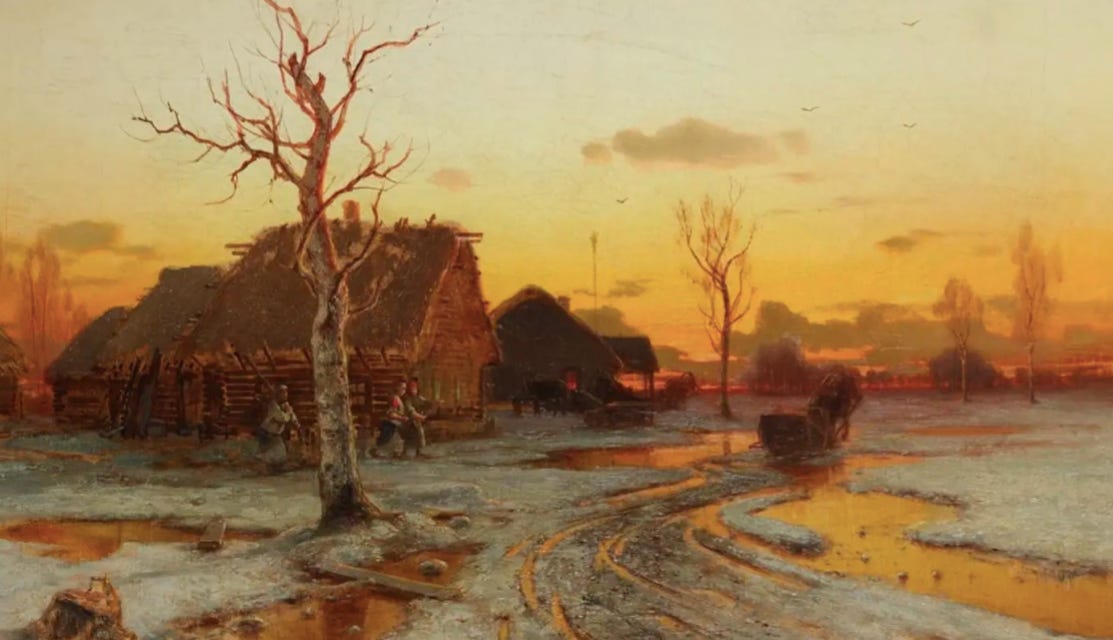
In the depths of Rasputitsa, a sorry picture from Kyiv to Congress.
Volodymyr Zelensky said Saturday Ukraine was running out of air defences. Ukraine denied Russia had seized the city of Chasiv Yar, but conditions were "difficult". Republicans warned Speaker Mike Johnson not to yield on Ukrainian aid.
INTELLIGENCE. The “mud season” of Rasputitsa on the Ukrainian steppe would usually deter enemy advancement, but Ukraine’s lack of weapons has given Russia an advantage. Kyiv has instead resorted to largely performative strikes inside Russian territory, designed to gain notice in a wavering West, and risky gambits, such as Sunday’s drone attack on the Zaporizhzhia nuclear plant. High-stakes performance art is also defining the response in Washington.
FOR BUSINESS. Johnson has promised a vote on Ukraine but many in his party are warning his speakership could be over if he fails to extract a border deal at the same time. And while Donald Trump is on the back foot over alleged comments on Ukraine’s need to cede land, this is what many on both sides of the aisle are privately contemplating. Russia has so far pushed back on peace talks, but this is because it’s having too much success on the battlefield.
Geopolitical Strategy is the advisory firm behind Geopolitical Dispatch. Our partners are former diplomats with vast experience in international affairs, risk management, and public affairs. We help businesses and investors to understand geopolitical developments and their impacts with clarity and concision.
CHINA. UNITED STATES. Yellen’s brick wall
Stable ties don’t mean good ties.
Treasury Secretary Janet Yellen told Premier Li Qiang Sunday the US and China had a duty to responsibly manage ties. The Financial Times said Saturday the US, Britain and Australia were preparing to bring Japan into the AUKUS alliance.
INTELLIGENCE. Yellen may be tasked with stabilising ties, but her hands are tied as tensions rise off China’s coast. And while US-China military talks have also resumed, China is unlikely to view the incorporation of Japan into AUKUS favourably, even if it means little in terms of Tokyo and Washington’s already comprehensive defence ties. Japan and the Philippines joined the US and Australia in South China Sea drills Sunday. China held “combat patrols” nearby.
FOR BUSINESS. Yellen's task is also complicated by the tension between China's turbocharged EV and clean tech production, and US trade policy. Yellen has joined others in urging Beijing not to compound the error of infrastructure-led growth with industrial overproduction, but China sees its policies as much about security as economics. Having admired Russia's economic rebound, China is building its own war economy where overcapacity is a virtue, not a vice.
EUROPE. Populism contest
Further worries for the EU’s centrist establishment.
Peter Pellegrini won 53% of Slovakia's second-round presidential vote Saturday, a win for pro-Russian Prime Minister Robert Fico. Exit polls Sunday showed the opposition Law and Justice (PiS) party coming first in Polish local elections.
INTELLIGENCE. Pellegrini will have a largely ceremonial role, and PiS mayors will have little bearing on Warsaw's foreign or economic policies. Yet the wins are another sign of populism's enduring appeal, two months out from EU parliamentary elections. In another potential fright for Europe’s centre, Bulgaria is set to announce concurrent elections after its coalition government collapsed. A caretaker administration was proposed over the weekend.
FOR BUSINESS. Ahead of European elections on 6-9 June, Croatia will elect a new parliament (17 April), while Lithuania and Iceland will hold a presidential vote (Iceland's prime minister has announced she will be running). Outside of the bloc, Macedonia will also hold presidential and parliamentary elections on 24 April and 8 May respectively. These bear watching for clues. While EU polls show the centre being comfortably ahead, upsets happen.
Emailed each weekday at 5am Eastern (9am GMT), Geopolitical Dispatch goes beyond the news to outline the implications. With the brevity of a media digest, but the depth of an intelligence assessment, Geopolitical Dispatch gives you the strategic framing and situational awareness to stay ahead in a changing world.
LATIN AMERICA. Diplomatic ambiguity
Fugitive leaders can no longer hide behind protocol.
Mexico cut ties with Ecuador late Friday after police stormed its embassy to arrest fugitive ex-vice president Jorge Glas. Two staff at Hungary's mission in Brazil were sacked after leaking a video of Jair Bolsonaro hiding in the chancery.
INTELLIGENCE. Glas’s arrest has damaged Ecuador’s foreign relations, not just with Mexico, but it’s good politics. Amidst a drug war that’s seen politicians murdered and investment plunge, President Daniel Noboa is taking a stand on the corrupt Glas, the deputy of Rafael Correa, himself a fugitive now living in Belgium. It’s also a break with Ecuadorian tradition. Correa's government billeted an untidy Julian Assange at its London embassy for seven years.
FOR BUSINESS. Glas isn’t the first high-profile fugitive in a Latin embassy. Ex-Panamanian president Ricardo Martinelli is currently inside Nicaragua’s compound. Another ex-Panamanian leader, Manuel Noriega, is remembered for fleeing to the Apostolic Nunciature. But this mocks the Vienna Conventions. And like so much else of international law, it’s getting smoked by realpolitik, as witnesses to last week’s Iranian embassy bombing in Damascus can attest.
DEMOCRATIC REPUBLIC OF CONGO. RWANDA. Long shadow
Thirty years after the genocide the killings continue.
World leaders gathered in Kigali Sunday to mark 30 years since 1 million were slaughtered in the Rwandan genocide. Militants killed 25 civilians in eastern Congo Saturday. At least a dozen civilians were killed in a separate raid last week.
INTELLIGENCE. Rebels linked to Rwanda weren’t behind the attacks – blamed on a Lendu militia and Islamic State respectively – but they’ve created the conditions for the crisis in Congo’s east, part of a wider conflict that’s displaced 1.4 million and threatens to break out into a third Congo war (the second killed 5.4 million). Beyond a fight between ethnic groups, at the centre of the conflict is the Twangiza-Namoya belt, one of the world’s richest gold provinces.
FOR BUSINESS.The crisis is largely confined to the twin Kivu provinces, adjacent Uganda, Rwanda, and Burundi. Congo's copper, cobalt and diamond industries are far away and, thankfully, Congo's lack of roads means getting there is hard. Yet as history shows, any resultant instability could threaten these sectors too. Protesters in the capital, Kinshasa, have called for Russia's intervention. A 25-year-old draft agreement is apparently awaiting signature.