


Hello,
In this edition of Week Signals:
IN REVIEW. October surprises, boots on the ground, and the Diversionary War Theory.
UP AHEAD. Elections in Brazil, Bosnia and Herzegovina, Quebec, Holborn and St Pancras, and the Nobelkomité.
The Week in Review: Plehve bargain
T=The week began with indirect peace talks between Iran and the US in New York. It ended with another US aircraft carrier sailing to the region, alongside a fresh contingent of another 2,000 Marines. The week also saw Europe forced to release its diesel stockpiles ahead of winter to forestall a US distillates embargo. Reuters said a 100,000-troop Yemen offensive was in the works.
Whether you believe Time’s report that Donald Trump consulted the chatbot Grok before toppling Maduro and turning attention to Iran, one can reasonably assume that the present conflict’s planning has all the hallmarks of AI slop. The grammar of war, as Carl von Clausewitz put it, may not have the telltale em dashes, contrastive framing, and words like “delve”, but per the Prussian strategist, if the how does not follow a why (i.e., a logic), then it will end in defeat. As he famously wrote in On War: “No one starts a war – or rather, no one in his senses ought to do so – without first being clear in his mind what he intends to achieve by that war and how he intends to conduct it.” (There are those em dashes again – oops).
But having got to this place, we now need to invent our own theory of victory – another Clausewitzian concept – even if Trump doesn’t have one. JPMorgan may have given up, but we have been speaking to clients this week about a range of potential scenarios. And of these, the scenario of escalation prior to the midterms – once dismissed as something politically illogical for everyone but the Iranians – is looming larger into view, like a Prussian breech-loading field cannon through the thick morning fog of Sedan.
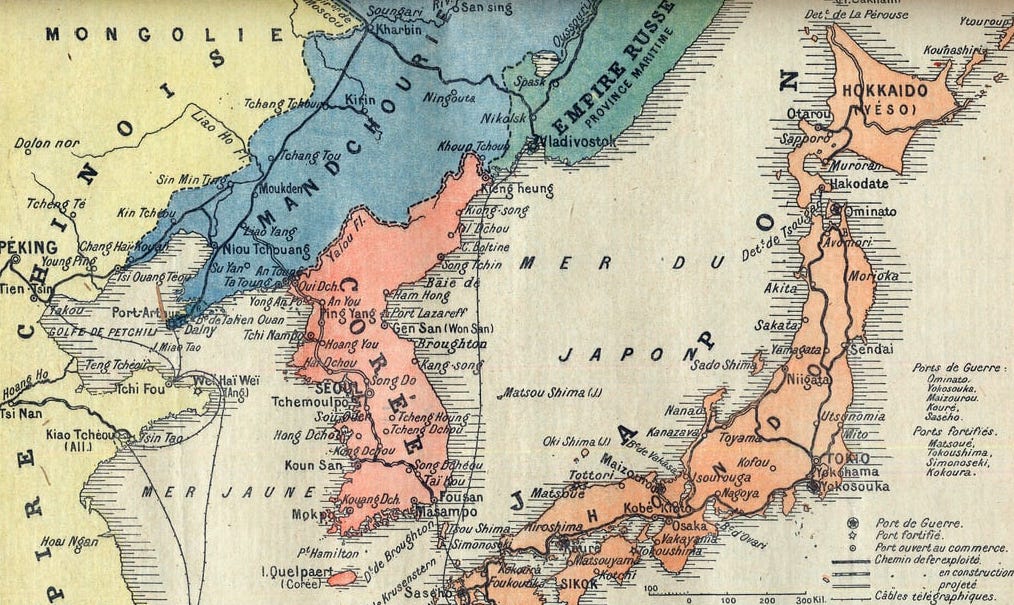
To quote another German nobleman – this time in service of Imperial Russia – Interior Minister Vyacheslav von Plehve is reputed to have said in January 1904: “What this country needs is a short, victorious war to stem the tide of revolution.” The Russo-Japanese War began weeks later, and was, as history would have it, the very ripple that led to that tide. Four months in, and Plehve would be assassinated in his coach by a Socialist-Revolutionary Party terrorist. One year later, the First Russian Revolution would occur. Twelve years after that, and following another assassination in a town called Sarajevo, 300 years of Romanov rule would end.
Diversionary War Theory – certainly not something Clausewitz would have approved of – did not end with Plehve. Instead, it’s enjoyed something of a renaissance, since Bill Clinton bombed Belgrade in the wake of Monica Lewinsky and Vladimir Putin invaded Crimea in the wake of fears of a colour revolution. There was even a Dustin Hoffman movie about it.
Yet diversionary war perhaps only reached its apogee when, in June last year, Benjamin Netanyahu attacked Iran amid Tehran’s nuclear negotiations with Steve Witkoff and a no-confidence motion in the Knesset. And when Trump would subsequently end that 12-day campaign by dropping Midnight Hammer, it briefly took a tweet from Elon Musk off the front page. By 28 February of this year, of course, the problems of the Knesset, and the late Jeffrey Epstein, would be back.
Since then, the tail that wagged the dog has done a turd that won’t flush, and with pricey oil and no exit plan, we need a diversion from the diversion. Several weeks ago, we analysed the remote but real risk of nuclear escalation, specifically with Pickaxe Mountain as the target. One month later, that option still looks live, and with October being famous for the October surprise, let’s update the theory for the final pre-midterms stretch.