



Hello,
In this edition of Week Signals:
IN REVIEW. Understanding the big picture, our previous analyses on the Gulf, precedents and consequences, and where to from here.
UP AHEAD. Elections in Hungary, Peru, Benin and Canada; and a sanity check on the global economy.
If you haven’t yet signed up for the full edition, please consider upgrading your subscription via the link below, and don’t forget to connect with me on LinkedIn.
The Week in Review: A pro Gulf tour
The week began with threats of Iran’s civilisational death. It ended with almost grovelling requests for it to let shipping resume in the Strait of Hormuz, as a semi-ceasefire struggled to be born. Peace talks began in Pakistan, of all places.
Capital, as usual, struggled to make sense of it all. Designed to price assets and liabilities in stable, information-rich environments, markets are not really built for times like this. In the short term, at least, the market is a voting machine, as Benjamin Graham put it. And whether in the bets of Polymarket, the volatility of crypto, or the outcome of US elections, there’s not always wisdom in the crowd that votes. But in the long run, it’s a weighing machine, and once the dust settles on the present chaos, we may be able to get some sensible price discovery.
In the meantime, in the fog of war, the fog of special military operations and the fog, it would seem, of ceasefires, there’s old-fashioned qualitative analysis of the sort Geopolitical Strategy produces for subscribers and clients, where data, markets, artificial intelligence, and probabilistic forecasts fear to tread.
As readers of our daily dispatches know, we’re currently in a very liminal space on the Iran conflict. It hasn’t ended. Nor perhaps has it even begun. And lest you think it’s just me making these gnomic utterances, just check out Truth Social, or Pete Hegseth’s press conferences.
It’s in periods like this that it’s worth taking a step back to try to understand the bigger picture and driving forces, so as to better see the directions in which this conflict, and those mispriced markets, may travel next.
And to help us do that, my colleague Damien has stepped in this week to provide an overview of not just the current situation, but some of the analysis we’ve produced over the years leading up to it. These by no means complete the big picture to explain everything in uncertain times, but they may fill in some of the spaces.
Damien begins:
We are now six weeks into a war many thought unthinkable. The United States and Israel launched surprise strikes on Iran on 28 February, killing Supreme Leader Ali Khamenei and decapitating much of the military leadership. Iran has since retaliated with missiles and drones across the Middle East — hitting Israel, US bases in Qatar, Kuwait, Bahrain and the UAE, and civilian infrastructure from Dubai to Riyadh. Israel has spread the war to Lebanon. Thousands have been killed and millions displaced across the region. An American F-15 has been shot down — the first US combat aircraft lost to enemy fire in over twenty years. And Donald Trump has issued rolling ultimatums to reopen the Strait of Hormuz, creating fear, confusion and TACOs along the way.
The war appears to be both escalating and de-escalating. But the incentives on all sides — for Iran, the US and Israel — still favour continuation rather than cessation.
Much ink has been spilled on the consequences — and in a media environment that was already flooded with noise before the war began, separating the signal has never been harder. But it is worth dwelling on the sheer breadth and severity of the economic shockwaves — because these will outlast the military campaign regardless of when or how it ends. And considering their importance, they will not only be central to understanding how markets may eventually price this war but how the parties may choose to escalate or deescalate in turn.
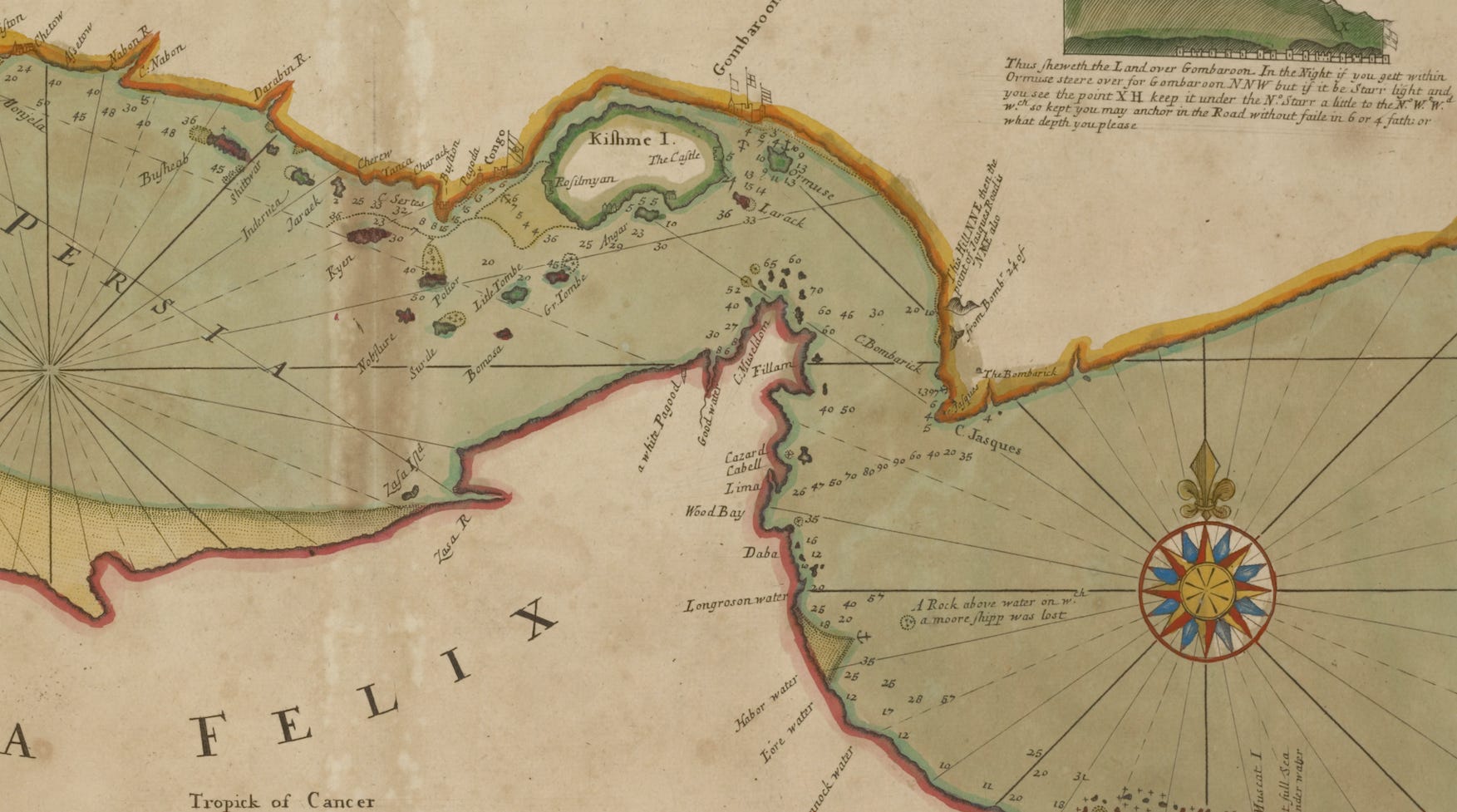
The most immediate has been the effective closure of the Strait of Hormuz — the chokepoint through which roughly 20% of the world’s oil and gas flows, and which we identified in our 2023 piece Choppy Waters as the single most dangerous point of failure in global maritime trade.
The most obvious impact has been the spike in oil prices. Brent crude continues to hover around $100 a barrel — and around $140 in physical markets — in what analysts are calling the most severe energy supply shock since the 1970s. Gulf states have been forced to curtail production as local storage fills up. Kuwait Petroleum Corporation has declared force majeure. Iraqi oil exports have been severely disrupted. And the world’s second-most critical maritime corridor — the Bab el-Mandeb Strait between Yemen and Djibouti, connecting the Mediterranean Sea and Indian Ocean — could soon also be compromised if the Houthis, aligned with Iran, decide to attack ships in the Red Sea as they did in 2023 and 2024 in response to the Gaza war. (For a backgrounder on the Houthis, their interests and relations with Iran, see Hou, What and Why.)
This alone is extraordinarily severe, and will only worsen the longer a state of war persists. Sustained high oil prices and constrained supply will, if history is any guide, likely tip the global economy into recession. The Dallas Fed has modelled a 2.9 percentage point decline in global GDP for a single quarter of closure. Oxford Economics estimates that oil averaging $140 a barrel for two months would push the eurozone, the UK and Japan into contraction. And Goldman Sachs has raised the probability of a US recession to 30%.
Countries that are net energy importers — especially those without significant strategic reserves — will soon face acute shortages. Some already have. Pakistan, while attempting to negotiate a truce, is scrambling for alternative supply routes. Bangladesh, which imports 95% of its energy, has seen fuel robberies and panic buying. Petrol stations across Australia have shortfalls. The IEA has coordinated a record release of 400 million barrels from emergency stockpiles — enough to cover roughly twenty days — but these are, by definition, finite. While we are not yet at Mad Max, it would not take much, or long, for the energy crisis to be more one of supply than of price.
Yet the consequences extend well beyond oil.