



Hello,
In this edition of Week Signals:
IN REVIEW. Expansion and restraint, the road from Saddam to Putin, and what the Falklands says about Greenland and Taiwan.
UP AHEAD. Diplomacy in the Middle East, referendums in Alberta, earnings in the US, and anarchy in France.
The Week in Review: Atlantic currents
The week began with Donald Trump declaring an “energy ceasefire” in Ukraine and Russia, which both sides ignored but for which only one received US blame when it collapsed. The week ended with the unedifying spectacle of Trump, Elon Musk and the Pentagon subsequently trying to shift blame for the apparent decision to deprive Kyiv of Starshield communications as it got rained on by Russian missiles and drones. As fault was anonymously briefed to journalists, the absence of a White House press secretary to present a common line – Katie Zacharia resigned, barely lasting half a Scaramucci – was more noticeable than ever.
Yet it was undoubtedly a good week for Vladimir Putin. Not only has his war against Ukraine received a new fillip, but Trump’s ongoing threats against Iran – including to use a GBU-43 (“like a tiny nuclear bomb”) – helped push his war crimes again off the front page. More to the point, amid this and the cascading rifts between NATO allies, former partners in the Middle East, proxy conflicts in Africa, and populist demagoguery everywhere, 2026 has been the year that made annexation great again.
In the pre-2008 days of unquestioned US unipolarity, territorial disputes had been seen by many as consigned to history’s dustbin. Border wars, independence wars and ethnic conflicts were frequent enough in the global economic periphery – Kosovo, South Sudan, East Timor, and so forth. Even wars on terror that turned into wars of occupation were a feature of the nightly news. But globalisation endured and the thought of industrial-scale war between major and middle powers – which Ukraine and Iran undoubtedly fall into the category of – was considered insane. And not so much because it was technically impossible, or politically implausible, but because it didn’t make economic sense in a world of just-in-time delivery, WTO negotiations, and cultural homogeneity.
Well, that era is over, and it’s on that grim note that we think of several other potential major-on-middle wars to come in our current interregnum, not least of which being the financial market’s current obsession: China vs Taiwan. But there are several others, including those that are really only in a kind of stalemate – such as India vs Pakistan, or South Korea vs North Korea – that shouldn’t be ignored either.
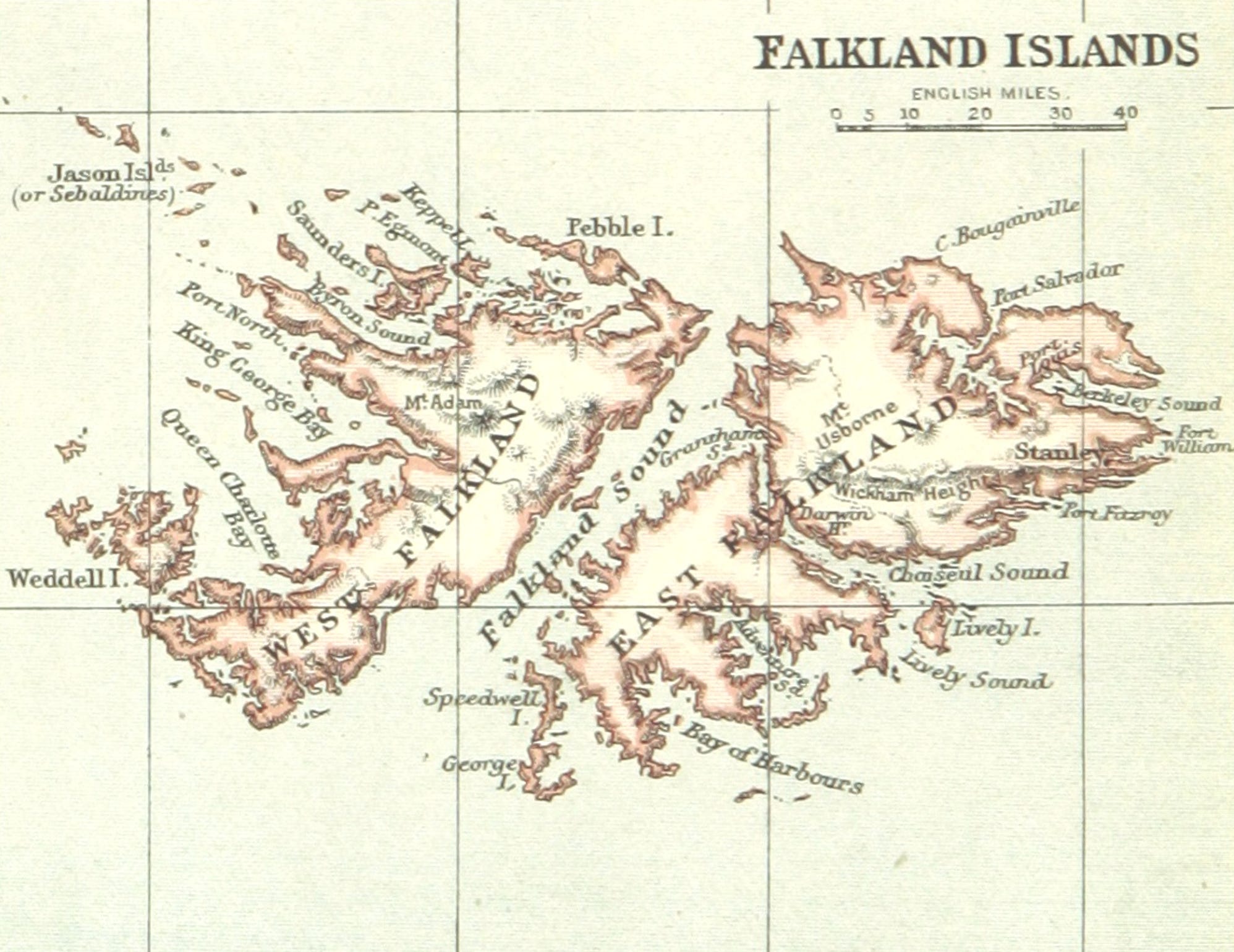
But then there’s yet more, which were ignored, and should ideally be ignored, but can’t. And since the World Cup at least, the Falkland Islands/Malvinas dispute, between Britain and Argentina, is emblematic. Remote, contrived, and ridiculous on face value, it’s the kind of conflict that could define the Trump era.
My colleague Oscar Martin holds the pen this week to put it all in context:
At the July World Cup, a geopolitical tension from 1982 was reignited after Argentina beat England 2–1, when two Argentine players celebrated by holding up a sign reading “Las Malvinas son Argentinas”, translated as ‘the Falklands are Argentine’. Forty-four years after the Falklands War, Argentina still has a deep wound from its decisive defeat by the British after attempting to annex the Falklands.
Earlier this month, the dispute extended beyond soccer celebrations to an international dispute when Argentina’s foreign minister, Pablo Quirno, promised to obstruct Falklands oil development as part of a peaceful sovereignty campaign. The oil project is being co-run by Navitas Petroleum, an Israeli company, and the UK’s Rockhopper Exploration. The field is projected to start producing oil in 2028, with a capacity of 50,000 barrels per day. The single project alone would completely transform the Falklands from a minor fishing and tourism destination into a much stronger resource-led economy. And for Argentina, this is a lost opportunity.
Argentine President Javier Milei has instructed officials to pursue international arbitration aimed at preventing the Sea Lion offshore oil project. The oil development would strengthen British control of the islands and make their security even more critical as oil prices remain high due to the Iran war. Even interrupting development and raising costs could dissuade further investment in the Falklands and potentially weaken Britain’s interest in the offshore territory, which it defended in 1982. Despite Britain’s victory over Argentina’s invasion, the sovereignty dispute did not end, and with a critical resource and domestic elections in Argentina added to the equation, the territory is back on the geopolitical map.
Globalisation has made it easier for states to prosper without expanding their borders, but territory remains the fundamental building block of geopolitics. Control of land determines who governs its people, exploits its resources and stations troops there. Trade reduces the incentive to acquire territory when governments trust that access to its resources will continue. As that trust weakens, direct control becomes more appealing, even as economic interdependence makes conquest more costly.