


Hello,
In this edition of Week Signals:
IN REVIEW. Less Yalta, more Munich; grand theft politics; Shenzhen and the art of alliance maintenance.
UP AHEAD. Summits in Delhi and Brussels; volatility on Wall Street; elections in Australia and Taiwan.
The Week in Review: Piecemeal in our time
The week began with grounded flights and software issues from banks to iPhones. It ended, unsurprisingly, with a Nasdaq crash that even Claude couldn’t fix. It was all bad timing for Donald Trump’s visit to the high-tech metropolis of Shenzhen. Yet judging from his reaction to the allegations that Nvidia’s former CEO had overseen a massive chip smuggling operation, maybe Trump doesn’t really care about the US’s competitive edge.
And perhaps he doesn’t care about the US’s waning alliance-based hegemony either, judging by the spectacle of his trilateral meeting with Xi Jinping and Vladimir Putin following the short shrift he gave the Quad earlier in the week. And while it’s always smart to engage with your adversaries, this ostensible Yalta-style summit – a “Big Three” for the 21st century – seemed more a way to put Putin on a pedestal while kowtowing to Xi. Luckily, the summit seems to have been without much consequence, other than a “declaration of peace” (ending which wars? you may ask). Indeed, if there were to be any real outcome, they might not be very happy for the likes of Ukraine, Taiwan, or Canada.
But a Yalta this was not. Not only was there no evidence of a 1945-style global carve-up, but Trump, Putin and Xi are not the victors of a major war, unlike Roosevelt, Stalin and Churchill before them. Indeed, two of the three are still fighting conflicts they started, and aren’t doing especially well either, despite their nuclear weapons and comparative economic heft. And regardless of what one might think of Stalin, Churchill or FDR, none of the current three has anything approaching the world historical stature (at least not yet). For Shenzhen, appropriately enough, this was a Temu Yalta. And without the money-back guarantee if things fall apart.
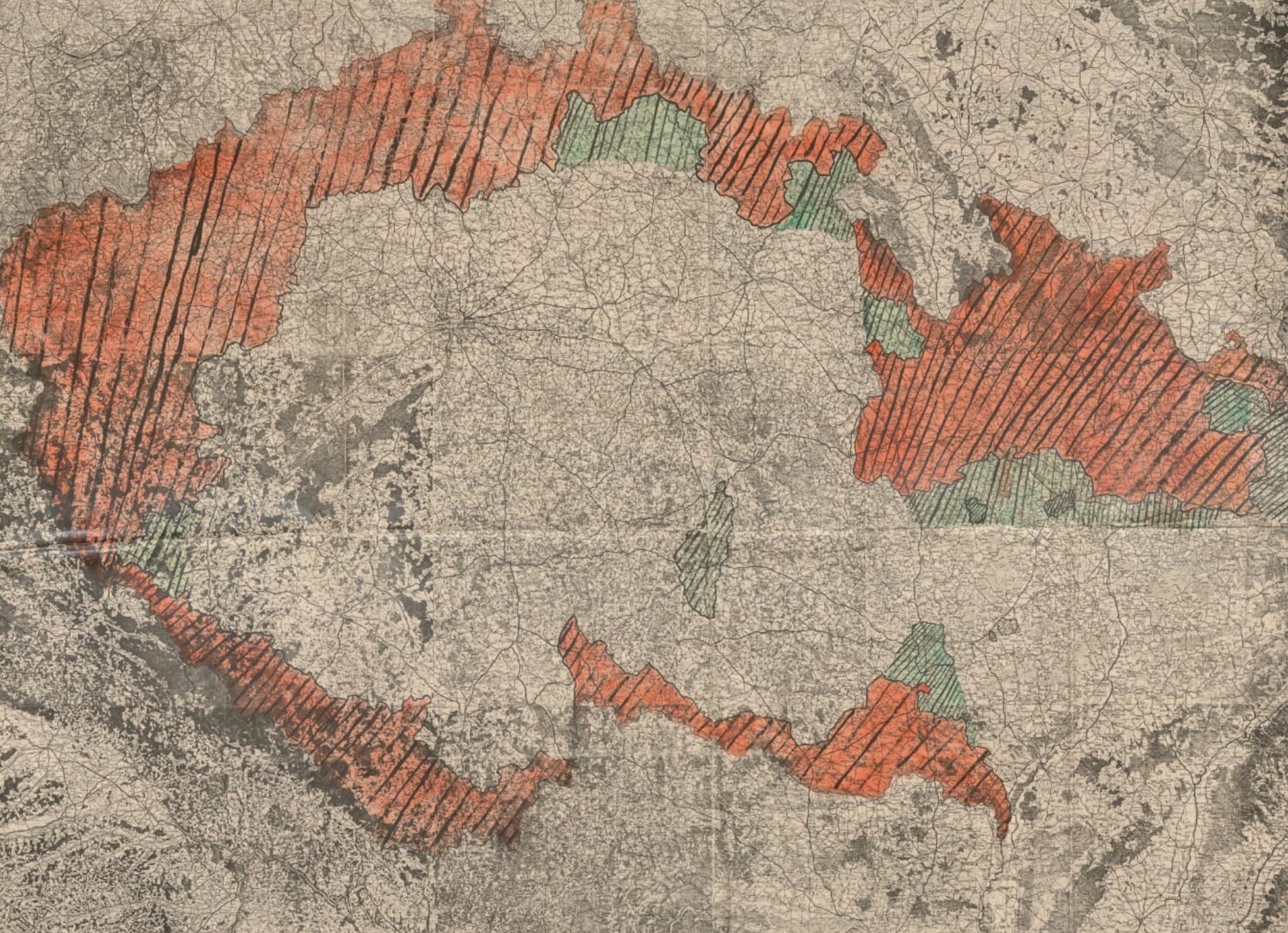
So maybe the Yalta comparison, already dodgy and self-serving (at least to Putin, whose soldiers now reoccupy the Crimean resort), is the wrong one. Returning to World War II and any comparisons of where we are now in our own geopolitical cycle, perhaps the better comparison is Munich, 1938, where a hapless Western leader travelled to meet Hitler and Mussolini to head off a global conflict over a quarrel in a faraway Eastern European country “between people of whom we know nothing”.
Yet Neville Chamberlain, who said those words in the days before his infamous deal on the Sudetenland, was no Hitler-apolgist patsy. Serious, war-weary, and realist, he held the Führer in deserved contempt. And while, like his brother Austen Chamberlain, he had a bit more time for Mussolini, his subsequent record in Churchill’s war cabinet should show that he was not the appeaser he’s commonly remembered as.
As for Trump on Putin and the Donbas? I’ll let you be the judge, but the omens for “peace in our time” are probably just as portentous as they were in 1938. And while this doesn’t mean world war, it doesn’t mean its absence either. Indeed, if you look at the state of cybersecurity – from exploding refrigerators in Europe to the now daily system compromises in the US – the war has already begunAnd this brings us back to Shenzhen and one of Trump’s fellow travellers, Howard Lutnick, of whom we wrote last week. Lutnick, it must be said, has longstanding links with Russia, just like his boss. A 2021 FBI report unearthed in the Epstein files release – corroborating allegations elsewhere that Lutnick’s Cantor Fitzgerald was the go-to bank for New York’s Russian mafia – may not stand up in court, but Cantor’s links to Russia are well established (as are its links to China, Nvidia and the rest of the semiconductor complex). All this may be circumstantial for a successful global businessman who has taken a financial sacrifice in order to serve in public office, but we weren’t born yesterday.
As with the Epstein files, we can’t expect much clarity from the Department of Justice on what the links may or may not be between the US, Russian and Chinese administrations. And even if there were to be an investigation, as under Biden or during Trump’s first term, it would all soon get sullied as a witch hunt. All we can go on, in divining the motivating factors behind Shenzhen, the Ukraine-Russia peace negotiations, or the war in Iran, is to take at face value what our leaders are telling us.
Yet as in Munich 1938, all leaders lie and some leaders lie all the time. What might be called a declaration of peace, or a policy of realist appeasement, could break apart as quickly as any of the equally flimsy liberal internationalist norms that shattered in the 1930s and are in the process of shattering today.
And of these norms, perhaps the most important is the concept of alliances. Unlike the First World War, where it was arguably rigid alliances that led to war in Europe (Germany entered because it was allied to Austria-Hungary; France entered because it was allied to Russia, which was allied to Serbia), the Second World War came about because of doubts on alliances. After Czechoslovakia was shorn of its German-speaking territories, Hitler tried his luck on Poland. This, of course, was a miscalculation, but it was a miscalculation that was shared.
The long and short of it is that we are in times ripe for miscalculation too, and not just of the financial kind (witness those evaporating tech valuations). One thing that Trump, Putin and Xi have in common is that they’ve sacked many of their most senior military commanders, or – in the case of the latter two – have had them killed. Another thing is that they don’t seem to invite external counsel (or even the internal kind, judging from how Marco Rubio’s alleged report on Nvidia was received). Trusted, dispassionate and expert advice is essential to strategy, as any successful leader knows. These three, like the Big Three before them, may consider themselves a success. But only history can decide.