


Hello,
In this edition of Week Signals:
IN REVIEW. Big Trouble in Little China, from Nvidia to the Imperial Palace, AI's Bear Stearns moment, the circular roads to SoftBank and Sam Altman.
UP AHEAD. Midterm primaries, Europe’s heatwave, Myanmar meetings, a Bolivian anniversary, and Colombia’s inauguration.
Geopolitical Dispatch is the daily client brief of Geopolitical Strategy - a specialist advisory firm helping leaders understand the geopolitical forces reshaping business and world affairs. Our work includes strategic forecasting, scenario planning and geopolitical risk workshops, crisis simulations, and GD Corporate Memberships. Learn more or upgrade for the full edition below
The Week in Review: Trans-Pacific Ponzi
The week began with a pre-market TACO on Iran. It ended with a post-market threat of escalation. In between, wildfires devastated swathes of France and Spain, a drought was declared for most of England, migrants invaded Ceuta, Patriot missile technology was offered, then withdrawn, for Ukraine, and FIFA proposed, then withdrew, a Kushner family-backed privatisation deal for the beautiful game.
If an alien were to open a major newspaper, or a Bloomberg API, the world would look as Eurocentric as in centuries past, but of course we live in the Asian Century – or so we are told – and while the lands of the Romans and the Persians continue to drive geopolitics, the opposite side of the world is driving the other big story: the irrepressible tech industry.
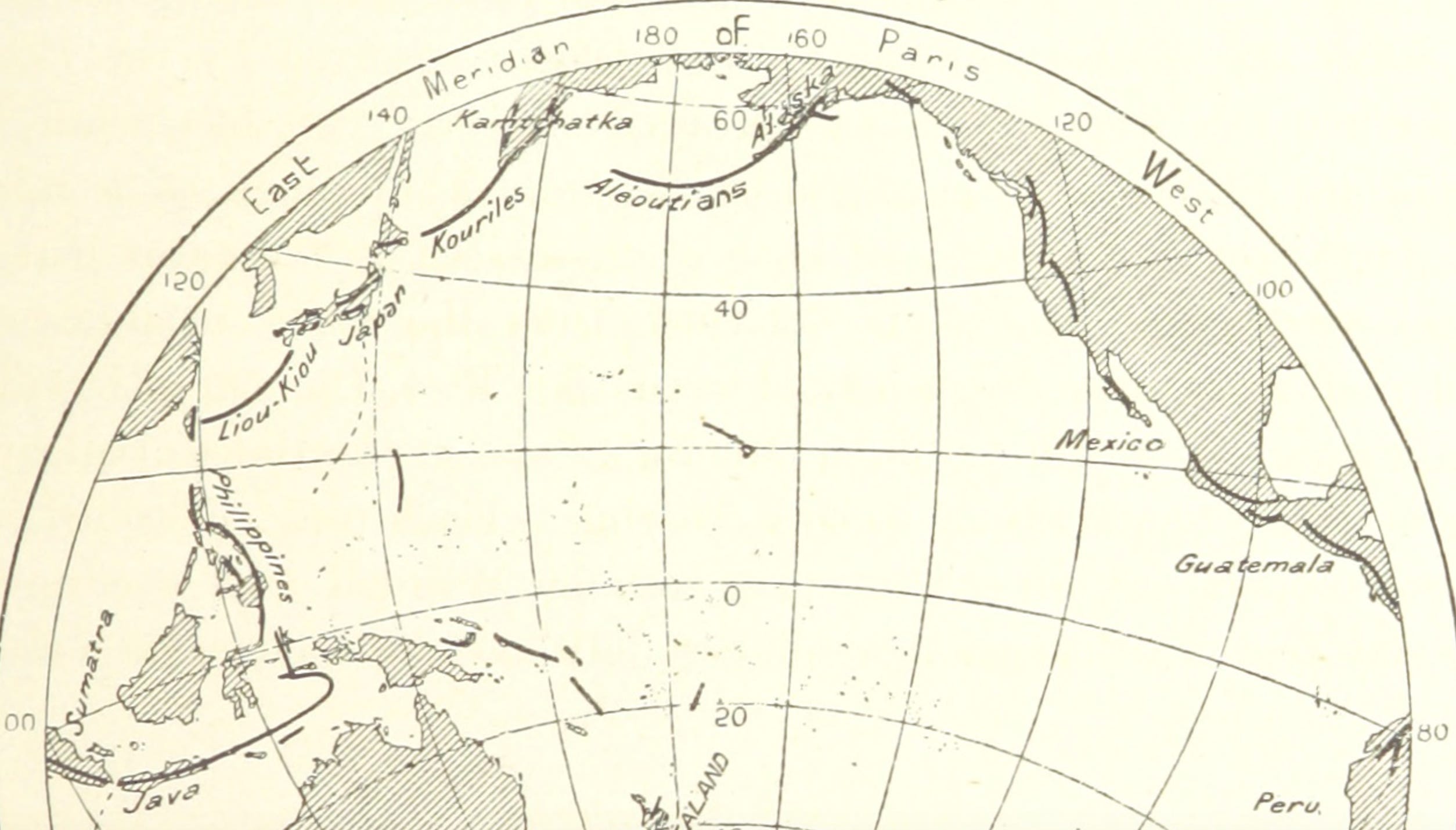
Beyond oil prices, businesses and investors have been able to largely ignore the tales of woe in old countries by focusing on the promises of singularity in the new tech hubs of Silicon Valley, Taipei and Seoul. The Pacific Rim, once best known for its volcanoes and earthquakes (and with a devastating reminder in Kumamoto on Tuesday), is now almost the entire world’s tech economy. Design and venture capital in California. Machines and bond investors in Japan. Semiconductors and speculators in South Korea and Taiwan. Competitors and communists in China. Yes, there’s ASML in the Netherlands, plus some war-damaged hyper-scaling FOMO in the Middle East, but technology in 2026 is primarily a Pacific story.
Yet beyond the turmoil between the Atlantic and Indian oceans, the Pacific is also the zone of the most high-risk geopolitical flashpoints in the coming decades, and it’s also the zone of an overarching geopolitical dilemma: who will run the world, China or the US? And more to the point, as we wrote about last week, more evidence is mounting that its current economic success story – artificial intelligence – could not just be at risk, but could cause an economic crisis that makes Europe’s problems with demography and debt look as quaint as its villages and tourism spots.
The risk isn’t the jobsapocalypse, terminator robots, or any of the doom-trolling that AI’s enthusiasts have begun relying on more as a quasi-marketing campaign (how else to explain the lack of regulation or safety follow-up that follows claims of autonomous hacking, like Anthropic has this week announced in the wake of an earlier claim by OpenAI?). The risk is plainer: not just a financial bubble, but a financial Ponzi scheme.