

In addition to our daily risk monitoring brief, the team behind Geopolitical Dispatch also provides advice, risk audits, scenario planning, executive masterclasses and board briefings among other services. Click here to get in touch.
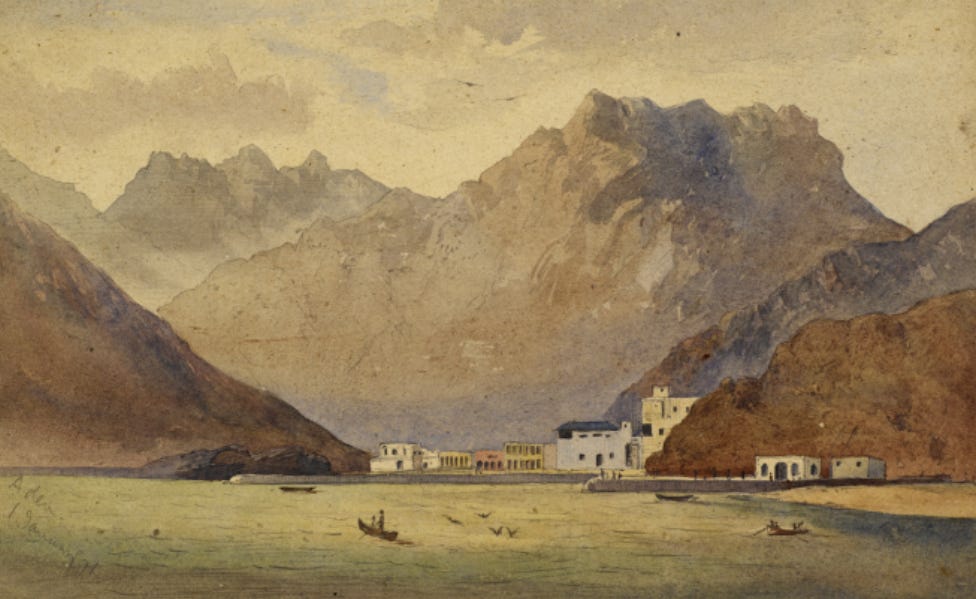
YEMEN. Chokepoint of no return
The Houthis escalate their war on international commerce.
Three sailors were killed Wednesday after a Houthi missile strike in the Gulf of Aden. A Hong Kong communications firm confirmed that four of 15 undersea cables in the Red Sea had been cut, impacting 25% of Asia-Europe data traffic..
INTELLIGENCE. The deaths were the first crew fatalities since attacks began following the start of the Gaza war, and come after the first sinking of a commercial ship, as well as the first confirmed attack on cable infrastructure (though other attacks have been guessed at). Having taken only sporadic action so far, the US and allies will be compelled to escalate their own strikes against the Iran-backed militia, which rules a region of Yemen with 80% of its population.
FOR BUSINESS. Albeit to the detriment of its prestige and global trade, the US has avoided escalation in the Red Sea and Gulf of Aden, which are bounded by conflicts in all directions. This has kept hopes of a peace deal alive, but as the conflict incurs more costs, Western leaders will have less appetite for strategic patience. A war with the Houthis would be perilous. With over 200,000 under arms, they are perhaps twice the size of Hamas and Hezbollah combined.
Geopolitical Strategy is the advisory firm behind Geopolitical Dispatch. Our partners are former diplomats with vast experience in international affairs, risk management, and public affairs. We help businesses and investors to understand geopolitical developments and their impacts with clarity and concision.
SUDAN. Lethal weapons
Hunger and brutality lay waste to Sudan.
Britain circulated a draft Security Council resolution Wednesday calling for a ceasefire in Sudan, where the UN estimates 18 million now face acute hunger. Sudan's military government confirmed Tuesday it had agreed to indirect peace talks.
INTELLIGENCE. Plenty of talks with the rebel Rapid Support Forces have been held, but all have failed. The RSF continues to make progress across Sudan south and west, supported by allies in Libya, Chad, and, reportedly, the UAE and Russia. Moscow meanwhile continues to entertain talks with the junta about a base on the Red Sea coast the military still controls. Iran, another of the regime’s backers (alongside Ukraine), is also said to be seeking a base.
FOR BUSINESS. Sudan’s civil war stands out for its brutality and constellation of actors. Though less noticed than the war in Gaza or the conflict in Yemen, its outcome could have greater long-term ramifications. Should the RSF win, Egypt could lose a vital friend to the south, Israel could lose another Arab partner, and Russia could potentially complete a chain of allies to the Atlantic. Sudan is the region’s breadbasket and one of the world’s top gold producers.
DEMOCRATIC REPUBLIC OF CONGO. Russian roulette
Amid escalating violence, Kinshasa takes a bet on Moscow.
Rwandan-backed rebels seized the strategic town of Nyanzale on Wednesday, killing 15. Rwanda asked the African Union to not support a South African-led peacekeeping mission. The Kremlin signed off on a military pact with the DRC.
INTELLIGENCE. Tutsi-led militias like the M23 are gaining ground in eastern Congo. Back in Kinshasa, many are blaming the West, which has maintained good ties with Rwanda’s technocratic but increasingly authoritarian regime. Images of protesters burning French and US flags has drawn comparisons to the anti-Western coups throughout the Sahel. The DRC, for all its troubles, is not at risk of a coup, but it is at risk of turning towards Moscow (and Beijing).
FOR BUSINESS. The Congo’s intractable crises are a legacy of Cold War realpolitik and Belgian colonisation. Russia thus has a rich seam of grievance to mine and while it may not wish to inject its ‘Africa Corps’ (an amalgamation of ex-Wagner fighters) into the DRC it would be willing to sell arms and reap the benefits. The West has few investments in eastern Congo, but this neglect could now begin to harm its wider security and economic interests across Africa.
Emailed each weekday at 5am Eastern (9am GMT), Geopolitical Dispatch goes beyond the news to outline the implications. With the brevity of a media digest, but the depth of an intelligence assessment, Geopolitical Dispatch gives you the strategic framing and situational awareness to stay ahead in a changing world.
MEXICO. Standoff
A contest between different types of populism.
Protesters entered Mexico's presidential palace Wednesday after a pickup truck rammed through the doors. Mexican bishops warned Sunday against cartel influence in elections to be held in June. Campaigning formally began last week.
INTELLIGENCE. Claudia Sheinbaum, protege of incumbent Andres Manuel Lopez Obrador, is favoured to win but faces a credible challenge from Xochitl Galvez. Both women have strong CVs and would normally prove capable leaders, but Mexico's increased polarisation is encouraging a populist campaign. The cartels could prove a wildcard, as could rhetoric north of the border, the army’s growing power, a stressed judiciary, and instability across the region.
FOR BUSINESS. Mexico has done well out of the US-China trade war, but its perennial insecurity and poor governance have blunted its natural advantages. Sheinbaum may ultimately be a better economic steward than AMLO, but her history of left-wing views worries investors. And with AMLO's dismantling of checks and balances there are now fewer institutional guardrails than before. Mexico won’t become a new Argentina, but nor will it become a Latin tiger.
PERU. Lima has-been
A cabinet reshuffle won’t save the president.
President Dina Boluarte appointed Gustavo Adrianzen as prime minister Wednesday after his predecessor resigned amid graft allegations. Congress voted to reinstate a bicameral system after 30 years. A dengue emergency was called.
INTELLIGENCE. Elections aren't due until 2026, but with Boluarte taking over from her jailed predecessor, Pedro Castillo, unelected, there are calls to bring them forward. In the meantime, she is seen as illegitimate by many Peruvians and several regional states, including Colombia and Mexico. Adrianzen, an envoy to the Organization of American States, may be able to break the diplomatic impasse, but won’t likely help with the lack of domestic support.
FOR BUSINESS. Boluarte is popular with investors but hated by voters. Her approval rating among CEOs is above 70%. With the electorate it’s below 10%. Unless political tensions can be diffused, economic reforms won’t stick. Yet any new elections could embroil Peru in a similar cycle of violence seen in Ecuador, where cartels sought to sway the vote with assassinations and intimidation, or a repeat of 2021's toxic contest between Castillo and Keiko Fujimori.