


Hello,
In last week’s edition of Irregular column, we discussed the geopolitics of food, warning that the Black Sea Grain Initiative was at risk of collapse. Moscow said the West was not living up to its side of the bargain. Its incentives to keep the deal going were diminishing.
Two days later, the Kremlin withdrew. And during the week, it began attacking Ukrainian ports and threatened foreign vessels. As our co-founder Damien Bruckard told the Australian Broadcasting Corporation, the omens for global food security look bad.
This week, we will take a deeper look into these developments. We will also look at the broader significance of the Black Sea. In the coming days, world leaders will convene in Rome for the UN’s Food Systems Stocktake. These are the issues that will be on their minds.
Deal or no deal
Wheat prices jumped about 4% but then corrected – markets had largely priced in a Russian withdrawal. But what would really spooked traders were the attacks on agricultural infrastructure. With around 10% of the world’s population facing hunger, removing Ukrainian wheat from global markets will have economic, political, and humanitarian impacts.
Yet, predictions of famine are probably overstated. While the Black Sea Grain Initiative, which took effect in June 2022, lowered wheat prices by almost 25%, other factors suggest an equivalent price hike will not eventuate.
Exports out of Ukraine at the time the deal expired were lower than before the war. Others have had bumper harvests, including Russia and Australia. Fertiliser prices are lower than a year ago, and Russia has begun exporting nitrates and potassium-based products out of its Baltic ports.
Russia, the world’s largest wheat exporter, will also likely use its conference with African leaders next week to sign bilateral deals. Moscow spies both an opportunity to replace Ukrainian exports and fashion itself as the saviour, not the cause, of the crisis.
Written by former diplomats and industry specialists, Geopolitical Dispatch gives you the global intelligence for business and investing you won’t find anywhere else.
A return to a deal looks unlikely for now. Russia largely signed up to win the support of developing countries. Much will hinge on who they blame for the deal’s collapse and whether they can secure alternative supplies.
And while the West will find a renewed deal unpalatable as Russia bombs Ukrainian ports, they may feel compelled to meet Moscow’s demands – especially if the Kremlin starts winning the narrative in the developing world.
This would mean connecting a subsidiary of Russia’s agricultural bank to SWIFT, waiving sanctions on insurance for Russian shipping, and unfreezing the accounts of Russian fertiliser companies.
A classic tactic of Russian statecraft is making itself indispensable to resolving the problems it has created…
Russia’s underbelly
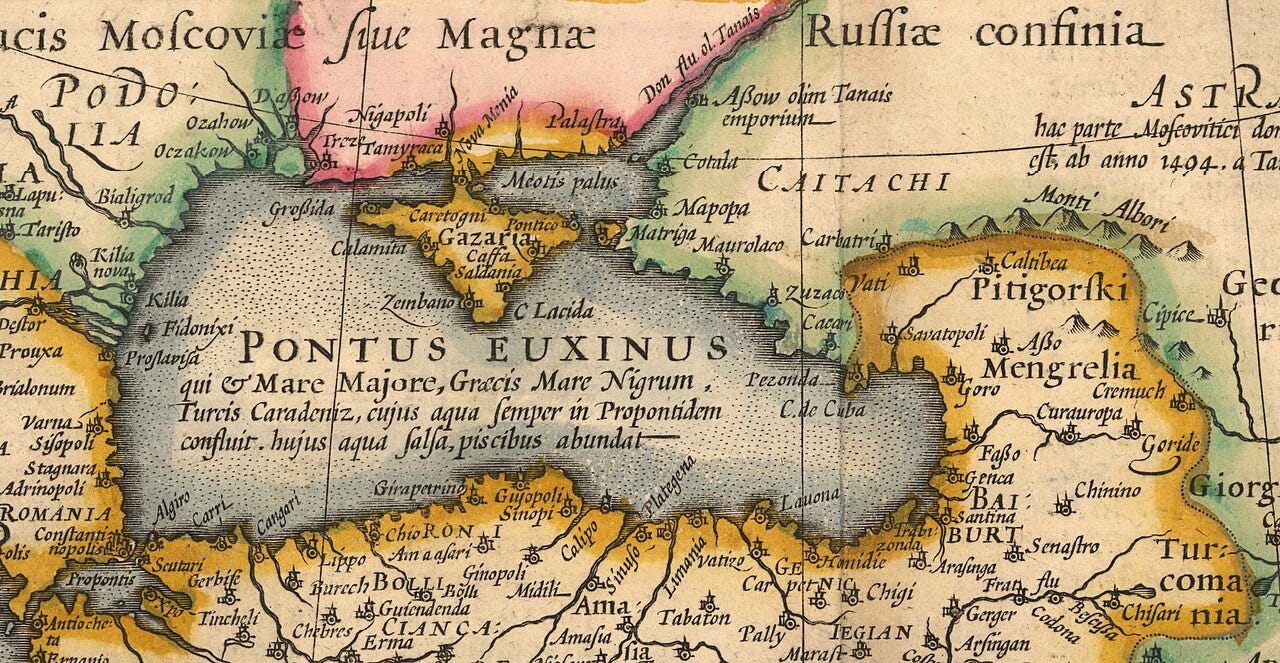
The Black Sea is more than just shipping lanes. It is a broader theatre of competition. Wars have been fought for centuries over command of its shores, which currently include Ukraine to the north, Russia and Georgia to the east, Turkey to the south, and Bulgaria and Romania (both EU and NATO members) to the west.
Today’s war in Ukraine, beginning with Russia’s annexation of Crimea, is just the latest conflict in this crossroads of Europe, Asia, and the Middle East. And where roads cross, so do interests.
Russia’s strategy in the Black Sea has offensive and defensive elements.
Offensively, Moscow views it as essential for projecting power and influence in the Mediterranean, the Middle East, North Africa, and Southern Europe.
Sevastopol, in Crimea, is Russia’s only true major warm-water port. Russian ships – military or commercial – can only access the Mediterranean through the Turkish Straits.
Defensively, Russia sees the region as a soft underbelly. Between its shores and Moscow lie flat plains and open roads (as the Wagner Group vividly showed as it motored up the M4 Highway).
Russia has tended to remedy this by stoking divisions in its neighbours (such as between NATO members Bulgaria, Romania, and Turkey) and creating instability and intervening in its buffers (Ukraine and Georgia).
While the success of the strategy’s current play remains to be seen, Moscow has not forgotten the advice of Czar Peter the Great, who asked that his descendants:
“approach as near as possible to Constantinople and India. Whoever governs there will be the true sovereign of the world. Consequently, excite continual wars, not only in Turkey, but in Persia… Penetrate as far as the Persian Gulf, advance as far as India.”
With the brevity of a media digest, but the depth of an intelligence assessment, Daily Dispatch goes beyond the news to outline the implications.
Turkish counterweight
But the Black Sea is more than Russia. Turkey, even before the days of Peter the Great, has been the major counterbalance in the region.
Through the city of Istanbul, the Canakkale Straits and the Marmara Sea, and Turkey controls access to and from the Mediterranean. As it did in the Ottoman era, it sees itself as the bridge between Asia and Europe. And as a NATO member with major strategic and commercial interests in Ukraine and Russia, it is naturally a key mediator in the current conflict.
The state of relations between Russia and Turkey, the two major Black Sea powers, is complex but will be critical for the eventual resolution of the war. Incidentally, Turkey may be the war’s only winner.
It has dramatically increased trade and investments with Russia. It has achieved a diplomatic coup with the grain deal. And (so far) it has successfully walked a fine line in supporting the West’s military efforts but not its sanctions.
Finally, the Black Sea is at the mouth of Europe’s second-biggest river – the Danube – plus a major energy corridor and a significant source of oil and gas in its own right.
A crossroads of energy from the Caspian, Central Asia, Russia and the Middle East, if the Black Sea’s pipelines are put in danger – as grain has been for Ukraine – the implications will have global consequences.
We hope you are enjoying Geopolitical Dispatch. We will continue to cover these issues and more through our regular daily assessments from Monday.
Our readership has grown a lot in the last couple of weeks, and we’d like to thank you for spreading the word. We’d also love to get your feedback. What’s useful to you? What’s not? Is there anything we’re not covering? Please email us at geopoliticaldispatch@gmail.com or feel free to leave a comment.
Thank you again for reading. As always, please consider passing our analysis on to a friend or colleague.
We’re less than three months into this journey, and we’re enjoying sharing our insights into this complex and changing world.
Best wishes,
Damien Bruckard
Emailed each weekday at 5am Eastern (9am GMT), Daily Assessment gives you the strategic framing and situational awareness to stay ahead in a changing world.
