



Hello,
In this edition of Week Signals:
IN REVIEW. Lessons mis-learned; the problem of too many objectives; where leverage is a trap.
UP AHEAD. Elections in Colombia; negotiations in Lebanon; diplomacy in South Asia; inflation in the US.
Geopolitical Dispatch is the daily client brief of Geopolitical Strategy - a specialist advisory firm helping leaders understand the geopolitical forces reshaping business and world affairs. Our work includes strategic forecasting, scenario planning and geopolitical risk workshops, crisis simulations, and GD Corporate Memberships. Learn more or upgrade for the full edition below
The Week in Review: Part II
The week began with a cage match on the White House lawn. It ended with algae in the reflecting pool. Washington DC, the Third Rome, lost bitterly to the Persians. We don’t know if the French have a word for Schadenfreude, but Emmanuel Macron’s recommendation that Donald Trump sign his 14-point MoU at Versailles, complete with reparations, seemed the pièce de résistance.
By all accounts other than the president’s (including Wikipedia), the US has lost the war in the Gulf. Traffic will hopefully increase in the Strait of Hormuz, barring interruptions from Israel and Lebanon (see the Week Ahead, below), but Iran is set to retain de facto control of Hormuz, be paid $300 billion in reconstruction funds (from where or whom it’s not yet clear), and keep its missile cities in Kermanshah, Isfahan and Lorestan. Perhaps it will also keep its uranium.
We covered some of the longer-term implications last week. This week, we wanted to cover a potential shorter-term response as Trump’s team goes into damage control.
No matter how you spin it, the Iran deal looks horrible for the US. Whether you compare it to Suez or Vietnam, it’s presumably going to crush the Republican Party at the midterms. Yet political memories are often short. Many Americans, like their president, are easily distractible. Lower gas prices over a long, hot El Niño summer will make the events of February to June seem distant. And just like the Epstein saga faded from view, and the Minneapolis killings before it, will voters even be thinking about Iran in November, or could they be thinking about Cuba instead?
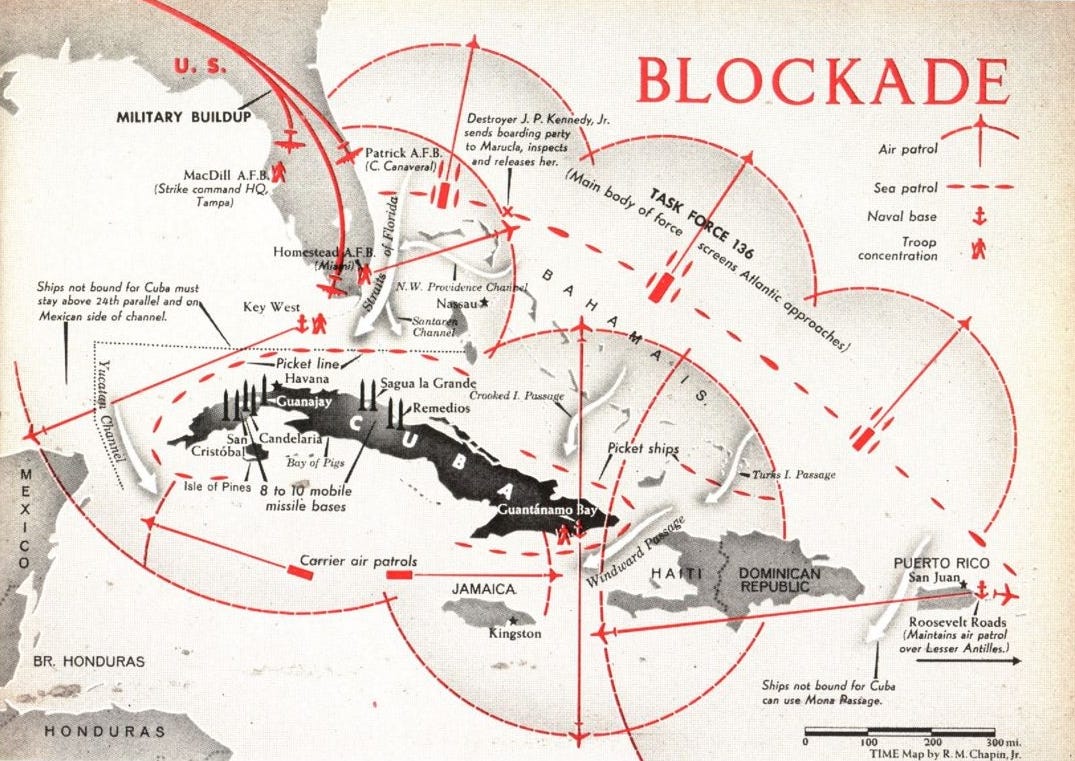
If Trump’s decision to go into Iran was influenced by his success in Venezuela, it stands to reason that his failure in Iran could be followed by an attack on a far weaker, far closer, and more domestically salient target. Rather than be another Jimmy Carter (or Herbert Hoover), Trump could be a more successful version of John F Kennedy, through a successful Bay of Pigs. Without a Soviet Union to contend with, surely taking Havana will be a piece of cake?
My colleague Oscar Martin outlines the scenarios.