



Hello,
In this edition of Week Signals:
IN REVIEW. Chokepoints of departure, access vs control, underestimating your enemy, and the errors inside assumptions.
UP AHEAD. Meetings and subterfuge for Ukraine and Russia, elections in Slovenia and Denmark, and an EU-Australia FTA.
And don’t forget to connect with me on LinkedIn.
The Week in Review: Strait up disaster
The week began with Donald Trump declaring victory in Iran. It ended with him declaring victory in Iran. Trump once warned we’d all be tired of winning. That was certainly no lie. But with all this winning, one must ask why energy prices remain so high, and the Strait of Hormuz remains effectively closed. One must also ask why several thousand US Marines are heading to the theatre, with the Pentagon beginning to shape a narrative for a limited incursion to finish all this winning, once and for all.
Over the last three weeks, we’ve outlined some scenarios we’ve been working on with our clients: the good, the bad, and the ugly. The good - a pragmatic regime change led by Ali Larijani – was essentially foreclosed when, earlier this week, Larijani was killed. The bad – another forever war, in the style of Ukraine, Iraq or Vietnam – now looks like the base case. The ugly – a quagmire that the US is then yanked from by China, in the style of Eisenhower yanking Anthony Eden during the Suez Crisis – remains a possibility, but Beijing, having none of Ike’s regard for his erstwhile British ally, will probably want to allow Washington to “win” a little more first.
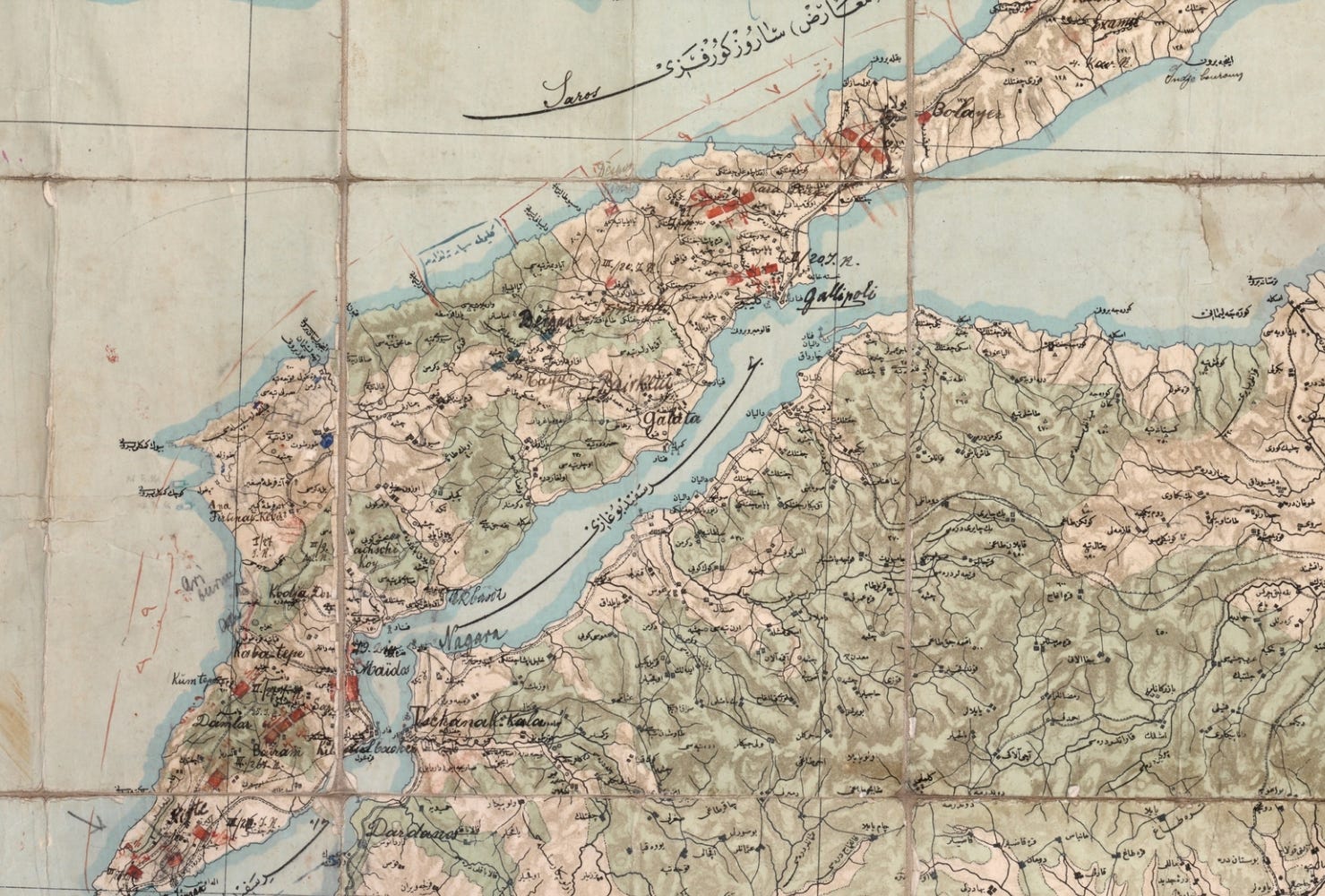
This week, and as befits a week when we have lost Chuck Norris, we want to go down to a more tactical level of analysis and explore what might happen in the interim. The next phase of the war - what Trump calls “winding down“ but which Pete Hegseth is seeking $200 billion for – will likely be defined by an amphibious landing on Kharg or the banks of the Hormuz (probably the latter, as Kharg is via Hormuz). The US will still call it winning, and Iran will still call it losing, but the history books may say something else. Every now and then, tactical actions in war can have a meaning and consequence completely separate from the overall conflict. As Australians, one example that comes to mind is the Allied landing at Gallipoli during the First World War, which continues to define how we remember that conflict down under. Not the Somme, not Versailles, but a mad dash for a maritime chokepoint that ended up defining not just Australia’s national identity and neuroses for the next 110 years, but much of the trajectory for the Middle East and the then-colonised world.
Our Paris-based analyst Oscar Martin breaks this down in today’s essay:
This week began with Donald Trump pressing allies to help reopen the Strait of Hormuz after Iran’s closure of the waterway and the widening disruption to shipping and energy flows. Several governments refused to commit military support, while calling instead for de-escalation. France said it would not join offensive operations, and Germany tied any role to the end of hostilities. Britain, France, Germany, Italy, the Netherlands, Japan and Canada later backed freedom of navigation in a joint statement, but stopped short of promising ships for Trump’s war. Meanwhile, the International Maritime Organization warned that even escorted passage would not guarantee safety for commercial crews.
The Strait of Hormuz carries around one-fifth of global petroleum liquids consumption. At its narrowest point, it is only around 21 nautical miles wide, and the navigable channels for inbound and outbound shipping are each just three kilometres wide, separated by a three-kilometre buffer (unlike the Great Satan, the Iranians use the metric system). The US and Israel started this war with a devastating campaign of leadership decapitation and destruction of military infrastructure. But the geography of the Strait has given Iran the upper hand in setting how it ends.
Last week Michael explored Suez as a guiding parallel. That remains a useful analogy for the potential strategic consequences: prestige squandered, allies unimpressed, markets alarmed, and a great power discovering that it was not so powerful. But if Suez explains where this may lead, Gallipoli tells us something about how it gets there. Gallipoli is what happens when a power mistakes access for control, underestimates the defender, and keeps pushing long after the plan has stopped making sense.
In 1915, Britain and France tried to force the Dardanelles, take Constantinople and knock the Ottoman Empire out of the war, while also opening a route to Russia through the Black Sea. The campaign began as a naval operation, and the assumption was that their superior ships and guns would batter their way through a narrow, defended waterway. On 18 March, that theory ran into mines and shore batteries as six Allied battleships were sunk or badly damaged. The naval attack was abandoned, and a land campaign followed because the original concept had failed.
On 25 April, British, French, Australian, New Zealand and Indian troops landed on the Gallipoli peninsula. They got ashore but did not seize the heights that mattered as the Ottomans held the commanding ground, turning the campaign into a grim, exposed stalemate of trenches, failed assaults, thirst, disease and attrition before the final evacuation in late 1915 and early 1916. More than 130,000 men died in the campaign overall. For Australia and New Zealand, it became both founding myth and military trauma. For military history more broadly, it became shorthand for a certain blunder: overconfidence in command, slaughter at the front, and a refusal to revise the basic idea even after reality had rendered its verdict.
The first parallel with Hormuz is that access is not the same as control. At Gallipoli, the British and French could reach the Dardanelles with superior naval power and technology. However, that was never the core concern, rather, the question was whether they could force, hold and exploit a narrow strait against a prepared defender. They could not, and the naval reach turned out to be something far less than command. The Allies discovered that entering a chokepoint is one thing, but making it function on your terms is another.