



Hello,
In this edition of Week Signals:
IN REVIEW. European heatwaves, Turkish summits, lessons from Australia, and a new dependence on China.
UP AHEAD. Conclaves in Beidaihe, primaries in the Midwest, elections for the Cook Islands, Zambia, and Clacton.
Geopolitical Dispatch is the daily client brief of Geopolitical Strategy - a specialist advisory firm helping leaders understand the geopolitical forces reshaping business and world affairs. Our work includes strategic forecasting, scenario planning and geopolitical risk workshops, crisis simulations, and GD Corporate Memberships. Learn more or upgrade for the full edition below
The Week in Review: Inconvenient truth, urgent questions
The week began with an evaporating threat to bomb Iran. It ended with a Saudi-Pakistan-Turkey defence pact and the dawning realisation that the US has run out of ammo.
We’re going to return to the Middle East next week, and unpack what this means not just for regional security but global order as more information comes to light, but as those in the northern hemisphere enter the dog days of summer, it’s worth revisiting another top-level geopolitical theme: climate change.
What has been seen as the biggest international challenge of our age – especially since Al Gore’s Inconvenient Truth in 2006 – has taken a surprising back seat politically (or perhaps not so surprisingly) as other key challenges – the 2008 financial crisis, the 2015 European migrant crisis, the 2020 Covid emergency, the wars since 2022, the mania for AI – have taken the fore.
Yet, economically, a warming world continues to shape business and investment decisions, even if you don’t believe it’s true. Renewables have now overtaken fossil fuels in many economies. In 2006, 30,000 US homes had solar panels. Now more than 6 million do. Globally, solar now provides 9% of total supply, from a fraction of a percent. Wind energy has likewise grown exponentially. Nuclear energy is having a renaissance, after the post-Fukushima backlash of 2011-12. Events in the Strait of Hormuz will only further accelerate these trends.
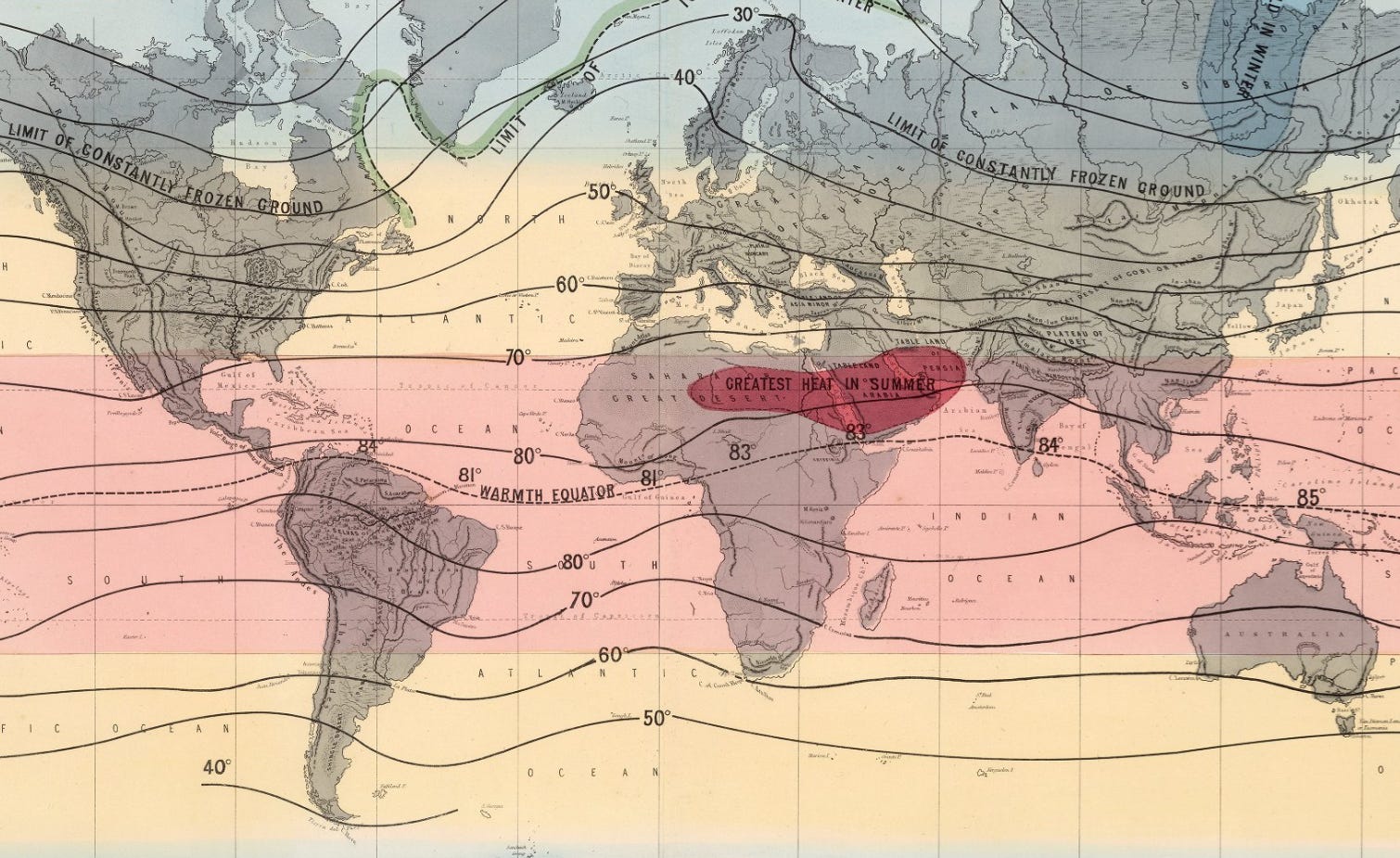
On the other side of the ledger, climate change is also melting ice – making Arctic shipping routes more viable for longer stretches of the year – and forcing changes in agriculture, from new conflicts in the Sahel to new wine regions in southern England. It’s also, of course, the centre of a heat wave debate in Europe and North America that looks only set to continue should predictions of a “super El Niño” this year pan out.
Ahead of this year’s season of diplomatic summits on the challenge, and writing from an unairconditioned apartment in the French capital, Oscar Martin provides his views: