


Hello,
In this edition of Week Signals:
IN REVIEW. Butterfly effects and chaos theory; Black Swans vs the Mule; and getting to Tuesday.
UP AHEAD. Elections in Brazil, Serbia, and Israel; China's Fifth Plenum; and US interest rates.
The Week in Review: Stormy weather
The week began with waivers on Russia, riots in France, and escalation in the Middle East. It looks like it’ll end the same way.
On the surface, as busy as it was, it seemed less a week of pivots than of trends. Things were noisy but continued in an already-established direction: waning US support for Ukraine, waning public support for European centrists, and waning patience for the unhappy status quo in the Gulf and the Red Sea.
Yet a series of pivots do approach, most notably in several key elections, including Brazil and Israel this coming week, and the US midterms the one after. And while the outcome for the US election, at least, is getting clearer - a victory for the Democrats in both the House and the Senate – how Donald Trump reacts to this, or moves to confound it, is still unknown.
At a rally in Florida overnight, the riddle deepened with Trump suggesting the US “may do another little Epic Fury” just as his Middle East envoy, Tom Barrack, told a podcast there could be a strike “this weekend”. Benjamin Netanyahu has certainly been upping the ante. Declaring the West Bank “closed” yesterday, and vowing to “destroy” Hebron after two soldiers were killed, fears of a pre-election escalation may indeed play out over the next 48 hours.
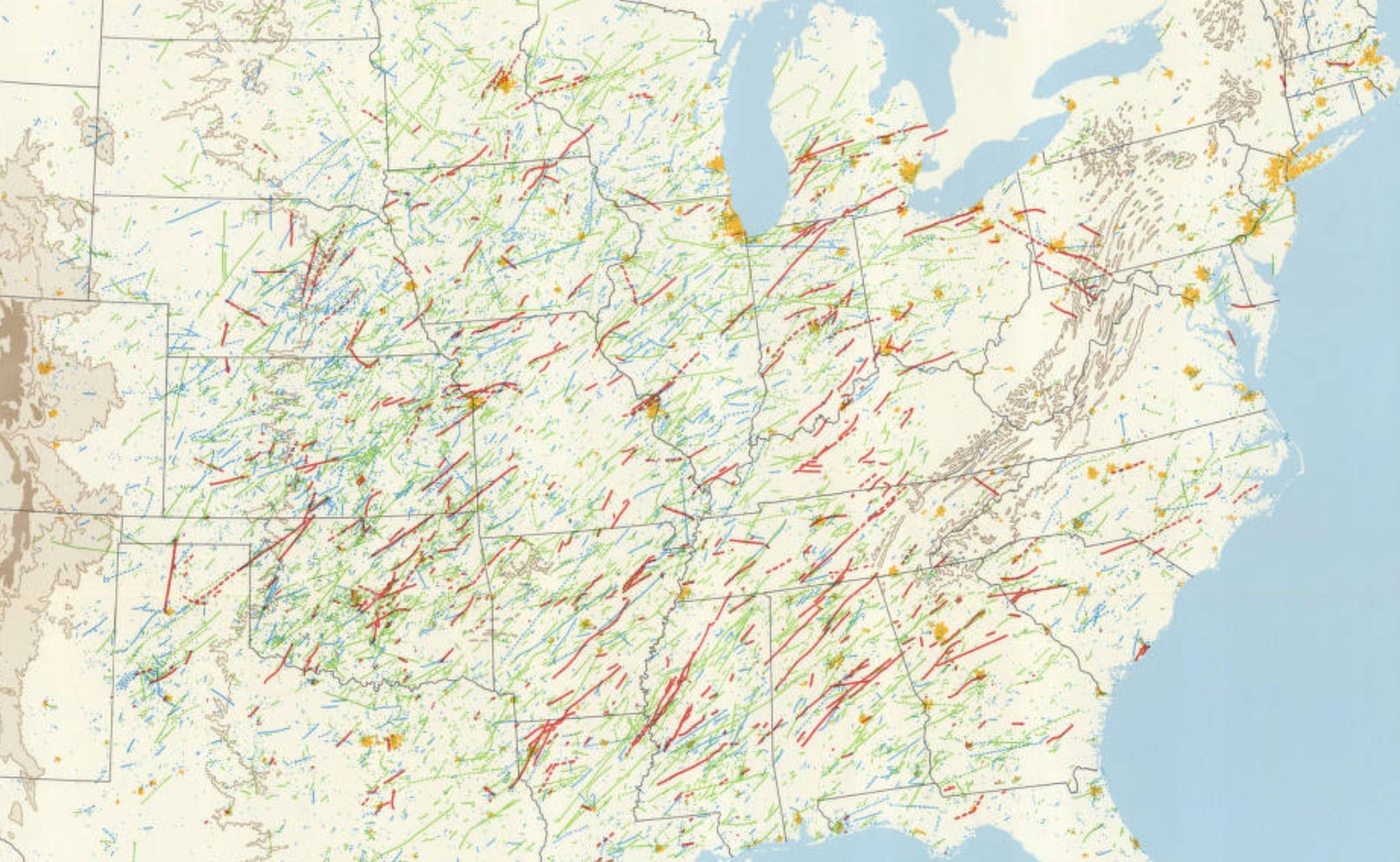
In 1972, meteorologist Edward Lorenz famously asked: “Does the flap of a butterfly’s wings in Brazil set off a tornado in Texas?” The idea caught on, spawning the phrase “butterfly effect“. And certainly, from a geopolitical perspective, the theory holds, as we’ve written before. While it’s hard to trace a major calamity to a single cause or flap of the wings – even oft-cited cases like Sarajevo’s “shot heard around the world” in 1914 were a little more complicated – there’s an endless library of examples of where seemingly unforecastable mistakes, upsets, Black Swans, and random occurrences have led to big political change. We even have another expression, quite apt for times like this: the October Surprise.
But what if the causal event is neither small nor unforecastable? If a butterfly can cause a tornado, what whirlwind might be reaped from a tactical nuclear attack on Pickaxe Mountain or the full-scale occupation of Palestine, both of which now seem (just) within the realms of possibility? We’ve also written before about low-probability, high-impact events. Yet when they’re anticipated, whether via the pricing mechanism of markets or the preparations encouraged by political declarations, does the impact diminish?
Lorenz’s 1972 speech was not just about the weather but about the broader concept of chaos theory. Like weather, but perhaps even more so considering the inherent agency of human beings, geopolitics is a chaotic, non-linear system. And as much as betting markets, AI, superforecasters, pollsters and geopolitical Substacks might try to break it down into probabilistic chunks, it’s usually a mug’s game trying to predict it (hence why we prefer scenario analysis instead).
Thus, even if an “October surprise” may not be such a surprise, there are still all sorts of chaotic and unforeseen consequences that may arise from it. And even if the first-order effects can be anticipated and managed (Brent’s recent rise to ~$117 at the time of writing suggests this is the case), the second, third and nth order effects can be harder to quantify, and can be ultimately more consequential.
Renewable fuel mandates, backed by Barack Obama in the 2008 election, led to higher conversion of corn to ethanol in the US. A global food price spike in 2010, in part helped along by such mandates, led to the self-immolation of a young fruit seller, Mohamed Bouazizi, in a central Tunisian town later that year.
This, in turn, would be seen as the proximate cause of the 2011 Arab Spring. And that, in turn, would be seen as the proximate cause of the 2015 European border crisis, which was the proximate cause of Brexit and perhaps Trump 1.0, which was the proximate cause of where we are today.
Now, while that may seem like turtles all the way down, good luck in forecasting it. In my conversation with Damien Bruckard earlier this month, we discussed how history is a mix of structural forces and singular individuals. And while you can model the former, like in Asimov’s Foundation, you can’t predict the Mule (or Bouazizi, or Trump). And even in the short term – say the next two days – you can’t really predict what a Trump (or a Netanyahu) might do. As Damien has said elsewhere, most of science is a big data problem, but political science, and geopolitics, is a small data problem, or specifically, the data of what’s inside the brains of a few key people, Trump, Vladimir Putin, Xi Jinping and so forth. And while hedge funds may now have a feed to Trump’s Truth Social, I doubt the hive mind of the Kremlin or the Zhongnanhai will ever be available for download via an API.
Still, in the business of geopolitical risk analysis, you’re not paying us to say something vague. You want the week ahead (and we’ve got a good one, further below the paywall). So, what are we likely to see before Tuesday?