


Hello,
In this edition of Week Signals:
IN REVIEW. From Pax Americana to Bellum Americanum; talking about Kevin; manifest destiny’s child.
UP AHEAD. Elections in New Caledonia; Burnham’s notice; talks in Delhi and Lucerne; and the Fourth of July.
Geopolitical Dispatch is the daily client brief of Geopolitical Strategy - a specialist advisory firm helping leaders understand the geopolitical forces reshaping business and world affairs. Our work includes strategic forecasting, scenario planning and geopolitical risk workshops, crisis simulations, and GD Corporate Memberships. Learn more or upgrade for the full edition below
The Week in Review: Thinking the unthinkable
The week began with JD Vance and Mohammad Bagher Ghalibaf beginning formal negotiations in Switzerland under the Iran-US MoU. The week ended with Iran and the US attacking each other.
The Iran-US war, the defining event of this year, and possibly much longer, may have so far had minimal effect on a market more defined by the AI boom, but it’s almost certain to have long-range effects on US power and international order, as we wrote a fortnight ago. And, in the lead-up to the midterms and in a presidency built on the politics of drama and distraction, it may also lead to more misadventures, potentially in Cuba, as we wrote last week.
Yet there’s perhaps some even broader lessons to think about. One is on the nature of war between states in the current era. The other is on the nature of the United States, soon to be 250 years old.
In terms of the nature of war, aspects of Iran-US are both familiar and novel.
Familiar, in that geography still matters. Don’t fight a land war in Asia (particularly in the Middle East). Don’t underestimate a weaker adversary’s home-side advantage (particularly if they sit astride a chokepoint). Don’t forget that even in an age of globalisation and abundance, the world still relies on physical (i.e., maritime) trade.
Novel, in not only the asymmetry of drone warfare (already having been proven elsewhere), but that unfamiliarity can sometimes breed contempt. Most wars, unlike this one, are between very familiar powers, generally bordering each other. Russia invaded the brotherly nation of Ukraine. China threatens the sisterly territory of Taiwan. The Israelis and the Palestinians are, it is argued, the children of Abraham. The US, on the other hand, clearly knew nothing about the Iranians.
And in terms of the nature of the US, there’s also the old and the new.
The old in that the US has now effectively been at war for all but 17 years of its independence, if one includes its campaigns against the various Native American tribes that came before European settlement. The new in that the US generally fights to win or, if it can’t – in the case of Korea, Vietnam, Iraq, or Afghanistan – it will keep fighting for decades.
This year’s war in Iran suggested something else: that the US has grown tired of the unipolar Pax Americana and wants to revert to its own hemisphere and the Donroe Doctrine. One admirable trait of Donald Trump is that, unlike most of his predecessors, he knows when to cut his losses. The Iran war, like so many others, could have dragged on for years. And while a return to full-scale fighting could still happen, for now, it would seem there are easier, de-escalatory options.
So what of future wars in our emerging multipolar order, or what could be better known as Bellum Americanum? A system of all against all. Of low trust and shifting alliances. A global fight club.
The first rule of Fight Club is that if you are to talk about Fight Club, you need to have a pitch you can sell to the spectators: the American public. Regime change in Iran wasn’t going to cut it. Renaming Hormuz the Strait of Trump wasn’t either. Gaza had made Israel toxic to much of MAGA.
The second rule of Fight Club is that you need to find someone much weaker to fight. Iran looked that way on paper, but geography – not paper – determines wars. Amateurs talk strategy, but professionals talk logistics. The US had bases scattered throughout the Gulf, but it couldn’t resupply them so long as Iranian missiles kept US reinforcements hundreds of miles offshore. Iran’s navy may have been “at the bottom of the sea”, but its drones – cheap and quick to replace – were safe in their underground silos. And Iran, with its back against the war, fought like it had nothing to lose.
The third rule of Fight Club is that you can’t win a war from the air. If the US were to ever defeat Iran – beyond the ridiculous notion that the ayatollahs would just wave the white flag, Venezuela-style, on day two – it would need to send in the Marines. Ground troops, even in an age of AI and drones, are necessary to each of war’s key phases, whether seizing, dominating, or stabilising (let alone occupying). And ground troops, as Napoleon discovered, should ideally not have to travel great distances.
If war truly is both the health of the state and the business of America, then best to find a business model that works. Returning to America’s 250 years, the model – to an outsider – would seem clear: war begins at home. Over two and a half centuries, most of America’s wars and most of its territorial expansion have been proximate to its borders (most empires, except for a few, tend to grow outwards from a fixed position). These were the wars against the Indians, the French, the British, and the Mexicans. These were also wars quickly followed by settlement. Conquest, in the Obama phraseology, is a whole-of-society effort. Or a public-private partnership in the Wall Street argot. Wars may have been expeditionary and driven by Cold War impetus during Pax Americana, but in Bellum Americanum, they’ll be played at home.
It was in this week’s muddle of thoughts – about the Iran misadventure, the upcoming 250th anniversary, the weird thing on the White House lawn, the tri-country World Cup, the stalling US-Mexico-Canada trade review, and the administration’s whole Western Hemisphere schtick – that I was listening to Gideon Rachman’s Financial Times podcast, featuring on Thursday former Australian prime minister Kevin Rudd and two other US commentators.
Like most who worked in government during Rudd’s time, it was perhaps unsurprising then that I got triggered when – in that very Kevin way – he simply said “yeah right” after being asked if the US posed a threat to Canada. But surely, Kev, if Bellum Americanum is to live out its manifest destiny, and if Greenland is so important to Trump (and not just so Red Lobster can continue serving bottomless shrimp), then surely Canada – with which the US fought a war in 1812, and for which much more recent invasion plans have existed – is an even more logical focus than Cuba or Iran?
Whether it’s those oil-filled prairies in restive Alberta, or those condo-ready beachfronts sitting between Seattle and Alaska, why not continue where 1776 left off? The Thirteen Colonies declared independence, but Quebec, Nova Scotia, Newfoundland and others never did. Surely time to remedy that accident of history? After all, with their nice manners, superior ice hockey skills, and all-too-familiar accent, those guys are really annoying.
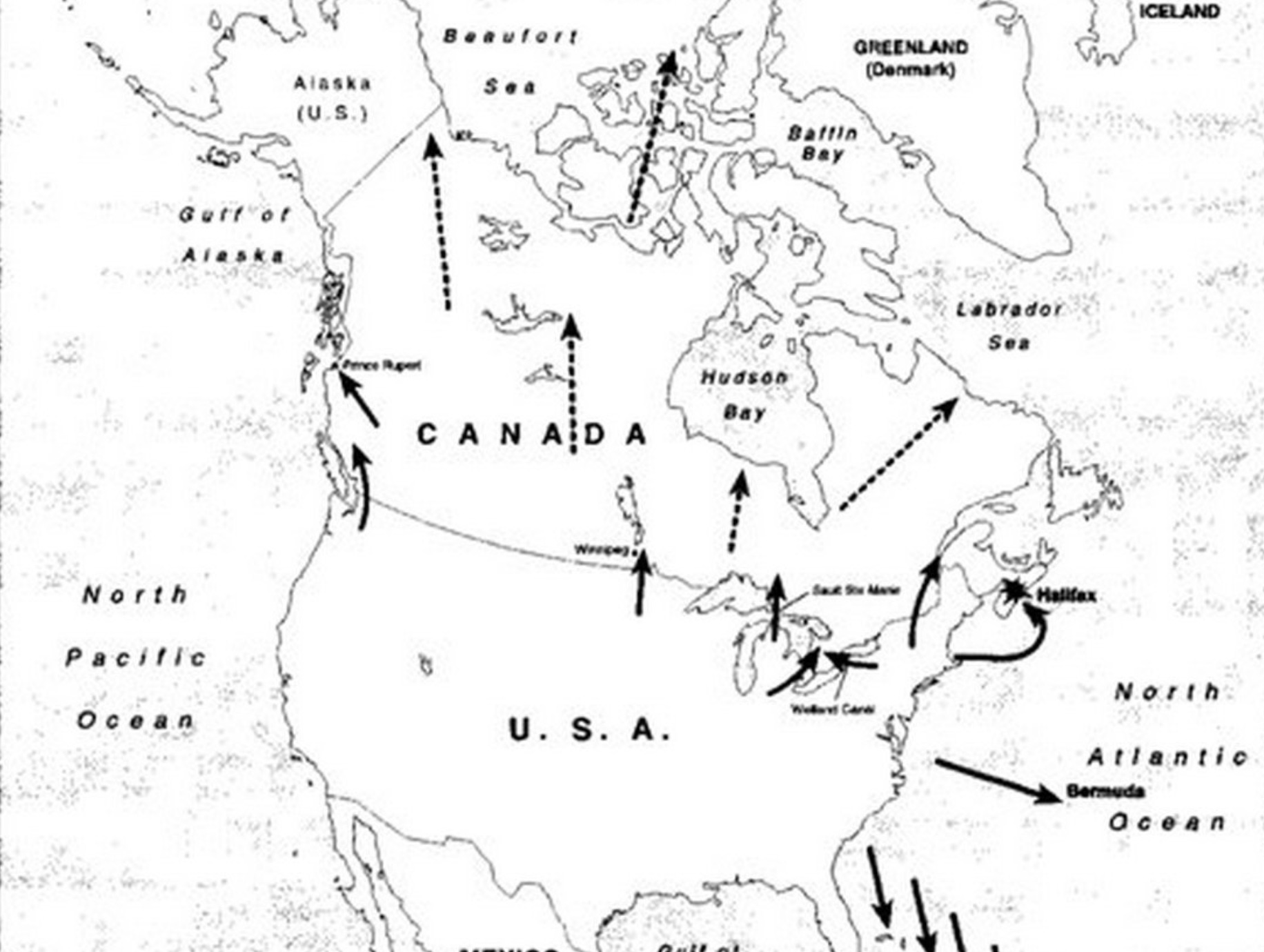
So is the 2026 wildcard of wildcards a US invasion of Canada? Were those stories from January, about Ottawa planning a mujahedin-style insurgency, really so crazy? To respond to Kevin, let’s suspend our disbelief for a moment and conduct a short thought experiment, including for what it might mean for business and the world economy.